
Mooneye
Mooneyes, scientifically called Hiodontidae, are a family of ray-finned fish. The family has only one included genus, called Hiodon.
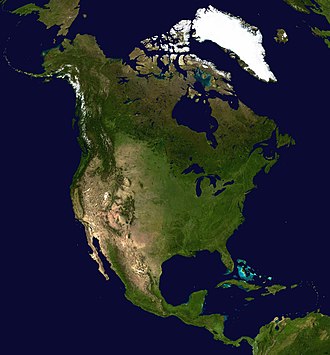
The genus has two living species, which live in North America. There are also a few extinct species, known from fossils from long ago, from the Paleocene to Eocene times. Mooneyes have large eyes and a forked tail. They look a bit like shads. Their name comes from the shiny, metal-like shine of their eyes.
Scientists do not yet agree on how mooneyes fit into the larger family tree of fish. Some sources place them in their own order, Hiodontiformes, while others keep them in the order Osteoglossiformes.
Species
The goldeye, Hiodon alosoides, lives across eastern North America. It has a bright golden iris in its eyes. It likes slow, cloudy water in lakes and rivers. It eats many small animals, including insects, crustaceans, small fish, and mollusks. The goldeye can grow up to 52 centimetres (20 in) long.
The mooneye, Hiodon tergisus, also lives across eastern North America. It lives in clear water in lakes, ponds, and rivers. It eats invertebrates, insects, and fish. Mooneyes can grow up to 47 centimetres (19 in) long.
-
†Hiodon consteniorum Li & Wilson, 1994
-
†Hiodon falcatus (Grande, 1979)
-
†Hiodon rosei (Hussakof, 1916)
-
†Hiodon woodruffi Wilson, 1978, a species from the Early Eocene, Ypresian to Late Eocene, Lutetian times. Scientists found its fossils in the Klondike Mountain Formation in Washington, in Horsefly shale in British Columbia, and later in the Kishenehn Formation of northwestern Montana.
-
?†Hiodon shuyangensis Shen, 1989
Pictures
Keep exploring



This article is a child-friendly adaptation of the Wikipedia article on Mooneye, available under CC BY-SA 4.0.
Images from Wikimedia Commons. Tap any image to view credits and license.