 Safekipedia
Mumbai
Adapted from Wikipedia · Adventurer experience
Mumbai
Mumbai, also known as Bombay, is the capital city of the Indian state of Maharashtra. It is the financial capital and the biggest city in India, with about 12.5 million people. The city is on the Konkan coast on India's west coast and has a deep natural harbour.
The seven islands that make up Mumbai were once home to Marathi language-speaking Koli people. Over time, these islands were joined together, turning Mumbai into a major seaport.
Today, Mumbai is often compared to New York City. It is the financial, commercial, and entertainment capital of India, home to the Bombay Stock Exchange and the famous Bollywood film industry. People from all over India come to Mumbai for work and business.
Etymology
The name Mumbai comes from Mumbā, the name of a local goddess called Mumbadevi, and the word ā'ī, meaning "mother" in the Marathi language. The city used to be called Bombay, a name given by Portuguese explorers. Later, the name changed to Mumbai to better match the local culture and language.
People who live in Mumbai are called Mumbaikar. This name became popular after the city's official name changed to Mumbai in 1995.
History
Main article: History of Mumbai
For a chronological guide, see Timeline of Mumbai.
Early history
Mumbai is built on what was once an archipelago of seven islands: Isle of Bombay, Parel, Mazagaon, Mahim, Colaba, Worli, and Old Woman's Island (also known as Little Colaba).
The Kanheri Caves in Borivali were excavated in the first century CE, and served as a centre of Buddhism in Western India. The Mahakali Caves in Andheri were cut out between the 1st century BCE and the 6th century CE. Greek geographer Ptolemy referred to the islands as Heptanesia in 150 CE. Between the 2nd century BCE and 9th century CE, the islands came under the control of successive rulers before being ruled by the Shilaharas from 810 to 1260 CE. Some of the oldest edifices in the city are the Jogeshwari Caves, Elephanta Caves, Walkeshwar Temple, and Banganga Tank.
King Bhima founded his kingdom in the region in the late 13th century CE and established his capital in Mahikawati (present day Mahim). The Pathare Prabhus came to Mahikawati from Saurashtra in Gujarat around 1298 CE. The Delhi Sultanate annexed the islands in 1347–48 CE and controlled it until 1407 CE. During this time, the islands were administered by the Muslim governors of Gujarat, appointed by the sultanate. The islands were later governed by the independent Gujarat Sultanate, established in 1407CE. Numerous mosques were built during this period, including the Haji Ali Dargah in Worli, erected in 1431, as a homage to Sufi saint Haji Ali.
Portuguese and British rule
Main articles: History of Bombay under Portuguese rule (1534–1661) and History of Bombay under British rule
Sultan Bahadur Shah of Gujarat signed the Treaty of Bassein with the Portuguese Empire on 23 December 1534. As per the treaty, the seven islands of Bombay, the nearby town of Bassein, and its dependencies were given to the Portuguese on 25 October 1535.
The Portuguese leased the islands to various Portuguese officers during their regime, and assisted the Roman Catholic religious orders. The islands were called by various names, and later took the written form Bombaim. The Portuguese Franciscans and Jesuits built churches in the city, such as the St. Michael's Church at Mahim, St. John the Baptist Church at Andheri, St. Andrew's Church at Bandra, and Gloria Church at Byculla. They also built several fortifications including the Bombay Castle, Castella de Aguada, and Madh Fort. The English vied with the Portuguese for control over Mumbai, recognising its strategic natural harbour. On 11 May 1661 CE, the marriage treaty of Charles II of England and Catherine of Braganza, daughter of King John IV of Portugal, gave most of the islands to the English, as part of Catherine's dowry to Charles.
In accordance with the Royal Charter of 27 March 1668, England leased these islands to the English East India Company in 1668 for a sum of £10 per annum. The population quickly rose from 10,000 in 1661 to 60,000 in 1675. The islands were subject to several attacks. In 1687, the English East India Company transferred its headquarters from Surat to Mumbai, and the city eventually became the headquarters of the Bombay Presidency.
The Portuguese presence in the region ended when the Marathas under Peshwa Baji Rao I captured Salsette in 1737, and Bassein in 1739. By the middle of the 18th century, Bombay expanded into a major trading town, receiving a large influx of migrants from across India. The British occupied Salsette on 28 December 1774, and signed the Treaty of Surat (1775), with Raghunathrao, one of the claimants to the Maratha throne, to transfer control of Salsette and Bassein. This resulted in the First Anglo-Maratha War, and the British secured Salsette officially through the Treaty of Purandar (1776), and later through the Treaty of Salbai (1782), signed to settle the outcome of the war.
From 1782 onwards, the English undertook large-scale civil engineering projects to merge the seven islands of Bombay into one by means of a causeway, the Hornby Vellard, completed by 1784. In 1817, the English East India Company under Mountstuart Elphinstone defeated Baji Rao II, the last Peshwa of the Marathas in the Battle of Khadki. The success of the campaign marked the end of attacks by native powers, and brought almost the whole of the Deccan Plateau under the British suzerainty and the Bombay Presidency. On 16 April 1853, India's first passenger railway line was established, connecting Bombay to the neighbouring town of Thana. During the American Civil War (1861–1865), the city became the world's chief cotton-trading market, resulting in an economic boom.
The opening of the Suez Canal in 1869 transformed Bombay into one of the largest seaports on the Arabian Sea. In September 1896, the city was hit by a disease epidemic, which resulted in many people leaving the city, affecting the textile industry. The Indian independence movement fostered movements in 1942 at the Bombay session of the Indian National Congress and in 1946.
Independent India
Main article: History of Bombay in Independent India
After India's independence in 1947, the Bombay Presidency was restructured into Bombay State, which was further expanded when several erstwhile princely states were integrated into the Indian union. Subsequently, the city became the capital of Bombay State. In April 1950, municipal limits were expanded by merging the Mumbai suburban and city districts to form the Greater Mumbai Municipal Corporation.
The Samyukta Maharashtra movement to establish a separate Maharashtra state reached its heights in the 1950s. In 1955, during discussions in the Parliament of India, the Congress party demanded that the city be made an autonomous city-state. Following several protests, Bombay State was reorganised on linguistic lines into separate states of Maharashtra and Gujarat on 1 May 1960. The Gujarati-speaking areas were separated from Bombay State to form Gujarat. Maharashtra was established with Bombay as its capital was formed with the merger of Marathi-speaking areas of Bombay State, eight districts from Central Provinces and Berar, five districts from Hyderabad State, and numerous princely states. As a memorial to the martyrs of the Samyukta Maharashtra movement, Flora Fountain was renamed as Hutatma Chowk.
The following decades saw a massive expansion of the city and its suburbs. In the late 1960s, Nariman Point and Cuffe Parade were reclaimed from the sea and developed. Industrial development began with a focus on the petrochemical, electronic, and automotive sectors. In the 1950s, Hindustan Petroleum and Bharat Petroleum commissioned Mumbai Refinery at Trombay and BPCL Refinery respectively. The Bombay Metropolitan Region Development Authority was established on 26 January 1975 by the Government of Maharashtra to co-ordinate development in the Mumbai metropolitan area. In August 1979, a sister township of New Bombay was established by the City and Industrial Development Corporation spread across the Thane and Raigad districts to accommodate the city's expanding population.
The Jawaharlal Nehru Port was commissioned on 26 May 1989 across the creek at Nhava Sheva to de-congest the Mumbai Harbour and to serve as a hub port for the city.
In the 21st century, Mumbai has become the commercial capital of India and a global financial hub. It is the home of India's main financial services companies and a focus for infrastructure development and private investment. It has become one of South Asia's largest cities and home of the world's most prolific film industry.
Geography
Main articles: Geography of Mumbai and Geology of Mumbai
See also: Eastern Suburbs (Mumbai), Western Suburbs (Mumbai), and List of neighbourhoods in Mumbai
Mumbai covers an area of 603 km2 and is split into two parts: Mumbai City and Mumbai Suburban. The suburban part is bigger, taking up 446 km2, and is divided into three areas: Andheri, Borivali, and Kurla. The southern part, called South Mumbai or "Island City," is smaller at 157 km2. The greater Mumbai Metropolitan Region stretches into parts of Thane, Palghar, and Raigad districts, covering 4,355 km2.
Mumbai is located on a narrow peninsula on the Salsette Island. It is bordered by the Arabian Sea to the west, Thane Creek to the east, and Vasai Creek to the north. The city sits near the mouth of the Ulhas River along India’s western coast in the Konkan region. Most of Mumbai is close to mean sea level, with heights between 10 and 15 metres. The northern part has hills, with the highest point at 450 metres in the Powai–Kanheri area. The coastline has many creeks and bays. The eastern side of the island has mangrove swamps, while the western side is mostly sandy and rocky.
Climate
Main article: Climate of Mumbai
See also: Mumbai Climate Action Plan
Mumbai has a tropical wet and dry climate, with a dry period from October to May and heavy rains in July. Cooler weather occurs from December to February, while warmer weather is from March to May. The southwest monsoon season runs from June to September.
The average yearly temperature is 27 °C. In the city, temperatures usually range from 24 °C to 31 °C. Mumbai sometimes faces tropical cyclones. The city can also experience flooding during the monsoon season.
Pollution
Air pollution is a big problem in Mumbai. The city has very high levels of tiny particles in the air, making it unhealthy to breathe. Efforts are being made to study and improve air quality in the city. Mumbai is also known for being very noisy.
Demographics
See also: Growth of Mumbai
In 2011, Mumbai had about 12.4 million people living in a small area. The city is very crowded, especially in places like Dharavi, one of the world's busiest neighborhoods. Many people come to Mumbai from other places to find work.
The main religions in Mumbai are Hinduism, Islam, Buddhism, Jainism, Christianity, and Sikhism. Marathi is the most spoken language, but many people also speak Hindi, Urdu, and Gujarati. English is used in offices and schools.
Further information: Religion in Maharashtra
Economy
Main article: Economy of Mumbai
Mumbai is the financial and commercial capital of India. It helps create a big part of the country’s wealth. The city’s economy is very strong and ranks among the best in India.
Mumbai used to be famous for its textile mills and its busy seaport. Today, the city has many important jobs in areas like finance, engineering, healthcare, and information technology. Big companies and important money-related places, such as the Reserve Bank of India and the Bombay Stock Exchange, are located here.
Mumbai has many large factories and busy streets. Some areas, like Dharavi, have many small factories that help make and fix things.
The city is also home to some of the richest people in the world, but not everyone lives in the same way. Many people in Mumbai live in small, crowded homes, and they often travel long distances to get to work.
Government and politics
Greater Mumbai covers an area of 603 square kilometers and includes two districts. In 2011, its population was about 12.4 million people. The city is managed by the Brihanmumbai Municipal Corporation (BMC). The BMC handles many city services. The BMC is one of the richest city governments in India and Asia.
The BMC is led by a mayor, chosen by elected council members every two and a half years. A municipal commissioner, appointed by the state government, oversees daily operations. Mumbai also has its own police department, fire service, and courts, including the Bombay High Court.
Mumbai has been important in India's history, hosting early meetings of the Indian National Congress. Different political groups have been active in the city. Today, Mumbai's elections include national, state, and local government positions.
Transport
Main article: Transport in Mumbai
Mumbai has many ways to get around, making travel in the city and to other places easy. The city is linked to important cities like Chennai and Delhi by big roads, including the Golden Quadrilateral highway system. There are special roads called expressways, such as the Mumbai–Pune Expressway, which opened in 2000, and the newer Mumbai–Nagpur Expressway, which opened in June 2025.
The city has many buses that help people travel short and medium distances. These buses are run by the Brihanmumbai Electric Supply and Transport and carry millions of passengers every day. There are also taxis and auto rickshaws, which are small vehicles people can hire to travel around the city.
Mumbai’s trains are very important. The Mumbai Suburban Railway, often called "locals," is the main way many people get around. These trains are very busy during peak hours. There are also other train lines, like the Mumbai Monorail and Mumbai Metro, which help reduce crowding on the trains.
For flights, the main airport is the Chhatrapati Shivaji Maharaj International Airport, which is very busy and handles many passengers. A new airport in Navi Mumbai opened in December 2025 to help with more travelers.
Mumbai also has ports, like Mumbai Port and Jawaharlal Nehru Port, which are important for ships and cargo. There are also ferry services that help people travel across water areas in the city.
Utility services
See also: Water sources of Mumbai
The city gets its clean water from six lakes and water bodies nearby. One important lake, Tansa, provides water for the western parts of the city. The water from this lake is cleaned at a big facility in Bhandup. The water travels through tunnels to reach the city.
Mumbai makes a lot of trash every day. This trash is taken to special places to be handled, such as Gorai, Mulund, and Deonar. The city also takes care of its sewage at special places in Worli and Bandra.
Electricity in Mumbai is provided by different companies. Most of the power lines are buried underground to keep them safe. People can cook using gas from special cylinders sold by state companies, or from piped gas provided by Mahanagar Gas Limited.
Mobile phone service covers the whole city, with major providers like Bharti Airtel, Reliance Jio, MTNL, and Vodafone Idea. Mumbai also has many internet users, more than any other city in India.
Education
See also: List of educational institutions in Mumbai § Schools, and List of colleges in Mumbai
Mumbai has many schools and colleges. Schools can be run by the city, supported by the city, or private. Most schools teach in Marathi or English.
Students in Mumbai usually finish ten years of school, then spend two years in junior college choosing between arts, commerce, or science. After that, they can start a degree program in many fields.
The city has many well-known colleges such as Wilson College, Grant Government Medical College, and the Veermata Jijabai Technological Institute. There are also big schools like the Indian Institute of Technology Bombay and IIM Mumbai.
Culture
Mumbai is a city where many different cultures meet. You can find all kinds of food, movies, music, and fun things to do. It is where Indian movies, called Bollywood, began, and it has many cinemas showing films from India and around the world.
The city has lovely art galleries, old libraries, and museums. People there enjoy many festivals from Indian and Western traditions. Some popular festivals are Ganesh Chaturthi, Diwali, Holi, and Christmas. There are also special art events like the Kala Ghoda Arts Festival and music events like the Banganga Festival.
Mumbai has many beautiful beaches, such as Girgaum Chowpatty and Juhu Beach. There are also fun places to visit like Essel World, a big theme park with exciting rides and a large water park called Water Kingdom.
Architecture
Main article: Architecture of Mumbai
See also: Heritage structures in Mumbai and List of tallest buildings in Mumbai
The architecture of Mumbai mixes many styles, including Gothic Revival, Indo-Saracenic, and Art Deco. Old buildings from British times, like the Victoria Terminus and the University of Mumbai, show Gothic Revival style with features from Europe and India. You can also find Indo-Saracenic buildings such as the Gateway of India. Along Marine Drive, there are famous Art Deco buildings. Mumbai has more Art Deco buildings than any other city in the world except Miami. In newer parts of the city, modern skyscrapers stand tall. Mumbai has the most skyscrapers in India, with many more being built.
The city has special rules to protect its important buildings. Mumbai is home to three places chosen by the world for their special value, including the Chhatrapati Shivaji Terminus, the Elephanta Caves, and the Victorian and Art Deco Ensemble. The city's buildings range from old colonial styles to modern tall structures.
Cityscape
Mumbai's skyline is filled with tall buildings, most of which were built in the 2000s. After a slow period in the mid-1990s, building grew quickly, especially in the Lower Parel area. Because there is little space and many people, most new buildings in Mumbai are homes rather than offices. Today, about 77% of India's tallest buildings are in Mumbai, making the city very expensive for real estate. As of 2023, Mumbai has around 250 tall buildings, with many still under construction.
Food
Mumbai is a lively city with many tasty foods. People in Mumbai enjoy different kinds of dishes, including local Marathi food and other Indian meals. The city's many street food stalls and restaurants have spicy curries and sweet treats, making it a fun place to try new flavors.
Media
See also: List of Mumbai radio stations
Bollywood, the Hindi film industry based in Mumbai, makes many films each year. The name Bollywood comes from combining the names of Bombay and Hollywood. In the 2000s, Bollywood became more popular around the world. This led to better-quality movies with new ideas and special effects. Many movie sets are located in studios in Goregaon, including Film City.
Mumbai has many newspapers, TV channels, and radio stations. Readers in the city enjoy reading Marathi-language papers like Maharashtra Times, Navakaal, Lokmat, Loksatta, Mumbai Chaufer, Saamana, and Sakaal. English-language newspapers such as The Times of India, Hindustan Times, and The Indian Express are also popular. Bombay Samachar, Asia’s oldest newspaper, has been published in Gujarati since 1822.
Mumbai is home to many international media companies. The national TV channel, Doordarshan, offers two free channels, and several cable networks reach most homes. Popular satellite TV services include Dish TV and Tata Sky.
The city has twelve radio stations. Nine of them broadcast on the FM band, and three All India Radio stations use the AM band. Listeners can also tune into Commercial radio services such as Sirius. A system started by the Union Government in 2006 didn’t catch on in Mumbai because of competition from Direct-to-Home services.
Sports
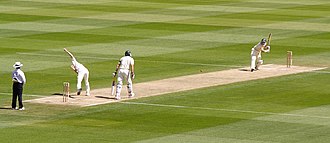
Cricket is very popular in Mumbai. The city is home to the Board of Control for Cricket in India and the Indian Premier League. Mumbai's first-class team, the Mumbai cricket team, has won many Ranji Trophy titles. The city-based Mumbai Indians also play in the Indian Premier League. Mumbai has two big cricket stadiums: the Wankhede Stadium and the Brabourne Stadium.
Football is also popular in Mumbai. The Mumbai City FC team plays in the Indian Super League at the Mumbai Football Arena. Other sports in Mumbai include field hockey, badminton, and rugby. The city holds horse races every February at the Mahalaxmi Racecourse and has hosted many international sporting events.
| Team/Club | Tournament/League | Sport | Venue | Established | Ceased |
|---|---|---|---|---|---|
| Mumbai Champs | Indian Cricket League | Cricket | N/A | 2007 | 2009 |
| Mumbai Marines | World Series Hockey | Field hockey | Mahindra Hockey Stadium | 2011 | 2013 |
| Mumbai Magicians | Hockey India League | Field hockey | Mahindra Hockey Stadium | 2012 | 2014 |
| Mumbai Masters | Premier Badminton League | Badminton | National Sports Club of India | 2013 | 2016 |
| Mumbai FC | I-League | Football | Cooperage Ground | 2007 | 2017 |
| Mumbai Challengers | UBA Pro Basketball League | Basketball | – | 2015 | 2017 |
International relations
Twin towns and sister cities
Mumbai has friendly relationships with many cities around the world. These partnerships began in different years, starting with St. Petersburg, Russia, in 1963 and continuing to Shanghai, China, in 2014. Other cities include Yokohama in Japan, Stuttgart in Germany, and several cities in the United States like Honolulu, Los Angeles, and New York City. These connections help cities learn from each other and work together.
Images
Related articles


This article is a child-friendly adaptation of the Wikipedia article on Mumbai, available under CC BY-SA 4.0.
Images from Wikimedia Commons. Tap any image to view credits and license.