 Safekipedia
Nathan Hale
Adapted from Wikipedia · Adventurer experience
Nathan Hale was an American Patriot and soldier. He lived from June 6, 1755, to September 22, 1776. He worked with the Continental Army during the American Revolutionary War.
Nathan volunteered for a special mission to gather important information in New York City. Sadly, he was caught by British forces.
Because of his bravery, Nathan Hale is remembered as a hero in American history. In 1985, he was officially named the state hero of Connecticut. His story teaches us about courage and the importance of standing up for what is right.
Early life and family
Nathan Hale was born in Coventry, Connecticut in 1755. His parents were Deacon Richard Hale and Elizabeth Strong, and they were from a well-known family. He went to Yale College and studied many interesting things.
After he finished school, Nathan became a teacher. He taught in places like East Haddam and New London. His family included people who helped make good changes in society.
American Revolutionary War
After the Revolutionary War began in 1775, Hale joined a Connecticut militia unit and became a first lieutenant. His group took part in the Siege of Boston, but Hale stayed behind because his teaching job in New London, Connecticut wasn’t finished yet. Later, he joined the 7th Connecticut Regiment.
Hale was also part of Knowlton's Rangers, the first intelligence service of the United States of America. In 1776, when the Continental Army moved to Manhattan to protect New York City from the British, General George Washington needed information about the British plans. Hale was the only one who volunteered to go behind enemy lines.
Intelligence-gathering mission
On September 8, 1776, Hale volunteered to go behind enemy lines to learn about British troop movements. On September 12, he was taken across Long Island Sound to Huntington, New York. Hale planned to disguise himself as a schoolteacher.
While Hale was undercover, New York City fell to British forces on September 15, and the Americans had to move north to Harlem Heights.
Death and purported last words
According to the rules at the time, spies were hanged. Hale stayed calm before his execution. On September 22, 1776, Hale was hanged. He was 21 years old.
It is often said that Hale’s last words were, “I only regret that I have but one life to lose for my country.” This quote came from a British officer who spoke to an American captain the next day. Some believe Hale may have said something similar to a line from a popular play of the time.
There are different places in Manhattan that claim to be where Hale was hanged. Hale’s body was never found, but his family put up an empty grave marker in Connecticut.
Legacy
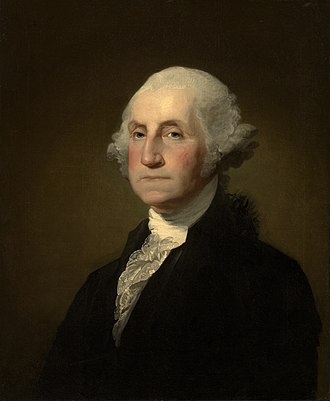
Statues of Nathan Hale are based on ideas of what he might have looked like, since no real pictures from his time exist. People who knew him described him as a tall, strong man with blue eyes and light hair. He was known for being thoughtful and caring, often visiting and supporting sick soldiers.
Hale is honored with several statues and places named after him. One famous statue by Frederick William MacMonnies stands in City Hall Park in New York, and another by Bela Pratt is located at Connecticut Hall in Yale. Copies of these statues can be found in many places, including New London, Connecticut; Andover, Massachusetts; and Washington, D.C. Other memorials include a statue at the Connecticut State Capitol and markers in Huntington, New York, and Norwalk, Connecticut. A tall monument called the Captain Nathan Hale Monument was built in his birthplace of Coventry, Connecticut, in 1846.
Many schools, buildings, and even a submarine are named after Hale. These include high schools in East Haddam, Connecticut; Seattle, Washington; West Allis, Wisconsin; and Tulsa, Oklahoma. There are also middle and elementary schools across several states named in his honor. The USS Nathan Hale (SSBN-623), a submarine, carries his name as well. Other tributes include a dorm at the University of Connecticut, a classroom building at Robert Morris University, and a barracks at Fort George G. Meade.
There are also ballads and poems that remember Hale’s courage. One early poem, written soon after his death, speaks of his love for freedom and his wish to protect future generations from oppression. Though the exact words may not be true, they show how people remembered his strong beliefs and bravery.
Images
Related articles


This article is a child-friendly adaptation of the Wikipedia article on Nathan Hale, available under CC BY-SA 4.0.
Images from Wikimedia Commons. Tap any image to view credits and license.