
Presidency of Ronald Reagan
Ronald Reagan served as the 40th president of the United States from January 20, 1981, to January 20, 1989. He was a Republican from California.
Reagan won the 1980 presidential election against the Democratic president Jimmy Carter. He was re-elected in the 1984 presidential election against Walter Mondale. After Reagan left office, his vice president, George H. W. Bush, became the next president after winning the 1988 presidential election.
During his time as president, Reagan changed many parts of the U.S. government. He cut taxes and tried to spend less money on things that were not the military. His economic plan, called Reaganomics, was based on supply-side economics. Reagan also changed the tax system in 1986 to make it simpler. He passed laws to change how people could come to live in the United States. Reagan appointed many federal judges, including four to the Supreme Court.
In world affairs, Reagan opposed the Soviet Union. He built up the U.S. military and worked to reduce the power of the Soviet Union. His administration supported groups fighting against governments unfriendly to the United States. One famous event was the invasion of Grenada in 1983. Reagan also worked with the leader of the Soviet Union, Mikhail Gorbachev, to agree on limiting weapons.
Historians often think Reagan was one of America’s most important presidents because he helped end the Cold War and brought back confidence in the country.
Background
Conservative shift in politics
Further information: Conservatism in the United States and Reagan era
Before Ronald Reagan became president, he helped change American politics toward more conservative ideas. People trusted the government less after a big mistake called the Watergate scandal. A new group of voters called the religious right also started to support these ideas.
Reagan and other conservatives offered new ideas to people who were unhappy with old ways. His good speaking skills helped many people see conservatism as a hopeful future for the country.
1980 election
Main articles: Ronald Reagan 1980 presidential campaign, 1980 United States presidential election, and Presidential transition of Ronald Reagan
Further information: 1980 United States elections, 1980 Republican Party presidential primaries, and 1980 Republican National Convention
Reagan, who was the Governor of California from 1967 to 1975, lost a race for the Republican nomination in 1976 but became a top candidate for the 1980 election. He competed against other Republicans but won many votes and chose George H. W. Bush as his running mate.
The race against Jimmy Carter focused on problems with the economy and events like the Iran hostage crisis. In a debate, Reagan asked people, “Are you better off today than you were four years ago?” He won the election with most of the votes and helped Republicans take control of the Senate.
Administration
See also: Vice presidency of George H. W. Bush
President Reagan had a team of important people who helped him run the country. One of his first choices was James Baker, who managed the daily work of the White House. Other key helpers included Michael Deaver, who planned President Reagan’s public events, and Edwin Meese, who helped develop policies.
President Reagan also picked important leaders for different parts of the government. Alexander Haig was his first secretary of state, and Caspar Weinberger became the secretary of defense. Later, George P. Shultz took over as secretary of state and became a major influence on foreign policy. These leaders helped shape the policies during President Reagan’s time in office.
Judicial appointments
Supreme Court
Main article: Ronald Reagan Supreme Court candidates
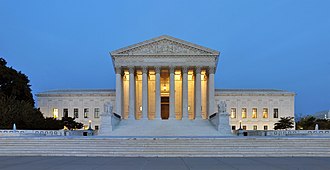
Reagan chose four people to be justices on the Supreme Court while he was president. In 1981, he picked Sandra Day O'Connor to be the first woman on the Supreme Court. Many people liked her, but some groups worried about her ideas. In 1986, Reagan made William Rehnquist the Chief Justice and chose Antonin Scalia to fill Rehnquist's old spot.
Reagan had some trouble when another justice left in 1987. His first choice, Robert Bork, was not approved by the Senate. His next choice, Douglas H. Ginsburg, decided not to take the job. Finally, Reagan chose Anthony Kennedy, and he was approved in 1988.
Other courts
Further information: List of federal judges appointed by Ronald Reagan and Ronald Reagan judicial appointment controversies
Reagan appointed 368 judges to federal courts, more than any other president. Most of these judges were known for their conservative ideas. By the time Reagan left office in 1989, he had appointed almost half of all federal judges in the country.
Assassination attempt
Main article: Attempted assassination of Ronald Reagan
On March 30, 1981, just 69 days after Ronald Reagan became president, someone tried to harm him near the Washington Hilton Hotel. Reagan and a few others were hurt. Reagan went to the hospital and needed surgery, but he got better quickly. He was the first president to survive such a serious incident. After this happened, many people started to like Reagan more, which helped him reach his goals as president.
Domestic affairs
Main article: Domestic policy of the Reagan administration
Reagan used his team in the White House to help shape important national policies. His main assistant helped oversee how different parts of the government worked on Reagan’s plans.
"Reaganomics" and taxation
Main article: Reaganomics
Economic Recovery Tax Act of 1981
Reagan put into place economic policies that supported free markets and less government control. He believed that cutting taxes would help reduce inflation and grow the economy. His team was influenced by economists who thought lower taxes would bring in more money for the government.
Reagan made changing the tax law a top priority when he became president. With help from some members of Congress, he passed the Economic Recovery Tax Act of 1981. This law cut the top tax rate from 70% to 50%, lowered taxes on investments, and made it easier to pass on wealth when someone dies. Many people called this the “Reagan Revolution” because it was a big change in how the government handled taxes.
Later tax acts
Later, Reagan agreed to raise some taxes to help with growing government debt. He signed new laws that increased taxes on cigarettes and changed some business tax cuts. By 1983, taxes had gone down for most people, especially the wealthy. In 1986, Reagan helped pass a law that made the tax system simpler by reducing the number of tax levels and cutting many special breaks. The highest tax rate went down to 28%, but some taxes on investments went up.
Government spending
Reagan wanted to cut spending on government programs, especially those that helped poor people and communities. He tried to reduce funding for things like food help for families and school lunches. However, many of these programs actually got more money after 1982. Reagan also tried to shift responsibility for some programs to state governments, but this didn’t get much support in Congress.
Deficits
Reagan’s tax cuts and spending on defense led to big government deficits. The national debt grew quickly during his time in office. To try to control the debt, Congress passed laws that were supposed to force the government to cut spending if deficits didn’t go down, but these didn’t work well.
Economy
When Reagan became president, the country was going through tough economic times with high inflation and unemployment. The economy improved a bit early on, but then went into a downturn in 1981. Unemployment was very high in 1982, but things started to get better in 1983. Inflation came down, and the job market improved by 1988.
Labor
In 1981, a group of air traffic controllers went on strike asking for better pay and benefits. Reagan said they had to go back to work or lose their jobs. When they didn’t, he fired over 10,000 controllers. This made it harder for workers to go on strikes, and fewer strikes happened in the 1980s.
Deregulation
Reagan wanted to reduce government rules that controlled business activities. His team cut many regulations and made it easier for companies to operate without as much government oversight.
Savings and loan crisis
After changing laws to make it easier for banks and savings institutions, some of them took big risks and lost money. This led to a big problem where many of these institutions failed, and it cost a lot of money to fix.
Immigration
In 1986, Reagan signed a law that made it illegal to hire people who were in the country without permission. The law also allowed about three million people who had been living in the U.S. without permission to become legal residents.
Criminal and anti-drug policy
Soon after becoming president, Reagan started strong policies against drugs, promising a big campaign to reduce drug use. First Lady Nancy Reagan started a campaign called “Just Say No” to raise awareness about the dangers of drugs.
Congress passed laws that added more money to fight drugs and set stricter punishments for drug crimes. Critics said these policies unfairly affected certain groups and didn’t really stop drug use or crime.
Reagan also signed a law in 1986 that made it illegal to own certain types of guns, like machine guns.
Social policies and civil rights
Reagan tried to change some social policies, like allowing prayer in schools, but didn’t succeed in making big changes. He did support extending a law that helped protect voting rights and agreed to make Martin Luther King Jr. Day a federal holiday.
LGBTQ rights and AIDS
Main article: Ronald Reagan and AIDS
During Reagan’s time as president, there wasn’t much progress in laws to protect the rights of LGBTQ individuals. The issue of AIDS became more important in 1985 when a famous actor, Rock Hudson, was revealed to have the disease. Reagan’s administration focused on teaching people to avoid having sex rather than promoting other ways to stay healthy.
Environmental policy
Reagan believed in reducing government rules to help businesses grow, and this included environmental rules. He cut funding for environmental programs and appointed people who didn’t prioritize protecting the environment to lead these agencies.
Mass surveillance
Reagan’s team wanted more power to watch and collect information, saying it was needed for national security. In 1981, Reagan signed an order that gave intelligence agencies more freedom to collect and share information about people in the United States.
| Receipts | Outlays | Surplus/ Deficit | GDP | Debt as a % of GDP |
|---|---|---|---|---|
| 599.3 | 678.2 | −79.0 | 3,133.2 | 25.2 |
| 617.8 | 745.7 | −128.0 | 3,313.4 | 27.9 |
| 600.6 | 808.4 | −207.8 | 3,536.0 | 32.2 |
| 666.4 | 851.8 | −185.4 | 3,949.2 | 33.1 |
| 734.0 | 946.3 | −212.3 | 4,265.1 | 35.3 |
| 769.2 | 990.4 | −221.2 | 4,526.3 | 38.5 |
| 854.3 | 1,004.0 | −149.7 | 4,767.7 | 39.6 |
| 909.2 | 1,064.4 | −155.2 | 5,138.6 | 39.9 |
| 991.1 | 1,143.7 | −152.6 | 5,554.7 | 39.4 |
Foreign affairs
Main article: Foreign policy of the Reagan administration
Escalation of the Cold War
See also: Cold War (1979–1985)
Reagan increased tensions during the Cold War. He worried that the Soviet Union had a stronger military than the United States. He believed spending more on the military would help the U.S. Reagan ordered a big increase in the size and power of the U.S. military. He also spoke strongly against the Soviet Union. Reagan kept talking with the Soviet Union about controlling nuclear weapons.
Strategic Defense Initiative
In March 1983, Reagan introduced a defense project called the Strategic Defense Initiative. This plan would use systems to protect the U.S. from attacks by nuclear missiles. Reagan thought this could make nuclear war impossible. But many experts said it would be too expensive and hard to do. The Soviet Union was worried about this plan.
Reagan Doctrine
Main article: Reagan Doctrine
See also: Soviet–Afghan War
Reagan supported groups fighting against communist governments in Africa, Asia, and Latin America. In Poland, the U.S. helped a group called Solidarity. In Afghanistan, the U.S. trained and supplied forces called the Mujahideen to fight the Soviet Army.
Central America and the Caribbean
See also: Latin America–United States relations
Reagan focused on Central America and the Caribbean. He started programs to help countries that opposed communism and used secret actions to reduce Cuba influence. The U.S. also supported some governments in Latin America.
Invasion of Grenada
In 1983, after a leader in Grenada was arrested and killed, Reagan sent U.S. soldiers to invade the island. After a short fight, the new government was removed.
Iran–Contra affair
Main article: Iran–Contra affair
See also: Scandals of the Reagan administration
In Nicaragua, a group called the Sandinistas took over the government. Reagan wanted to support a group called the Contras, who opposed the Sandinistas. But laws stopped the U.S. from giving them help directly. Reagan’s administration found other ways to support them. When this was discovered, it caused a big scandal.
End of the Cold War
See also: Cold War (1985–1991)
In the mid-1980s, new Soviet leader Mikhail Gorbachev started changes in the Soviet Union. Reagan met with Gorbachev several times, and they made agreements to reduce nuclear weapons.
Honoring German war dead at Bitburg, Germany
Main article: Bitburg controversy
Reagan visited a cemetery in Germany where some soldiers who fought for Nazi Germany were buried. This caused controversy.
Middle East
Lebanon
A civil war started in Lebanon in 1975, and several countries got involved. Reagan tried to help arrange peace, but attacks happened. The U.S. later pulled its peacekeepers out of Lebanon.
Libya bombing
Main article: 1986 United States bombing of Libya
Tensions between the U.S. and Libya led to the U.S. launching attacks on Libya in 1986. The U.S. said Libya was responsible, and the attacks were meant to stop Libya from supporting harmful actions.
South Africa
During Reagan’s time as president, South Africa had a system that treated people unfairly based on their race. Reagan’s administration tried to work with the government there.
Free trade
Reagan worked to create agreements to make it easier to trade between countries. He signed agreements with Israel and Canada.
Age and health
Ronald Reagan was the oldest person to serve as U.S. president at the time. People sometimes worried about his health.
Early in his presidency, Reagan started using a special hearing aid to help him hear better. He talked about it publicly in 1983, which helped many other people feel comfortable using hearing aids too.
In 1985, Reagan had surgery to remove a growth in his colon. He temporarily gave his powers to the vice president for a few hours, but everything went well and he returned to work the same day. Later that year and in the years ahead, he had more operations to remove skin growths, but nothing serious was found.
Some reporters thought they noticed changes in Reagan’s behavior later on, but his doctors said he did not show any problems during his time as president. After leaving office, Reagan faced health challenges, but during his presidency, he continued to lead the country.
Elections during the Reagan presidency
Main article: 1982 United States elections
Main articles: Ronald Reagan 1984 presidential campaign and 1984 United States presidential election
Further information: 1984 United States elections, 1984 Republican Party presidential primaries, and 1984 Republican National Convention
Main article: 1986 United States elections
Main article: 1988 United States elections
Further information: George H. W. Bush 1988 presidential campaign, Michael Dukakis 1988 presidential campaign, 1988 United States presidential election, and Presidential transition of George H. W. Bush
In the 1982 elections, Democrats kept most seats in the House, while Republicans held the Senate. This made it harder for President Reagan to pass his plans.
Reagan ran for re-election in 1984. His opponent was Walter Mondale, who picked Geraldine Ferraro as his running mate—the first woman on a major party’s ticket. Reagan won by a large margin, getting votes from almost every state.
In 1986, Democrats took control of the Senate again. Reagan worked hard to help Republican candidates, but they lost many seats.
By 1988, Reagan supported George H. W. Bush for the next president. Bush won the election against Michael Dukakis, continuing Reagan’s legacy. When Reagan left office, many people approved of how he handled the country.
Evaluation and legacy
Main articles: Opinion polling on the Reagan administration and United States presidential approval rating
Since Ronald Reagan left office in 1989, people have talked a lot about what he did. Some say he helped make the economy stronger and made people feel proud to be American again. They think he fixed problems left by President Jimmy Carter.
Others say his policies made money problems worse and increased the gap in wealth. Some also felt his actions during the Iran–Contra affair hurt America’s reputation.
Even though people still argue about his time as president, many agree he was one of the most important leaders since Franklin Roosevelt. He changed American politics and helped bring the country together. Surveys show that many people think he was one of the best presidents.
Pictures
Keep exploring



This article is a child-friendly adaptation of the Wikipedia article on Presidency of Ronald Reagan, available under CC BY-SA 4.0.
Images from Wikimedia Commons. Tap any image to view credits and license.