 Safekipedia
Pune
Adapted from Wikipedia · Adventurer experience
Pune, also called Poona, is a big and important city in the state of Maharashtra in Western India. It is the largest city in Maharashtra and has lots of people, with more than 7 million living nearby. Pune is famous for its many schools and universities, and people call it "the Oxford of the East."
The city has a long history. Many different rulers and empires, such as the Rashtrakuta dynasty, Ahmadnagar Sultanate, Mughals, and the Maratha Empire, have controlled it over time. Today, Pune is a key place for technology, making cars, and many other jobs. It remains a vital spot for learning and culture in India.
Etymology
The city of Pune was first mentioned in an old writing from the year 937 CE, where it was called Punya-vishaya. By the 1200s, it was known as Punawadi.
During different times, Pune had many names. In the Rashtrakuta dynasty, it was called Punnaka and Punyapur. Later, the Yadava dynasty called it Punakavishaya and Punya Vishaya. ‘Vishaya’ means land, and ‘Punaka’ and ‘Punya’ mean holy. When Shivaji’s father, Shahaji, ruled, the city was known as Kasbe Pune. The Mughal emperor Aurangzeb named a small part of the city Muhiyabad after his great-grandson, but this name was not used for long. During British rule, the city’s name was changed to Poona in 1857, but in 1978, it was officially changed back to Pune.
History
Main article: History of Pune
Early and medieval period
In the 9th century, a small village called Punnaka was where Pune is now. The area was ruled by the Rashtrakuta dynasty. A famous temple complex named Pataleshwar was built then. Later, Pune was ruled by the Seuna Yadavas of Devagiri and then by different Muslim rulers until the 1600s.
The Maratha Empire
Main articles: Maratha Empire and Battle of Poona
In 1599, Pune became part of land given to Maloji Bhosale by the Nizamshahi (Ahmadnagar Sultanate). His son, Shahaji Bhosale, made Pune home for his wife Jijabai and their son Shivaji, who later founded the Maratha Empire. A special house named Lal Mahal was built for them in 1640. Jijabai also built a temple named Kasba Ganapati, which became important to the city.
Pune often changed rulers during the 1600s. Leaders from both the Mughals and the Marathas improved the town. By 1670, the Marathas took control of Pune again. Later, the Mughal emperor Aurangzeb briefly renamed the city Muhiyabad, but the old name returned after his death.
Peshwa rule
In 1720, Baji Rao I became the prime minister of the Maratha Empire and moved to Pune in 1728. This marked the start of Pune growing into a big city. He built a grand palace named Shaniwar Wada in 1730. His son built a large lake and a special water system to bring water to the palace and city. Many temples and bridges were built, making Pune beautiful and important.
The Maratha leaders helped Pune grow with new neighborhoods, gardens, and markets. After a big battle in 1802, control of Pune changed hands again. The Maratha rule ended when the British took over in 1818.
British rule (1818–1947)
In 1817, war began between the Marathas and the British. The Marathas were defeated near Pune in 1818, and the British took control of the city. They built a large military camp east of Pune. The British developed their part of the city in an organized way, while the older part kept its traditional style with narrow streets.
Pune became an important city under British rule. It was cooler than Bombay, so leaders from Bombay often spent the rainy season there. Rail service began in 1858, connecting Pune to Bombay. New neighborhoods like Navi Peth and Ganj Peth (now Mahatma Phule Peth) were created.
Centre of social reform and nationalism
Pune played a big role in India’s fight for independence. Leaders like Gopal Krishna Gokhale and Bal Gangadhar Tilak worked here. Social reformers also lived in Pune, pushing for fair treatment for all people and better education. Mahatma Gandhi was once held in a jail in Pune.
Pune since Indian independence
After India gained independence in 1947, Pune grew very quickly. New schools and universities were opened, such as Savitribai Phule Pune University in 1949. Industries began to develop, especially in areas like Hadapsar and Bhosari. In the 1990s, technology companies started setting up in Pune, bringing many new jobs.
Big events like the Commonwealth Youth Games in 2008 helped develop parts of the city. Today, Pune is known for its universities, factories, and as a major center for making medicines and cars.
Geography
Pune is located at about 18° 32" north and 73° 51" east. The Pune district covers 15,642 km2, and the city itself covers 518 km2. By road, Pune is 149 km southeast of Mumbai, 580 km southwest of Indore, and 695 km west of Nagpur. It sits on the western side of the Deccan Plateau, 560 m above sea level. The city is next to the Sahyadri mountains, which protect it from the Arabian Sea. Vetal Hill rises to 800 m, and the Sinhagad fort is 1,300 metres high.
The old part of Pune is where the Mula and Mutha rivers meet. The Pavana and Indrayani River flow through the northwest parts of the city.
Cityscape
See also: List of neighbourhoods in Pune
Pune has many different areas, called neighbourhoods. These include the old parts of the city along the Mutha river, areas set up by the British long ago, and many newer suburbs. Areas like Pimpri, Chinchwad, and Akurdi have grown a lot with industry.
The Pune Metropolitan Region grew from 1967 and now covers 7,256 km2. It includes parts of the Pune district, three military areas, and many smaller towns and villages.
Since the 1960s, many people have moved to Pune for jobs. Some of these areas don’t have enough housing or facilities.
Pune is known for technology and car companies.
- Selection of neighborhoods in Pune
[Aundh](/wiki/Aundh,_Pune)
[Bund Garden](/wiki/Bund_Garden,_Pune)
[Erandwane](/wiki/Erandwane)
[Hadapsar](/wiki/Hadapsar)
[Hinjawadi](/wiki/Hinjawadi)
[Kalyani Nagar](/wiki/Kalyani_Nagar)
[Katraj](/wiki/Katraj)
[Kharadi](/wiki/Kharadi)
-
.jpg)
[Kothrud](/wiki/Kothrud)
[Magarpatta](/wiki/Magarpatta)
[Mandai](/wiki/Mahatma_Phule_Mandai)
[Pune Camp](/wiki/Pune_Camp)
[Shivajinagar](/wiki/Shivajinagar,_Pune)
[Sus](/wiki/Sus,_Pune)
Peths in Pune
Main article: Peths in Pune
Peth is a word in the Marathi language for a part of a city. Seventeen peths make up the old area of Pune. Most were built during the time of the Maratha Empire in the 1700s.
Climate
Pune has a tropical wet and dry climate. The temperature usually stays between 20 and 28 °C (68 and 82 °F). The city has three seasons: summer, monsoon, and winter. Summers run from mid-March to mid-June and can get hot.
The monsoon season is from June to October. Rain falls mostly between June and September.
Winters are cool, with daytime temperatures around 29 °C (84.2 °F) and nights below 12 °C (53.6 °F).
Pune was named 23rd for clean air among big cities in India in 2024.
Seismology
Main article: List of earthquakes in India
Pune is 100 km north of an area that can have earthquakes near the Koyna Dam. The India Meteorological Department says this area is in Zone 3 for earthquake risk. Pune has had some small earthquakes over the years.
Demographics
Pune is a big city with over 3 million people. Many live in crowded neighborhoods.
Pune is an important industrial city. People from all over India have moved there for work. This has made the city grow fast, and it now includes many nearby villages.
Pune is a place where people of many religions live together. Most people follow Hinduism, but there are also communities of Islam, Buddhism, Jainism, Christianity, Sikhism, and Zoroastrianism. The city has many important temples, mosques, churches, and other places of worship.
The main language spoken in Pune is Marathi, but many other languages are also common, especially Hindi.
| Year | Pop. | ±% |
|---|---|---|
| 1851 | 73,000 | — |
| 1891 | 118,790 | +62.7% |
| 1901 | 153,320 | +29.1% |
| 1911 | 158,856 | +3.6% |
| 1921 | 198,523 | +25.0% |
| 1931 | 198,078 | −0.2% |
| 1941 | 257,554 | +30.0% |
| 1951 | 488,419 | +89.6% |
| 1971 | 856,105 | +75.3% |
| 1981 | 1,203,351 | +40.6% |
| 1991 | 1,566,651 | +30.2% |
| 2001 | 2,540,069 | +62.1% |
| 2011 | 3,124,458 | +23.0% |
| Source: Census of India | ||
Government and politics
Pune has local groups that help run the city. The Pune Municipal Corporation and the Pimpri-Chinchwad Municipal Corporation take care of local services. They have two main parts: one led by a commissioner who helps make decisions, and another with leaders called corporators who help make rules. People vote every five years to choose these leaders.
The Pune City Police keeps the city safe. It is part of the larger Maharashtra Police and is led by a police commissioner. There is also a group called the Pune Metropolitan Region Development Authority that plans how the area around Pune should grow. It looks after many towns and villages.
The Pune Municipal Corporation collects money and spends it on things the city needs.
The city gets its clean water from a big reservoir called Khadakwasla, with help from other smaller water sources. The electricity for Pune comes from a state company, and people can use phones from different service providers like BSNL, Reliance Jio, Bharti Airtel, and Vodafone Idea.
Healthcare in Pune is offered by both government and private hospitals. People can visit places like Sassoon Hospital or choose from many private hospitals for their health needs.
Economy
Pune is a big city in India where many things are made. It is important for the state's economy and has a strong economy compared to other cities.
Pune is well-known for making cars and vehicles. Big companies like Bajaj Auto, Tata Motors, and Mahindra & Mahindra have factories around the city. The area also produces many vaccines, with the Serum Institute of India located here.
Pune is also becoming a center for technology. Many big IT companies and new businesses work in special areas like the Rajiv Gandhi Infotech Park in Hinjawadi. This work helps create many jobs.
The city is also a fun place with many new meeting spots and places to eat, making Pune a popular destination.
Culture
Pune has many interesting old buildings and places to visit. You can see the Pataleshwar cave temple, the Shaniwar Wada, and the Aga Khan Palace. There are also beautiful old houses called Wadas, though many have been replaced by new buildings. One famous Wada is Vishrambaug Wada.
The city has many museums, such as the Raja Dinkar Kelkar Museum and the Mahatma Phule Industrial Museum. There are also parks like Kamala Nehru Park and Peshwe Park. The Rajiv Gandhi Zoological Park is a big zoo located in Katraj.
Pune loves theatre and music. There are many theatres where people can watch plays. Each year in December, the city hosts the Sawai Gandharva Sangeet Mahotsav, a famous music festival.
The festival of Ganesh Chaturthi is celebrated with great excitement in Pune. People put up beautiful displays and have fun processions with music and dancing.
Food
The main food in Pune is Maharashtrian cuisine. A popular dish is Puneri misal, a tasty vegetarian meal. Other well-known foods in Pune include Poha, Upma, Vada Pav, Bhel, Pani Puri, Dabeli, Sabudana vada, and Pav Bhaji. Bakarwadi is a favorite snack.
Here are some popular food areas in Pune:
- JM Road is known for Vada Pav, Misal Pav, and Pav Bhaji.
- FC Road (Fergusson College Road) offers street sandwiches, dosas, shawarmas, and cold coffee.
- Tulshibaug is famous for Kanda Bhaji, Puran Poli, and chaat.
- East Street (Camp) is a great place for burgers, rolls, and desserts.
- Hong Kong Lane (Near Deccan Gymkhana) serves momos, Chinese street food, and chaat.
- Katraj Dairy Area is best for dairy products, lassi, and ice cream.
Transport
Main article: Transport in Pune
Air
Pune International Airport at Lohagaon is one of the busiest airports in India. It is run by the Airports Authority of India and shares runways with a nearby Indian Air Force base. The airport has flights within India and international flights to Dubai and Singapore.
A new international airport, Chhatrapati Sambhaji Maharaj International Airport, is planned but has faced delays.
Public transport
Pune has several ways to get around the city. There are two lines of the Pune Metro, bus services by PMPML, the Pune Suburban Railway, and auto rickshaws. A third Metro line is being built to connect Hinjewadi to the District Court Pune station and should open soon.
Metro
The Pune Metro is a fast way to travel in the city with two lines already open and a third under construction. The Purple Line goes from Pimpri Chinchwad Municipal Corporation metro station to Swargate metro station, and the Aqua Line goes from Vanaz metro station to Ramwadi metro station. Both lines pass through District Court Pune metro station.
Bus service
A PMPML Electric bus
Phule Nagar BRT Station
Buses in Pune are run by PMPML. Pune was the first city in India to use electric buses. There are many electric buses in the city now.
Rail
The Pune Suburban Railway connects Pune to nearby areas like Pimpri-Chinchwad and Lonavala. There are also express trains from Pune to many cities across India.
Road transport
Main article: List of roads in Pune
Pune is connected to other cities by many highways. National Highway 48 links it to Mumbai and Bangalore, National Highway 65 to Hyderabad, and National Highway 60 to Nashik. The Mumbai Pune Expressway, built in 2002, makes travel between the two cities faster. Only cars and similar vehicles are allowed on this expressway.
Major highways:
- Delhi–Chennai (Via Mumbai and Bengaluru) Highway
- Pune–Nashik Highway
- Mumbai–Pune Expressway
- Pune–Hyderabad Highway
- Pune–Ahmednagar Highway
- Pune–Saswad Highway
Personal transport
JRD Tata Bridge, Kasarwadi
Pune used to be known for its bicycles, but now has many motorbikes. Efforts to bring back cycling include building cycle tracks and launching bike-sharing programs.
Education
Main article: List of educational institutions in Pune
Pune is a special city with many schools and universities. It has over a hundred places to learn and nine big universities, including the Savitribai Phule Pune University, the largest university in the country. Students from far away, like from Iran, the United Arab Emirates, Ethiopia, and Kenya, come to study here. Pune is also a top place to learn Japanese, with other languages like German and French also taught. Many colleges in Pune have programs where students can study in Europe.
Main article: List of schools in Pune
The Pune Municipal Corporation (PMC) runs 297 primary schools and 30 secondary schools. In rural and suburban areas, the Pune Zilla Parishad runs public primary schools. Private schools are run by trusts and must follow rules set by the government. Public schools mostly teach in Marathi, but some also teach in Urdu, English, and Kannada. Private schools may follow the state’s rules or national rules set by the CBSE or CISCE.
One special school, Jnana Prabodhini Prashala, was the first in India for students who are very smart. It also has one of the world’s United World Colleges, the UWC Mahindra College.
Main article: List of educational institutions in Pune
Most colleges in Pune are linked to Savitribai Phule Pune University. Nine other universities are also in the city. There is a school for military training that teaches skills like understanding maps.
The College of Engineering Pune is one of the oldest engineering schools in Asia, started in 1854. Many important schools were started by people like Bal Gangadhar Tilak, who also helped start Fergusson College in 1885. There are top medical schools like the Armed Forces Medical College and B. J. Medical College. The Film and Television Institute of India is one of only three such schools in the world that is part of a special group of film schools.
The Lalit Kala Kendra at Savitribai Phule Pune University teaches music, dance, and drama.
Symbiosis International University runs 33 colleges in Pune, including schools for business, law, and computer studies. They are known for being among the best in the country. The Symbiosis Institute of Computer Studies and Research helps students learn about technology.
UWC Mahindra College, one of the world’s United World Colleges, is near Pune and offers a special international program for students.
Pune has many places for research, studying many topics from history to science. The Ministry of Defence also has schools and research centers in the area. Some of the big research places include:
- Agharkar Research Institute (ARI)
- Armament Research Development Establishment (ARDE)
- Armed Forces Medical College (India) (AFMC)
- Army Institute of Technology (AIT)
- Automotive Research Association of India (ARAI)
- Bhandarkar Oriental Research Institute (BORI)
- Central Institute of Road Transport (CIRT)
- Central Water and Power Research Station (CW&PRS)
- Centre for Development of Advanced Computing (C-DAC)
- Defence Research and Development Organisation (DRDO)
- Defence Institute of Advanced Technology (DIAT)
- Film and Television Institute of India (FTII)
- Gokhale Institute of Politics and Economics
- High Energy Materials Research Laboratory (HEMRL)
- Indian Institute of Science Education and Research, Pune (IISER, Pune)
- Indian Institute of Tropical Meteorology (IITM)
- Inter-university Centre for Astronomy & Astrophysics (IUCAA)
- National AIDS Research Institute (NARI)
- National Centre for Cell Science (NCCS)
- National Centre for Radio Astrophysics (NCRA)
- National Chemical Laboratory (NCL)
- National Defence Academy (NDA)
- National Informatics Centre (NIC)
- National Institute of Bank Management (NIBM)
- National Institute of Construction Management and Research (NICMAR)
- National Institute of Virology (NIV)
- National School of Leadership (NSL)
- National Insurance Academy (NIA)
- Research & Development Establishment (Engineers) (R&DE(E))
- Tata Research Development and Design Centre (TRDDC)
Media
Pune has many newspapers in Marathi, a local language. Some well-known ones are Kesari, which is now only online, and Sakal, which is still very popular. There are also special editions of big city newspapers like Maharashtra Times, Loksatta, and Lokmat made just for Pune.
Pune also has English newspapers and websites, such as Indian Express, Times of India with its Pune Mirror paper, and Mid-Day. There is a new website called Puneri Pages that shares news about the city.
The city has radio stations, including government-run All India Radio and a special channel from Savitribai Phule Pune University called Vidyavani. Pune can also receive many TV channels through broadcast, cable, and satellite.
Sports
Main article: Sports in Pune
Badminton, as we know it today, began in Pune. The game was named after the city, which was called Poona at the time. People have been playing games with shuttlecocks for centuries, but the modern version of badminton started here.
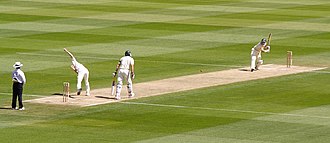
Pune is a great place for many sports. You can play cricket, athletics, basketball, badminton, field hockey, football, tennis, kabaddi, paragliding, kho-kho, wrestling, rowing, and chess. Important places for sports in Pune include the Chhatrapati Shivaji Stadium and the Royal Connaught Boat Club. The city also has skateparks and many famous clubs.
Pune has hosted big events like matches in the Cricket World Cup, the Pune International Marathon, and the National Games. There are teams in Pune for cricket, football, and basketball.
International relations
See also: List of twin towns and sister cities in India
Pune has friendly connections with cities around the world. Some of these cities are:
- San Jose, California, United States (since 1992)
- Vacoas-Phoenix, Mauritius
- Austin, Texas, United States (since 2018)
- Fairbanks, Alaska, United States
- Matteson, Illinois, United States
- Kawasaki, Japan
- Tromsø, Norway
Pune also has informal ties with:
Images
Related articles




This article is a child-friendly adaptation of the Wikipedia article on Pune, available under CC BY-SA 4.0.
Images from Wikimedia Commons. Tap any image to view credits and license.