 Safekipedia
Voiced uvular fricative
Adapted from Wikipedia · Adventurer experience
A voiced uvular fricative is a special sound that some languages use when people speak. This sound is made at the back of the mouth near a small part called the uvula.
The symbol that represents this sound in a special alphabet used by language experts is ⟨ʁ⟩. Sometimes, this sound is written simply as ⟨r⟩.
This kind of sound is part of a group called guttural R when it appears in European languages. Another similar sound, called a voiced uvular approximant, can also be used in place of the fricative.
More information about related sounds can be found in the article about the voiced velar fricative.
Features
The voiced uvular fricative is a special sound used in some languages. It is made by narrowing the airflow in the back of the mouth, which creates a rough, hissing sound. The back of the tongue is placed near a small piece of tissue in the back of the mouth called the uvula to make this sound. When this sound is produced, the voice box vibrates, giving it a soft quality. This sound is made only with air flowing out through the mouth, not the nose, and the airflow is directed straight down the middle of the tongue.
Occurrence
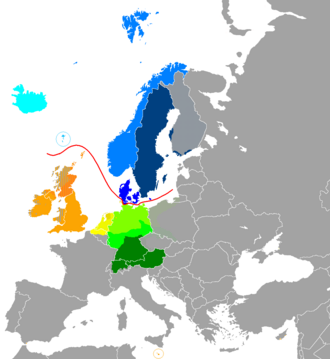
In Western Europe, a special way of saying "r" spread from northern French to several dialects in Basque, Catalan, Danish, Dutch, German, Judaeo-Spanish, Norwegian, Occitan, Portuguese, Swedish, some versions of Low Saxon, and Yiddish. Not all of these still use this sound today. In Brazilian Portuguese, the "r" sound is usually made in different ways, except in southern Brazil, where people often use this special "r" sound.
This special sound is also found in most Turkic languages, except for Turkish, and in Caucasian languages.
| Language | Word | IPA | Meaning | |
|---|---|---|---|---|
| Abkhaz | цыҕ / cëğ | [tsəʁ] | 'marten' | |
| Adyghe | тыгъэ / tëğa / تہغە | [təʁa]ⓘ | 'sun' | |
| Afrikaans | Parts of the former Cape Province | rooi | [ʁoːi̯] | 'red' |
| Albanian | Arbëresh Some Moresian accents | vëlla | [vʁa] | 'brother' |
| Aleut | Atkan dialect | chamĝul | [tʃɑmʁul] | 'to wash' |
| Arabic | Modern Standard | غرفة / ġurfa | [ˈʁʊrfɐ]ⓘ | 'room' |
| Archi | гъӀабос / ġabos | [ʁˤabos] | 'croak' | |
| Armenian | ղեկ / ġek | [ʁɛk]ⓘ | 'rudder' | |
| Asturian | gatu | [ˈʁat̪u]ⓘ | 'cat' | |
| Avar | тIагъур / thaġur / طاغۇر | [tʼaˈʁur] | 'cap' | |
| Azerbaijani | Southern dialects such as in Maragha, Malekan, Binab, Ajab shir and Leylan counties of East Azerbaijan, and Chaharburj, Miyandoab alongside Baruq in West Azerbaijan | yeralma / یئرآلما | [jeʁɑlma] | 'potato' |
| Bashkir | туғыҙ / tuğıð / توعئذ | [tuˈʁɤð]ⓘ | 'nine' | |
| Basque | Northern dialects | urre | [uʁe] | 'gold' |
| Chilcotin | relkɨsh | [ʁəlkɪʃ] | 'he walks' | |
| Danish | Standard | rød | [ʁ̞œ̠ð̠] | 'red' |
| Dutch | Belgian Limburg | rad | [ʁɑt] | 'wheel' |
| Central Netherlands | ||||
| East Flanders | ||||
| Northern Netherlands | ||||
| Randstad | ||||
| Southern Netherlands | ||||
| English | Dyfed | red | [ʁɛd] | 'red' |
| Gwynedd | ||||
| North-east Leinster | ||||
| Northumbrian | ||||
| Sierra Leonean | ||||
| French | rester | [ʁɛste]ⓘ | 'to stay' | |
| German | Standard | Rost | [ʁɔstʰ] | 'rust' |
| Lower Rhine | ||||
| Swabian | [ʁ̞oʃt] | |||
| Gondi | Hill-Maṛia | pār̥- | [paːʁ-] | 'to sing' |
| Hebrew | Modern | עוֹרֵב | [ʔoˈʁ̞ev] | 'crow' |
| Inuktitut | East Inuktitut dialect | marruuk | [mɑʁːuːk] | 'two' |
| Italian | Some speakers | raro | [ˈʁäːʁo] | 'rare' |
| Kabardian | бгъэ / bğa / بغە | [bʁa]ⓘ | 'eagle' | |
| Kabyle | ⴱⴻⵖ / bbeɣ / بغ | [bːəʁ] | 'to dive' | |
| Kazakh | саған / sağan / ساعان | [sɑˈʁɑn] | 'to you' | |
| Kyrgyz | жамгыр / camğır' / جامعىر | [dʒɑmˈʁɯr] | 'rain' | |
| Lakota | aǧúyapi | [aʁʊjapɪ] | 'bread' | |
| Luxembourgish | Parmesan | [ˈpʰɑʁməzaːn] | 'Parmesan' | |
| Malay | Kedah | ramai | [ʁamaj] | 'many' |
| Perak | Perak | [peʁɑk̚] | 'Perak' | |
| Malto | पोग़े | [poʁe] | 'smoke' | |
| Minangkabau | Kampar dialect | boghe | [boʁe] | 'rice' |
| Norwegian | Southern dialects | rar | [ʁ̞ɑːʁ̞] | 'strange' |
| Southwestern dialects | ||||
| Toba qom | Takshek dialect | Awogoyk | [awoʁojk] | 'moon' |
| Tundra Nenets | Some speakers | вара | [waʁa] | 'goose' |
| Ossetic | Iron | æгъгъæд / æğğæd | [ˈəʁːəd] | 'enough' |
| Portuguese | European | carro | [ˈkaʁu] | 'car' |
| Setubalense | ruralizar | [ʁuʁɐɫiˈzaʁ] | 'to ruralize' | |
| Fluminense | ardência | [ɐʁˈdẽsjə] | 'burning feeling' | |
| Sulista | arroz | [ɐˈʁos] | 'rice' | |
| Spanish | Puerto Rican | carro | [ˈkaʁo] | 'car' |
| As spoken in Asturias | gusano | [ʁ̞uˈsano] | 'worm' | |
| Swedish | Southern dialects | rör | [ʁɶʁ] | 'pipe(s)' |
| Tatar | яңгыр / yañğır / ياڭگئر | [jɒŋˈʁɯr] | 'rain' | |
| Turkmen | aɡyr / آغیٛر | [ɑʁɨɾ] | 'heavy' | |
| Tsez | агъи / aɣi | [ˈʔaʁi] | 'bird' | |
| Ubykh | [ʁa] | 'his' | ||
| Uyghur | ئۇيغۇر / Уйғур | [ʊjʁʊr] | 'Uyghur' | |
| Uzbek | ogʻir / оғир / اۉغیر | [ɒˈʁɨr] | 'heavy' | |
| Yakut | тоҕус / toğus | [toʁus] | 'nine' | |
| Yi | Ğņyņə | [ʁŋêŋĕ] | 'twenty' | |
| Yiddish | רעגן | [ʁɛɡŋ] | 'rain' | |
| Zhuang | roek | [ʁɔ̌k] | 'six' | |
Related articles



This article is a child-friendly adaptation of the Wikipedia article on Voiced uvular fricative, available under CC BY-SA 4.0.