 Safekipedia
Bodrum
Adapted from Wikipedia · Discoverer experience
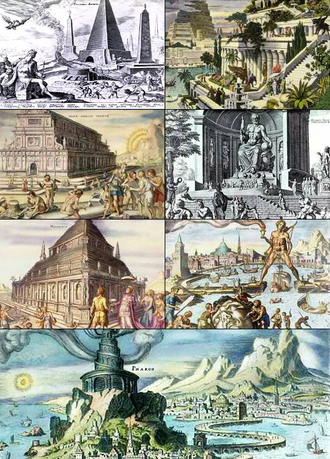
Bodrum is a lively town and district in Muğla Province, Turkey, located at the edge of the Gulf of Gökova. In ancient times, it was called Halicarnassus and was very important. One of the greatest wonders of the ancient world, the Mausoleum at Halicarnassus, once stood here. This grand tomb was built for Mausolus, a ruler of the area, by his wife Artemisia.
The town has a rich history. It was first settled by Dorian Greeks and later ruled by Persians. After the death of Alexander the Great, many different groups controlled the town, including Macedonians, Hellenistic rulers, and Romans. Although natural disasters and pirate attacks caused problems over time, the town remained important until later years.
Today, Bodrum is known for its beautiful beaches and tourism. Fishing and sponge diving used to be the main jobs, but now many people work in tourism, shops, and services. The town has airports, ferry services, and many buses and taxis to help people travel around.
Etymology
The name Bodrum comes from an old name called Petronium, linked to a big castle called St. Peter that was built a long time ago.
Long before that, the town was called Halicarnassus. This name might have come from an old language spoken in the area, meaning "fortress."
History
See also: Halicarnassus
Halicarnassus was an ancient Greek city located where modern Bodrum stands in Turkey. Founded by Dorian Greeks, the city was proud of its legendary founder, Anthes, a son of Poseidon.
Later, the city became part of the Persian Empire and was the capital of the region known as Caria. One of its most famous rulers was Mausolus, and after his death, a grand tomb called the Mausoleum was built for him. This tomb became one of the Seven Wonders of the Ancient World, and the word "mausoleum" comes from his name.
Over time, the city changed hands many times, ruled by leaders such as Alexander the Great, the Ptolemies, and later the Romans. Earthquakes and pirate attacks damaged much of the city. In the medieval period, Crusader Knights used parts of the Mausoleum to build Bodrum Castle, which still stands today.
In more recent times, Bodrum grew from a small fishing village into a popular town, especially after the 1950s.
Geography
Climate
Bodrum has a warm Mediterranean climate. Winters are mild and humid, with average temperatures around 15 °C (59 °F). Summers are very hot and sunny, with average temperatures around 34 °C (93 °F). The hottest temperature ever recorded there was 46.8 °C (116.2 °F) in July 2017.
Main sights
The Castle of St. Peter, also called Bodrum Castle, is one of the main attractions of the area. The castle was built by the Knights Hospitaller in the 15th century. Its walls include pieces from the ruins of the Mausoleum, which was used for building materials. The castle keeps its original design from the Knights' time and shows Gothic architecture. It is home to the Bodrum Museum of Underwater Archaeology, a museum started by the Turkish government in 1962 to display ancient shipwrecks found in the Aegean Sea. Since 2017, the castle has been under renovation, and only some parts are open to visitors.
The ruins of the Mausoleum at Halicarnassus are also a major sight in Bodrum. Built in the fourth century BC, the Mausoleum was a tomb made by Greek architects for Mausolus, a leader of the Persian Empire, and his sister-wife Artemisia II of Caria. It was one of the Seven Wonders of the Ancient World. By the twelfth century AD, the building had been mostly destroyed. Today, the ruins still draw many visitors from around the world. Plans are in place to turn the ruins into an open-air museum.
Besides the Bodrum Museum of Underwater Archaeology, there are other museums on the peninsula. The Zeki Müren Art Museum is dedicated to Turkish classical musician Zeki Müren. After his death, the house where he lived in Bodrum was turned into this museum by the Ministry of Culture and opened to the public on 8 June 2000. The Bodrum Maritime Museum focuses on protecting and displaying important items from the city's maritime history. The Bodrum City Museum is a smaller museum in the city center that shows the general history of the Bodrum peninsula.
-
.jpg)
The ruins of the [Mausoleum at Halicarnassus](/wiki/Mausoleum_at_Halicarnassus)
-
.jpg)
Entrance of Museum of Underwater Archaeology
Collection of [amphoras](/wiki/Amphora) in Museum of Underwater Archaeology
[Zeki Müren](/wiki/Zeki_Müren)'s statue at Zeki Müren Art Museum
Windmills of Bodrum
Demographics
Government
The district of Bodrum is one of 957 in Turkey. It is located in Muğla Province, which is part of the Aydin Subregion. This subregion is within the Aegean Region. Bodrum became part of the Ottoman Empire in 1871 and a district of Muğla Province in 1872. The Bodrum Municipality manages the entire Bodrum Peninsula, which has an area of 689 km2 and a coastline of 215 km. It is led by a mayor, four deputy mayors, and 18 directorates.
As the population of the Bodrum Peninsula grew, new town municipalities were created. These include Turgutreis, established in 1967, followed by Mumcular in 1972, Yalıkavak in 1989, and Gündoğan in 1992. In 1999, several villages were combined to form new towns, such as Ortakent-Yahşi and Göltürkbükü. The same year, municipalities like Gümüşlük, Konacık, and Bitez were also founded. After Muğla Province became a metropolitan municipality, these town municipalities were abolished, and all towns were brought together under the city of Bodrum. Since March 30, 2014, the entire peninsula has been governed as one municipality.
Neighbourhoods
There are 56 neighbourhoods in Bodrum District, including:
- Akçaalan
- Akyarlar
- Bahçelievler
- Bahçeyakası
- Bitez
- Çamarası
- Çamlık
- Çarşı
- Cevatşakir
- Çiftlik
- Çırkan
- Çömlekçi
- Cumhuriyet
- Dağbelen
- Dereköy
- Dirmil
- Eskiçeşme
- Farilya
- Geriş
- Gökpınar
- Gölbaşı
- Gölköy
- Gümbet
- Gümüşlük
- Gündoğan
- Gürece
- Güvercinlik
- İslamhaneleri
- Karabağ
- Karaova
- Kemer
- Kızılağaç
- Konacık
- Koyunbaba
- Küçükbük
- Kumbahçe
- Kumköy
- Mazıköy
- Mumcular
- Müskebi
- Peksimet
- Pınarlıbelen
- Sazköy
- Tepecik
- Tepecik Karaova
- Torba
- Turgutreis
- Türkbükü
- Türkkuyusu
- Umurca
- Yahşi
- Yakaköy
- Yalıkavak
- Yeniköy
- Yeniköy Karaova
- Yokuşbaşı
Economy
During the 20th century, Bodrum's economy mainly depended on fishing and sponge diving. Sponge diving became common in Bodrum after Koan and Cretan immigrants moved there in the early 1920s, following the population exchange between Greece and Turkey. At its peak between 1945 and 1965, about 150 boats were involved in sponge diving. However, sponge diseases, artificial sponge production, and a ban on sponge diving eventually brought this industry to an end.
Over time, tourism grew to become a major source of income for the local community. The many visitors helped boost Bodrum's shops and services. Leather goods, especially traditional woven sandals, are well-known products. Other popular souvenirs include tangerine-flavored Turkish delight, nazar amulets, and handicrafts.
Besides small shops, Bodrum has a few large shopping areas, such as Midtown and Oasis. There are also places for yachts and small ships, like Milta Bodrum Marina, D-Marin Turgutreis, and the award-winning Yalıkavak Marina.
The Carian Trail, which goes near Bodrum and the nearby Kızılağaç and Pedasa ruins, draws walkers from all over Turkey and beyond.
Culture
Traditional houses in Bodrum have simple, unique shapes and are made from local materials like stone, wood, clay, and cane. These houses often have white walls with blue details around doors and windows. The white paint helps keep the houses cool in hot weather and was also used to keep insects away. Blue is thought to protect against bad wishes, similar to beliefs in nearby regions.
Bodrum holds several special events each year. The Bodrum International Ballet Festival has taken place every summer since 2002. Since 2014, the city has also hosted the Bodrum International Biennial. Another yearly event is the Bodrum Baroque Music Festival.
Architecture
Transportation
Airports
Bodrum does not have its own civilian airport. The nearest airports are Milas–Bodrum Airport and Kos Island International Airport. Milas–Bodrum Airport is located about 36 kilometres northeast of Bodrum and offers both domestic and international flights. Kos Island International Airport is located in Greece, about 70 kilometres southwest of Bodrum, and can be reached by boat across the Aegean Sea.
Bus
The main bus station in Bodrum was moved in 2021 to a new facility in Torba, about 6 kilometres from the town center. This change was made to help reduce traffic jams during busy seasons. The old bus station still handles buses for nearby areas, but trips to other parts of Turkey now leave from the new station. The new station uses solar power and has charging units for electric cars, which was a first for bus stations in Turkey.
Most people in Bodrum use shared taxis called "dolmuş". These small buses show their routes on signs and leave only when they have enough passengers. There are also scheduled buses between towns on the Bodrum peninsula.
Port
Bodrum has a port with ferries to nearby ports and islands in both Turkey and Greece. The town has three large marinas where boats can dock, including one in the center of Bodrum.
Wildlife
Bodrum has lots of plants and trees, including forests that cover most of the area. You can find animals like wild boars, foxes, and special birds such as pygmy cormorants, Dalmatian pelants, and lesser kestrels. The area is also home to the Mediterranean monk seal, which is protected by law.
The forests in Bodrum can sometimes catch fire, and many of these fires are thought to start because of human activities. This can be a problem for the plants and animals that live there.
Notable people
Bodrum has been home to many interesting people throughout history. Some of these include:
- Herodotus, an ancient Greek historian
- Scylax of Caryanda, an ancient explorer
- Julian of Halicarnassus, a bishop from the early 6th century
- Mausolus and Artemisia II of Caria, rulers from ancient times
- Dionysius, an ancient Greek historian and teacher
- Turgut Reis, an admiral from the Ottoman times
- Emmanuel Zairis, a Greek painter
- Halikarnas Balıkçısı or Cevat Şakir Kabaağaçlı, a Turkish writer who lived in Bodrum for many years
- Neyzen Tevfik, a famous Turkish musician
- Zeki Müren, a well-known Turkish singer who also lived in Bodrum
- Janet Akyüz Mattei, a director of the American Association of Variable Star Observers (AAVSO) from 1973 to 2004
- Abdurrahman Nafiz Gürman, a military officer in the Ottoman and Turkish armies
- Zeynep Çamcı, a Turkish actress
Twin towns – sister cities
Bodrum has friendly connections with cities in different countries. These cities are called sister cities. Bodrum is connected with:
Images
Related articles




This article is a child-friendly adaptation of the Wikipedia article on Bodrum, available under CC BY-SA 4.0.
Images from Wikimedia Commons. Tap any image to view credits and license.