 Safekipedia
Brown bear
Adapted from Wikipedia · Discoverer experience
The brown bear (Ursus arctos) is a large bear native to Eurasia and North America. It is one of the biggest land animals that eat both plants and meat. Male brown bears are usually larger than females, and their fur can be many colors, from light cream to dark brown. Brown bears have strong muscles on their shoulders and big paws that help them dig in the dirt.
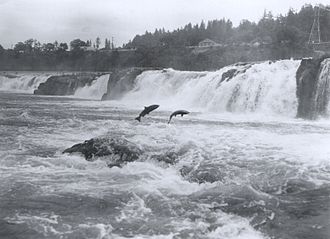
Brown bears live mainly in forests, often at high elevations. They eat many different things, but most of their food comes from plants. Sometimes they hunt small animals like insects and rodents, and sometimes large animals like moose. In coastal areas of Alaska, they especially like to eat salmon when the fish come close to shore to lay eggs. Brown bears usually live alone, except when they are raising their cubs or finding a mate. Females have one to three cubs, and the cubs stay with their mother for up to four and a half years.
Although brown bear numbers have gone down in some places, they are still common enough that scientists consider them to be not in immediate danger. However, some groups of brown bears, like the Himalayan brown bear and the Marsican brown bear, are in serious trouble because of hunting and loss of their homes. Brown bears are also famous and appear in many stories, artworks, and traditions around the world.
Etymology
The brown bear is sometimes called the bruin. This name comes from an old story called History of Reynard the Fox, translated by William Caxton. It started from a Dutch word meaning "brown".
The scientific name for the brown bear is Ursus arctos. This name comes from Latin, where ursus means "bear", and from Greek, where arktos also means "bear".
Evolution and taxonomy
Taxonomy and subspecies
Main article: Subspecies of brown bear
Carl Linnaeus first described the brown bear in 1758. Scientists have found it hard to agree on how many different types, or subspecies, of brown bears exist. Some studies using DNA found as few as five main groups, while others found nine. As of 2005, scientists generally recognized 15 different subspecies.
DNA studies show that, except for one group in the Kodiak Archipelago, brown bears in North America are mostly connected as one large population. Bears in different areas of the Alaska coast are more related to nearby grizzly bears than to brown bears far away.
Evolution
The brown bear is part of the bear family and evolved from an older bear species in Asia many millions of years ago. Fossils show that brown bears entered Europe and later North America. They are closely related to polar bears.
Hybrids
See also: Grizzly–black bear hybrid and Grizzly–polar bear hybrid
Sometimes, a brown bear and a polar bear can have offspring, called a hybrid. This has happened both in zoos and in the wild in the Arctic. Scientists have studied these hybrids and found that different bear species have mixed their genes over time.
Description
The brown bear is a very large bear that lives in many parts of the world. Male brown bears are usually much bigger than females. They can weigh anywhere from 80 to 600 kg, depending on where they live and the time of year. In spring, after waking up from hibernation, they weigh less because they haven't eaten much. By fall, they gain weight to get ready for their next hibernation.
Brown bears come in many colors, not just brown. Some have a mix of brown and cream-colored fur, especially on their backs. Their fur changes with the seasons, being thicker in winter and shorter in summer. They have strong jaws and big teeth, which help them eat many different foods. Brown bears also have large claws, which they use for digging and other tasks, though they are not as good at climbing trees as some other bears.
Distribution and habitat
Main article: Distribution of brown bears
Brown bears live in many different places, from sea level up to very high mountains. They like areas with some trees and open spaces where they can rest during the day. These bears used to live in many parts of Europe, Asia, Africa, and North America, but now they are gone from some areas and there are fewer of them in others. There are about 200,000 brown bears left in the world. The biggest groups are in Russia, the United States, and Canada. In North America, they live in Alaska, and some areas further south.
Even though brown bears are not in as many places as before, they are still considered safe by experts. However, some smaller groups of brown bears are in danger because of losing their homes, hunting, and other threats. Conservation efforts are helping in some places by protecting forests and helping people and bears coexist.
Behavior and life history
Brown bears are most active in the morning and early evening. They may stay active at any time, but those near humans often stay hidden at night. In areas far from people, many bears are active during the day, while younger bears stay busy all day. From spring to fall, a brown bear can double its weight, gaining up to 180 kg (400 lb) of fat to survive winter when it becomes less active. Though they don’t fully hibernate and can be easily woken, bears prefer to rest in protected spots during winter. These spots can be caves, tree roots, or hollow logs.
Brown bears have large brains for their size. One was seen using a rocky tool to scratch itself, though this is rare. They usually live alone but may gather at places with lots of food, like garbage dumps or salmon-filled rivers. Male bears are aggressive and avoid younger males. Females with cubs are very protective. Bears show dominance by facing forward and showing their teeth, while others respond by turning away.
Communication
Brown bears make many sounds, such as huffing, growling, and roaring. They also use facial expressions to show how they feel, like relaxed faces or aggressive stares.
Home ranges
Brown bears live in large areas but don’t mind sharing space with others unless there’s food or a mate involved. Males travel farther than females. In places with plenty of food, like coastal Alaska, home ranges can be small, but in areas with little food, they can be very large.
Reproduction
Brown bears mate from mid-May to early July. Females can mate with several males during this time. Females become ready to mate between ages four and eight, while males mate later. Females may mate with up to four males in one season. Females mate every few years, and during this time, they attract males with scent markings.
Males don’t help raise the young. Females give birth after a special process where the embryo waits to grow until winter. Cubs are born blind and tiny, weighing about 350 to 510 g (0.77 to 1.12 lb). They stay with their mother for about two and a half years, learning from her.
Dietary habits
Main article: Dietary biology of the brown bear
Brown bears eat many things, including plants like berries, grasses, and mushrooms. They can dig for tough foods like roots. In spring, they eat plants and old meat from winter. In summer and fall, they eat fruits and insects. Near coasts, they eat crabs and clams.
They also eat fish, especially salmon in places like Alaska. Bears gather at rivers to catch salmon, sometimes eating only the best parts and leaving the rest. Though they can hunt, they often just eat what’s available. They may eat small animals, birds, and even other bears.
When near humans, they might eat farm animals, crops, and garbage.
Relations with other predators
Brown bears are usually safe from other predators but may face challenges from big tigers in some areas. They often chase wolves away from their food. They are stronger than smaller bears and usually win when they meet.
Longevity and mortality
Brown bears can live a long time. Females in the wild can reproduce at 28 years, and the oldest known wild bear was nearly 37. In captivity, they can live even longer. Young cubs face risks like starvation and accidents.
Hibernation physiology
Studies show that brown bears change their body in ways that might help humans understand diseases related to not moving much.
Relations with humans
Attacks on humans
Main article: Bear attack
See also: Bear danger
Brown bears usually stay away from places where there is a lot of building or cities. They often avoid people and rarely attack when first seen. However, they can be unpredictable and might attack if they feel threatened or surprised. Mothers with cubs are more likely to attack, and they are responsible for many serious injuries or deaths. Because brown bears are very strong, even one bite or swipe can be very dangerous. When brown bears act violently, it usually lasts only a few minutes, but can continue longer if people fight back.
A study from 2019 looked at 664 reports of brown bear attacks between 2000 and 2015 in North America and Eurasia. These attacks caused 568 injuries and 95 deaths. In Russia, about 10 people are killed by brown bears each year, which is more than anywhere else. In Japan, a big brown bear named Kesagake caused a lot of trouble in 1915 in Tomamae, Hokkaido. It hurt three people and killed seven before it was stopped. Scientists found that bear spray works better than guns to stop a brown bear that is acting aggressively, stopping the bear 92% of the time compared to 67% for guns.
Bear hunting
Main article: Bear hunting
People have been hunting brown bears for thousands of years, from 10,300 to 9,300 years ago. They were hunted all over Europe, Asia, and North America by Native Americans and Europeans. Native Americans hunted bears mainly for food and survival, while Europeans often hunted them for sport or to control their numbers. In Europe, between the 1600s and 1700s, people offered rewards to those who killed brown bears, which almost made their numbers drop to very low levels. Protection laws helped save them in the 1900s, but hunting is still one reason why brown bear numbers went down in northern Europe.
The first known record of a European killing a grizzly bear was in 1691. When Europeans moved to western United States, they caused brown bear populations there to disappear in the 1800s and early 1900s. At first, people used spears or lassos to hunt bears, but when rifles were introduced in the mid-1800s, hunting became easier and more common. Bears were sometimes made to fight cattle, which often hurt or killed both animals. By the late 1800s, many places started offering rewards for killing bears, and farmers also clashed with bears, which helped their numbers drop. Grizzly bears finally got some protection from the US government in the 1920s. Today, brown bears can still be hunted in some American states, like Alaska, but hunters need a license, and killing mother bears with their cubs can lead to prison time.
Brown bear meat is eaten in some places and used in recipes like dumplings, hams, and stews. Indigenous people from James Bay (Eastern) Cree use bear meat in traditional dishes. In Asia and Romania, bear paws are considered a special food and have been part of traditional Chinese food since 500 BC. About 17 tons of brown bear meat are sold each year.
In captivity
Bears have been kept since 1,500 BC. As of 2017, there are over 700 brown bears in zoos and wildlife parks around the world. In small spaces, bears often seem lazy and spend a lot of time resting. When they move, they might pace back and forth, which is a sign of stress from being in a tiny space. Better enclosures and care from zoo workers have helped reduce this behavior.
Sometimes, very young brown bears are made to “dance” by being placed on hot metal, which makes them move when violin music plays. Bears are also kept in small spaces near restaurants to attract customers, and some privately owned bears don’t get enough food or space and can become sick or very fat.
Brown bears have been popular in circuses and shows for a very long time. In ancient Rome, they were used in fights with criminals or other animals. In the Middle Ages, they performed tricks like “dancing” or “sleeping on command” in streets. From the 1700s to 1800s, traveling circuses in Europe and Asia featured brown bears. They were easy to train because of their smarts and personalities. By 2009, brown bears were one of the most used animals in circuses.
Culture
Further information: Cultural depictions of bears
Bears appear often in stories, art, and traditions. In many cultures, the mother bear is a symbol of love and protection for her babies. Some of the oldest cave paintings show bears. In stories for children, brown bears are often shown as friendly and warm. For example, “The Brown Bear of Norway” is a Scottish tale about a girl who helps a prince turned into a bear. “Goldilocks and the Three Bears” features three brown bears, and “Snow White and Rose Red” has a prince changed into a brown bear. The book Brown Bear, Brown Bear, What Do You See? helps young children learn colors. Smokey Bear, a well-known symbol for the U.S. Forest Service, teaches people about preventing wildfires.
Native American cultures see brown bears as very important and sacred. The Denaa people believed that a bear’s spirit was strong, so they would cut off its paws after killing it and wait before eating its meat. Wearing bear claw necklaces was a sign of bravery and respect. In Haida culture, a story says that a marriage between a woman and a grizzly bear started the family lines of the Haida people.
Some ancient cultures may have worshiped bears, though this is not certain. The Romans made small bear carvings for baby burials. In Ancient Greek myths, bears were seen as similar to humans because they could stand up. Older stories often showed bears as slow or not very smart, which is not true to their real behavior.
In North America, brown bears are very popular and well-known. The death of a bear named Bear 148 in 2017 by a hunter caused many people to speak out against hunting for trophies. Russia often uses a bear to represent the country, even though it does not have an official national animal. Finland’s national animal is the brown bear. Montana’s state animal is the grizzly bear. California’s state animal is the California golden bear, even though it no longer exists. Madrid’s coat of arms shows a bear reaching for fruit on a strawberry tree. The Swiss city of Bern has a bear on its coat of arms, and many think the city’s name comes from the word for bear. The brown bear is also on the back of Croatia’s 5-kuna coin, made since 1993.
Images
Related articles



This article is a child-friendly adaptation of the Wikipedia article on Brown bear, available under CC BY-SA 4.0.
Images from Wikimedia Commons. Tap any image to view credits and license.