
Canton of Zug
The canton of Zug or canton of Zoug is one of the 26 cantons of Switzerland. It is located in central Switzerland and its capital is Zug. With an area of 239 km2 (92 sq mi), Zug is one of the smallest cantons in Switzerland. Unlike some other cantons, Zug is not divided into smaller districts but is made up of eleven municipalities. This makes it a unique and compact region in the heart of Switzerland.
History
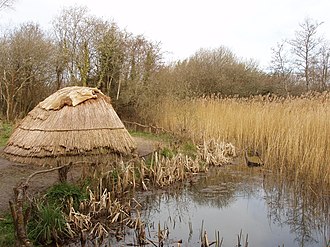
The history of the canton of Zug goes back a very long time. The first signs of people living there are from about 14,000 years ago, during the Paleolithic and Mesolithic times. Later, during the Neolithic and Bronze Age, many stilt house villages were built around Lake Zug. Some of these old houses are part of a special UNESCO World Heritage Site.
After the Romans came, they built homes and left behind coins and statues. When the Roman Empire ended, the area became part of the Frankish Empire. Churches were built, and the city of Zug was founded in the 1200s. One famous battle happened nearby at the Battle of Morgarten in 1315, where Swiss soldiers won against a powerful army.
Later, during a big change in government called the French Invasion, the people of Zug resisted. In 1803, Zug became its own canton again. Over time, the way people made decisions changed, and new rules were made.
Geography
The canton of Zug is found in the middle of Switzerland and covers an area of 239 square kilometres (92 square miles). It shares borders with Lucerne and Aargau to the west, Zürich to the north, and Schwyz to the east and south.
The land in Zug is mostly used for farming. Two large lakes, the Lake of Zug and Lake Ägeri, take up much of the space. Lake Ägeri lies entirely within Zug, while Lake Zug is shared with Lucerne and Schwyz. The area sits on a hilly plateau, with the highest point being the Höhronen at 1,229 metres. The river Lorze is the main river, flowing from Lake Ägeri through the canton and into Lake Zug before joining another river, the Reuss.
Zug has a varied landscape despite its small size. It includes flat areas around Lake Zug and hilly, mountainous regions to the east. Glaciers shaped the land long ago, leaving interesting traces in the mountains.
Political subdivisions
The canton of Zug is one single administrative area and has eleven towns. The local parliament, called the Kantonsrat, has 80 members. The government, called the Regierungsrat, has seven members. People choose these leaders through voting, and they each serve for four years. The two members who represent Zug in the Federal Ständerat and the three members in the Federal Nationalrat are also chosen by voting.
Municipalities
The eleven towns in the canton of Zug are: Zug, Oberägeri, Unterägeri, Menzingen, Baar, Cham, Hünenberg, Steinhausen, Risch, Walchwil, and Neuheim.
Demographics
The canton of Zug had a population of 128,794 people as of December 31, 2020. Around 26% of these people were from other countries, which is a big increase from 1990. Some places in Zug, like Walchwil, have even more people from other countries.
Most people in Zug follow the Roman Catholic faith, with a smaller group following the Protestant faith. People in Zug mainly speak a special kind of German called Swiss German.
| Nationality | Number | % total (foreigners) |
|---|---|---|
 Germany Germany | 6497 | 5.4 (20.5) |
 Italy Italy | 2957 | 2.5 (9.3) |
 United Kingdom United Kingdom | 2041 | 1.7 (6.5) |
 Portugal Portugal | 2004 | 1.7 (6.3) |
 Serbia Serbia | 1311 | 1.1 (4.1) |
 Kosovo Kosovo | 1296 | 1.1 (4.1) |
 Turkey Turkey | 1067 | 0.9 (3.4) |
 Bosnia and Herzegovina Bosnia and Herzegovina | 993 | 0.8 (3.1) |
 The Netherlands The Netherlands | 910 | 0.8 (2.9) |
 Austria Austria | 868 | 0.7 (2.7) |
 Croatia Croatia | 792 | 0.7 (2.5) |
 France France | 776 | 0.6 (2.4) |
 Macedonia Macedonia | 703 | 0.6 (2.2) |
 Sri Lanka Sri Lanka | 686 | 0.6 (2.2) |
 United States United States | 678 | 0.6 (2.1) |
 Russia Russia | 566 | 0.5 (1.8) |
| Historic Population Data | ||||
|---|---|---|---|---|
| Year | Total Population | Swiss | Non-Swiss | Population share of total country |
| 1850 | 17 461 | 17,355 | 106 | 0.7% |
| 1880 | 22,829 | 21,896 | 933 | 0.8% |
| 1900 | 25,093 | 25,093 | 2,004 | 0.8% |
| 1950 | 42,239 | 39,715 | 2,524 | 0.9% |
| 1970 | 67,996 | 57,276 | 10,720 | 1.1% |
| 2000 | 100,052 | 79,819 | 20,233 | 1.4% |
| 2020 | 128,794 | 1.5% | ||
Economy
The economy of Zug has changed a lot since 1910. Back then, people in the higher areas mostly took care of cows and had many high pastures called alps. There were factories making condensed milk in Cham and fruit trees around Zug, where they also made Kirsch and cider. Today, Zug has many businesses and jobs.
In 2014, most workers were in the service sector, like selling things in wholesale or working in schools. Some worked making computer and electronic products, while others were in construction or specialized trades. Zug is known for having low taxes and is friendly to businesses, so many companies have set up there. The town of Zug even started accepting digital money for small payments in 2016 and later allowed people to pay taxes with certain digital currencies. Because of this, Zug is called the "Crypto Valley," with many companies focused on digital money. Some of the biggest digital money companies are based there.
Transport
Zug is found on the north side of an important railway line that runs from north to south through the Alps. This line connects the Gotthard line to the city of Zürich. Zug is also a key spot where several railways meet, including the line between Zug and Lucerne.
The motorway A4 also passes through the canton, running west of Lake Zugersee.
Politics
Federal election results
^a FDP before 2009, FDP.The Liberals after 2009
^b "*" indicates that the party was not on the ballot in this canton.
^c Part of a coalition with the SP
^d Part of a coalition with the Green Party
| Percentage of the total vote per party in the canton in the Federal Elections 1971-2015 | ||||||||||||||
|---|---|---|---|---|---|---|---|---|---|---|---|---|---|---|
| Party | 1971 | 1975 | 1979 | 1983 | 1987 | 1991 | 1995 | 1999 | 2003 | 2007 | 2011 | 2015 | ||
| FDP.The Liberalsa | Classical liberalism | 0.0 | 23.1 | 32.8 | 33.6 | 34.1 | 32.9 | 22.5 | 25.7 | 22.4 | 21.5 | 19.2 | 17.6 | |
| CVP/PDC/PPD/PCD | Christian democracy | 0.0 | 39.4 | 34.1 | 39.9 | 34.2 | 34.2 | 27.1 | 26.4 | 22.9 | 23.3 | 24.3 | 26.4 | |
| SP/PS | Social democracy | 0.0 | 35.7 | 30.9 | 22.8 | 22.6 | 16.1 | 17.0 | 23.3 | 13.4 | 9.1 | 5.3 | 13.8 | |
| SVP/UDC | Swiss nationalism | 0.0 | * b | * | * | * | * | 15.2 | 21.4 | 27.7 | 29.1 | 28.3 | 30.5 | |
| GLP/PVL | Green liberalism | 0.0 | * | * | * | * | * | * | * | * | * | 6.8 | 3.6 | |
| GPS/PES | Green politics | 0.0 | * | * | * | * | * | * | * | * | 17.0 | 15.4 | 7.2 | |
| FGA | Feminism | 0.0 | * | * | * | 7.8 | 10.1 | 10.4 | c | 13.6 | d | d | d | |
| Other | 0.0 | 1.8 | 2.2 | 3.8 | 1.3 | 6.7 | 7.8 | 3.3 | * | * | 0.7 | 1.0 | ||
| Voter participation % | 0.0 | 58.9 | 55.9 | 53.3 | 46.4 | 51.1 | 44.4 | 53.5 | 52.6 | 53.7 | 55.1 | 53.7 | ||
Keep exploring




This article is a child-friendly adaptation of the Wikipedia article on Canton of Zug, available under CC BY-SA 4.0.
Images from Wikimedia Commons. Tap any image to view credits and license.