 Safekipedia
Eastern Hemisphere
Adapted from Wikipedia · Discoverer experience
The Eastern Hemisphere is one half of our planet Earth. It lies east of the prime meridian, an imaginary line that runs through Greenwich, London, and the United Kingdom. This line helps us measure time and location around the world. The Eastern Hemisphere ends at the antimeridian, another imaginary line crossing the wide Pacific Ocean.
This half of the Earth includes big land areas such as Afro-Eurasia, which combines Africa and Eurasia, as well as Australia. It is different from the Western Hemisphere, which mostly covers North and South America. Sometimes people call the Eastern Hemisphere the "Oriental Hemisphere."
In addition to its geographic meaning, the Eastern Hemisphere can also refer to cultures and political ideas linked to what Europeans historically called the "Old World." This term includes many of the world's oldest civilizations and natural wonders.
Geography
The Earth is shaped like a ball that is slightly wider around the middle, called an oblate spheroid. To divide the planet into two halves — the Eastern and Western Hemispheres — we use an imaginary line called the prime meridian, which passes through Greenwich, London, United Kingdom. This line is at 0° longitude. The opposite line, called the antimeridian, is at 180° longitude and helps separate east from west.
These lines were agreed upon in 1884 at a meeting in Washington, D.C.. They don’t perfectly match continents, so parts of Western Europe, West Africa, Oceania, and far northeastern Russia actually lie in the Western Hemisphere.
The center of the Eastern Hemisphere is in the Indian Ocean, near where the equator meets the 90th meridian east. The land in the Eastern Hemisphere is larger and includes many different kinds of places to live, called habitats.
Sovereign states in both hemispheres
Some countries are found in both the Eastern and Western Hemispheres. This happens when just a small part of the country is in one hemisphere, but most of it is in the other.
Here are some examples:
- Denmark has land called Greenland and the Faroe Islands in the Western Hemisphere, but its main land is in the Eastern Hemisphere.
- Norway has a small island called Jan Mayen in the Western Hemisphere, but most of its land is in the Eastern Hemisphere.
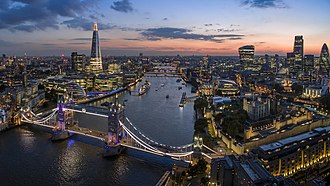
- United Kingdom passes through Greenwich in London. Most of the country and many of its islands are in the Western Hemisphere.
- The Netherlands has islands in the Western Hemisphere, but its main land is in the Eastern Hemisphere.
- France has parts in both hemispheres, including cities like Nantes and areas such as Guadeloupe, Martinique, and French Guiana.
- Spain has most of its land, including Madrid, in the Western Hemisphere.
- Algeria, Mali, Burkina Faso, Ghana, and Togo also have small parts in the Western Hemisphere.
Other countries along the 180th meridian include:
- Russia, with a small part in the Western Hemisphere.
- United States, with parts like the Aleutian Islands in the Western Hemisphere.
- Kiribati, which is in all four hemispheres.
- Tuvalu, Fiji, and New Zealand also have areas in both hemispheres.
Demographics
Most people, about 82%, live in the Eastern Hemisphere. The other 18% live in the Western Hemisphere.
Related articles



This article is a child-friendly adaptation of the Wikipedia article on Eastern Hemisphere, available under CC BY-SA 4.0.
Images from Wikimedia Commons. Tap any image to view credits and license.