
Eisenstadt
Eisenstadt is the capital city of the Austrian state of Burgenland. With a population of 16,118 as of 2025, it is the smallest state capital and the 38th-largest city in Austria. The city lies at the foot of the Leitha Mountains.
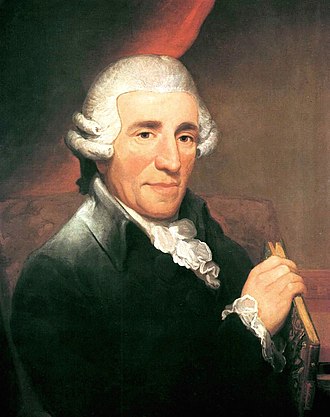
From 1648 to 1921, Eisenstadt was part of the Habsburg Empire's Kingdom of Hungary and was the home of the Hungarian noble family Eszterházy. During this time, the famous composer Joseph Haydn lived and worked in Eisenstadt as a court musician. After Burgenland became part of Austria in 1921, Eisenstadt became the province's capital in 1925. Today, it serves as an important center for public administration and is home to several institutes of higher education.
Geography
Eisenstadt is a city in Austria. It sits on a flat area near the Wulka River, right at the bottom of the Leitha Mountains. It is only about 12 kilometres, or 7 miles, away from the border with Hungary.
The city has three main parts: Eisenstadt-Stadt (the main city area), Kleinhöflein im Burgenland to the west, and St. Georgen am Leithagebirge to the east. There are also five smaller official areas, including parts of the northern and southern sections of the city. Some other places close by include Großhöflein, Müllendorf, Steinbrunn, Neufeld/Leitha, Ebenfurth, Hornstein, Wulkaprodersdorf, and Trausdorf/Wulka.
Names and etymology
See also: Names of Eisenstadt in different languages
The name of the city means "Iron City." It was first written down in the year 1118 as Castrum ferrum, which tells us that people in the area used to mine and trade iron a long time ago. The town was first mentioned in writing in 1264 as "minor Mortin." This matches the Hungarian name, Kismarton, which remembers Martin of Tours, the special saint of the main church there.
History
Eisenstadt has a long and rich history. People lived in the area as far back as the Hallstatt period, and later groups like the Celts, Romans, and Germanic tribes settled there. In the 11th century, it became part of the Kingdom of Hungary.
Over the centuries, Eisenstadt changed hands many times. It was ruled by different families and faced destruction from fires and invaders, including the Mongols and the Ottoman Empire. In 1648, the Esterházy family took control and began building beautiful structures, including Schloss Esterházy. The famous composer Joseph Haydn worked there as a music director.
In 1921, after World War I, Eisenstadt became part of Austria. During World War II, it was bombarded and later captured by Soviet troops. Since 1925, it has been the capital of the Austrian state of Burgenland.
Demographics
The people living in Eisenstadt have changed over time. In 1910, about 27% of the people spoke Hungarian, but by 1934, this dropped to about 5%. This happened because many Hungarian workers and officials moved back to Hungary.
Today, Eisenstadt has a small number of people who speak Hungarian or Croatian. As of 2025, the city had 16,118 people. The number of people who followed different religions also changed over the years.
| Year | Pop. | ±% |
|---|---|---|
| 1869 | 6,696 | — |
| 1880 | 7,035 | +5.1% |
| 1890 | 7,351 | +4.5% |
| 1900 | 7,387 | +0.5% |
| 1910 | 7,073 | −4.3% |
| 1923 | 6,796 | −3.9% |
| 1934 | 8,897 | +30.9% |
| 1939 | 9,005 | +1.2% |
| 1951 | 7,568 | −16.0% |
| 1961 | 9,315 | +23.1% |
| 1971 | 10,062 | +8.0% |
| 1981 | 10,102 | +0.4% |
| 1991 | 10,349 | +2.4% |
| 2001 | 11,334 | +9.5% |
| 2011 | 13,101 | +15.6% |
| 2021 | 15,220 | +16.2% |
| Source: Statistics Austria | ||
Politics
The current mayor of Eisenstadt is Thomas Steiner from the ÖVP.
The district council has seats from several parties: the Austrian People's Party has 17 seats, the Social Democratic Party of Austria has 8 seats, the Austrian Green Party has 3 seats, and the Freedom Party of Austria has 1 seat.
In 2021, the city’s budget was €42.256.600, and the total spending was €42.255.800.
Main sights
Eisenstadt has many interesting places to visit.
You can see Schloss Esterházy and its beautiful park, the Orangerie, and the Leopoldinentempel. Other sights include the Gloriette hunting lodge, the City Hall, the Cathedral Bastion, the Powder tower, and the old Martinkaserne barracks.
For religious buildings, there is the Bergkirche with Haydn’s tomb, the Eisenstadt Cathedral dedicated to Saint Martin, the Franziskanerkirche with the Esterházy family crypt, and the Krankenhaus Barmherzige Brüder with its church for Anthony of Padua. The Jewish quarter includes a private synagogue inside the Austrian Jewish Museum and both old and new Jewish cemeteries.
Museums in the area include the Haydnmuseum dedicated to Joseph Haydn, the Landesmuseum, the Austrian Jewish Museum, the Diözesanmuseum, and the Feuerwehrmuseum.
Education
Eisenstadt is home to several important schools. There is a university of applied sciences called FH Burgenland, a college of education named PH Burgenland, and a music school known as Joseph-Haydn-Privathochschule Burgenland.
Transport
The community had a station on the Pannonia Railway.
Culture
Eisenstadt used to hold special events like a festival for Joseph Haydn called the Haydn Festspiele, a wine festival named Fest der 1000 Weine, and a sports tournament called the Austrian Open, which was part of the World Athletics Continental Tour.
Twin towns – sister cities
See also: List of twin towns and sister cities in Austria
Eisenstadt has friendly partnerships with cities in other countries. These partnerships began in different years:
- Bad Kissingen in Bavaria, Germany, since 1978
- Colmar in Haut-Rhin and Grand Est, France, since 1983
- Sanuki in Japan, since 1993
- Sopron in Hungary, since 2002
Notable people
Some well-known people who were born in or lived in Eisenstadt include leaders, artists, and thinkers from many fields.
Natives
Many famous individuals grew up in Eisenstadt. These include important princes, musicians, writers, and scientists who made their mark in history.
Sport
Eisenstadt has also been home to several athletes, particularly in football. Some of these players have represented their countries in international competitions.
Other residents
Eisenstadt has attracted many notable figures over the years. Musicians, writers, and religious leaders have all called this city home at various times.
As a surname
The name "Eisenstadt" has become a family name for many people around the world. This surname and its variations have been carried by photographers, sociologists, and other influential figures in many countries.
Pictures
Keep exploring


This article is a child-friendly adaptation of the Wikipedia article on Eisenstadt, available under CC BY-SA 4.0.
Images from Wikimedia Commons. Tap any image to view credits and license.