
Fall of the Berlin Wall
The Berlin Wall fell on 9 November 1989 during the Peaceful Revolution. This event marked the beginning of tearing down the Iron Curtain, as rules that kept people from moving between East Berlin and other areas were ignored and stopped. Parts of the wall were broken through, and plans were made to tear it down the next June.
This was one of many events that led to the fall of communism in Central and Eastern Europe. Soon after, the border between the two parts of Germany also came down. The end of the Cold War was announced at the Malta Summit in early December, and Germany became one country again in October of the next year. The fall of the Berlin Wall was a symbol of big changes that happened in the world.
Background
Opening of the Iron Curtain
Further information: Pan-European Picnic and Removal of Hungary's border fence with Austria
The opening of the Iron Curtain between Austria and Hungary at the Pan-European Picnic on 19 August 1989 started a peaceful series of events. Soon after, many East Germans traveled to Hungary. The leaders of East Germany did not block their borders, and this marked the beginning of the end for the group of countries known as the Eastern Bloc.
Protection of the wall
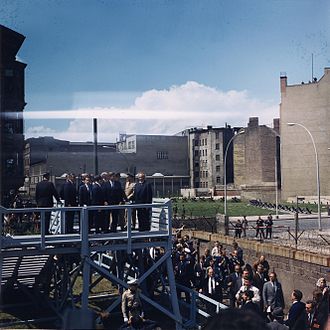
The Berlin Wall had two walls, each 4 metres tall and stretching for 155 kilometres. Between them was a guarded area called the death strip, which had watchtowers and was dangerous to cross.
Political changes in East Germany
On 18 October 1989, Erich Honecker, the leader of East Germany, stepped down. Egon Krenz took his place but many people were still unhappy. Protests grew, and Krenz tried to make changes, but trust in the government was low.
New East German immigration policy
On 8 November 1989, East Germany planned new rules to allow people to travel more freely. By 9 November, they announced that East Germans could visit West Germany more easily. This announcement led to many people gathering at the Berlin Wall, hoping to cross.
Events
The Berlin Wall fell on November 9, 1989. During a news meeting, Günter Schabowski, a leader in East Berlin, announced that East Germans could now travel freely to the West. However, he was not fully prepared for this announcement and it was misunderstood by many people.
The news spread quickly. People in East Berlin gathered at the Wall, demanding to be let through. The guards were unsure what to do. Eventually, one commander decided to open the gates. Crowds from both sides of the Wall celebrated together.
Before this event, many people in East Germany had been peacefully protesting for change. They met at a church and held quiet marches with candles, despite facing threats and attacks.
After the Wall opened, people began tearing down pieces of it as souvenirs. New border crossings were announced, and crowds cheered as bulldozers removed parts of the Wall. The official demolition of the Wall started in June 1990 and was completed by 1994.
The fall of the Wall was an important step toward reuniting Germany, which happened officially on October 3, 1990. Some leaders in other countries were concerned about a unified Germany, but the event marked a new beginning for many people.
Legacy
Celebrations and anniversaries
Many people celebrated the fall of the Berlin Wall with concerts and special events. On 25 December 1989, a famous musician gave a concert in Berlin where the word "Joy" was changed to "Freedom" in a song. On New Year's Eve, another performer stood on part of the Wall and sang to a huge crowd.
Over the years, people have talked about whether 9 November should be a special holiday in Germany. This date is important for many reasons, but some people remember sad events that happened on this day in history.
10th anniversary celebrations
In 1999, people marked ten years since the Wall fell with a concert and fireworks at the Brandenburg Gate. A famous cellist played music, and a rock band performed a song called "Wind of Change."
20th anniversary celebrations
In 2009, Berlin held a big celebration for the 20th anniversary. Over a thousand tall, colorful tiles were arranged to look like dominoes and then knocked down in front of the Brandenburg Gate. People from all over the world joined in the festivities.
30th anniversary celebrations
In 2019, Berlin planned special events from 4 to 10 November to remember the 30th anniversary of the Wall falling.
Polling
Some people still think about the Wall. In different years, polls have shown that small numbers of people in both West and East Germany wished the Wall was still there. Most people, however, are happy that the Wall fell.
Pictures
Keep exploring



This article is a child-friendly adaptation of the Wikipedia article on Fall of the Berlin Wall, available under CC BY-SA 4.0.
Images from Wikimedia Commons. Tap any image to view credits and license.