 Safekipedia
Fortification
Adapted from Wikipedia · Discoverer experience
A fortification (also called a fort, fortress, fastness, or stronghold) is a military construction designed for the defense of territories in warfare, and is used to establish rule in a region during peacetime. The term comes from the Latin words for "strong" and "to make."
From very early times, defensive walls have helped cities survive through invasion and conquest. Some of the first small fortified cities were in the Indus Valley Civilization. In ancient Greece, large stone walls were built to protect places like Mycenae. These early forts acted as watch towers to guard important roads and borders.
The building of forts has taken many forms over time. Castles became special kinds of forts that were also homes for monarchs and nobles. As new weapons like cannons and explosive shells were invented, the design of forts changed. Today, the way we build defenses has evolved because of modern warfare.
History
Early uses
Defensive fences were used long before writing existed to protect people and animals from dangerous animals. Walls have been important for cities since very early times.
Some of the oldest known fortified places include Amnya Fort in Siberia and Solnitsata in Bulgaria, which had tall stone walls. Uruk in ancient Sumer and cities in ancient Egypt also had walls for protection. Many early forts were made from mud brick.
Bronze Age Europe
During the Bronze Age, some places in Malta began to have walls around them. Sparta and Rome chose not to have walls for a long time, relying instead on their armies for defense. In Greece, large stone walls were built, like the famous walls of Mycenae. Athens built long stone walls to their seaport at Piraeus.
In Central Europe, the Celts built large fortified settlements called oppida. One example is the Oppidum of Manching, which had walls over 7 kilometers long and housed thousands of people.
Bronze and Iron Age Near East
In Israel and the Near East, special walls called casemate walls were used. These had inner and outer walls with spaces in between that could be used for storage or filled with earth to make them stronger. These walls were common from the Middle Bronze Age to the Iron Age.
Ancient Rome
The Romans built strong stone walls around their cities. Famous examples include the Aurelian Walls of Rome and the Theodosian Walls of Constantinople. Hadrian’s Wall was built across northern England.
Indian subcontinent
Forts have been built in the Indian subcontinent from very early times. The Indus Valley Civilization had fortified towns. Many forts were built during different periods, especially by the Maratha Empire. Notable forts include the Red Fort in Delhi and Agra, and Chittor Fort in Rajasthan.
China
China built large earth walls since the Shang dynasty. The Great Wall of China began in the Qin dynasty and was expanded during the Ming dynasty. Chinese cities like Hangzhou and Xi'an also had defensive walls.
North America
In the United States, many frontier forts were built for defense against attacks. Examples include Fort Nelson in Kentucky and Fort Buenaventura in Utah.
Philippines
During Spanish rule, many forts were built in the Philippines. Intramuros in Manila was a walled city with many important buildings. Other forts include those in Cebu and Zamboanga City.
Pre-Islamic Arabia
In Arabia during Muhammad’s time, tribes used fortifications. In the Battle of the Trench, defenders dug a trench to protect Medina. During the Siege of Ta’if, attacks were made on a fortress.
Islamic world
Further information: Caravanserai, Kasbah, Ribat, and Qal'a
Africa
The city of Kerma in Nubia had fortified walls. The walls of Benin are among the longest man-made structures. In Africa, forts and walled cities were built from the Senegal River to the Niger River. In Southern Africa, places like Mapungubwe and Great Zimbabwe had walls.
Medieval Europe
Roman forts and hill forts were the early forms of castles in Europe. From the 12th century, many new towns were founded with walls for protection. Cities in eastern Europe were often founded for defense.
Development after introduction of firearms
When cannons were introduced, older walls were no longer strong enough. New forts were built with lower walls and ditches to protect against cannon fire. Star-shaped forts with bastions were developed to cover all approaches.
19th century
In the 19th century, new types of forts were built with rings of forts around cities to keep enemies far away. Explosive shells made older star forts weaker, so new polygonal forts with deep ditches were built for better protection.
20th and 21st centuries
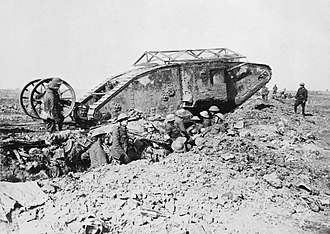
Modern warfare made large permanent forts less useful. Underground bunkers became important for protection. Field fortifications with earthworks and trenches became common. Mobile defenses and airpower changed how wars were fought. Missile silos and submarines became new types of defenses. Airfields have special protections for aircraft and fuel storage.
Forts
In modern times, the word "fort" can mean a special area set aside for military use. These areas might not have any walls or defenses at all, but they can include buildings for soldiers, doctors, or other important work.
Sometimes, small forts are built for short-term use. In cities, people might strengthen houses or other buildings to protect themselves. In open areas, forts can be made from logs, bags filled with sand, or special baskets filled with rocks. These small forts are usually used in smaller fights, like when armies are trying to keep control in a place with not too many big weapons.
Prisons and others
Some special buildings, like prisons and concentration camps, use strong walls to keep people inside instead of keeping enemies outside. These places are discussed in other articles because they are usually not regular military forts. However, some forts and camps have been used as prisons, like Theresienstadt, Guantanamo Bay detention camp, and the Tower of London.
Field fortifications
Main article: Trench warfare
Field fortifications are special defenses built quickly in areas where armies are fighting. These can include trenches, small walls, or other barriers to protect soldiers and make it harder for the enemy to attack. Trench warfare is a type of battle where soldiers dig in and fight from these defensive positions.
Images
Related articles



This article is a child-friendly adaptation of the Wikipedia article on Fortification, available under CC BY-SA 4.0.
Images from Wikimedia Commons. Tap any image to view credits and license.