 Safekipedia
Galactic astronomy
Adapted from Wikipedia · Discoverer experience
Galactic astronomy is the study of the Milky Way galaxy and everything inside it. Unlike extragalactic astronomy, which looks at objects outside our galaxy, galactic astronomy focuses only on our own galaxy and its features.
The Milky Way is where our Solar System lives, and it is the galaxy we know the most about. However, some parts of it are hard to see because of dark areas filled with cosmic dust. In the 20th century, new ways of looking at the sky using radio astronomy, infrared astronomy, and submillimetre astronomy helped scientists map the gas and dust in the Milky Way for the very first time. This has allowed us to learn much more about our home galaxy.
Subcategories
Astronomers use different categories to study the Milky Way galaxy. These categories help scientists understand where elements are found, the shape of the galaxy, how it formed, and more.
Some key areas of study include the center and bulge of the Milky Way, its disk and halo, and the movement of stars. Scientists also look at star clusters, nearby stars, and the galaxy's structure, such as its spiral arms.
Stellar populations
Galactic astronomy is the study of our own galaxy, the Milky Way, and everything inside it. This is different from studying galaxies that are far away from us.
There are special groups of stars called star clusters. Two main types are globular clusters and open clusters.
Interstellar medium
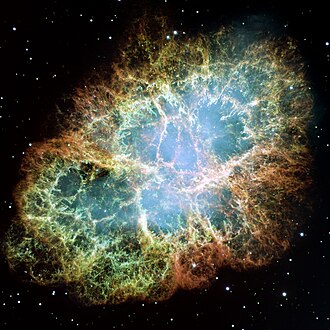
The interstellar medium is the area between stars in our galaxy. It includes spaces like interplanetary space, which is between planets in our solar system, and interstellar space, which is between stars in the Milky Way. There is also intergalactic space, which lies between entire galaxies.
This medium contains various materials such as dust and gas spread throughout these spaces.
Related articles


This article is a child-friendly adaptation of the Wikipedia article on Galactic astronomy, available under CC BY-SA 4.0.
Images from Wikimedia Commons. Tap any image to view credits and license.