
Gazpacho
Gazpacho is a cold soup made from raw, blended vegetables. It comes from the southern parts of the Iberian Peninsula and is very popular in Spain and Portugal, especially during the hot summer months because it is refreshing and cool.
While there are many different recipes that use the name "gazpacho," such as gazpacho manchego, the most common one is simply called gazpacho. There are also other similar dishes, like ajoblanco, salmorejo, and porra antequerana, which is more like a bread soup.
History
Gazpacho has many different stories about where it began. One story says that a simple soup made from bread, olive oil, water, vinegar, peas, and garlic came to Spain with the Romans. The name "gazpacho" might have started from a Latin word linked to a type of bread used in ancient Rome. In Spain, especially in places like Córdoba, Seville, and Granada, this soup became part of local cooking. It used stale bread, garlic, olive oil, salt, and vinegar, and was similar to another dish called ajoblanco.
In the 1800s, red gazpacho was invented when tomatoes were added. This version became popular around the world and is the one most people know today. Today, there are many new kinds of gazpacho that use ingredients like avocados, cucumbers, parsley, strawberries, watermelon, grapes, meat stock, and seafood instead of tomatoes and bread.
Ingredients and preparation
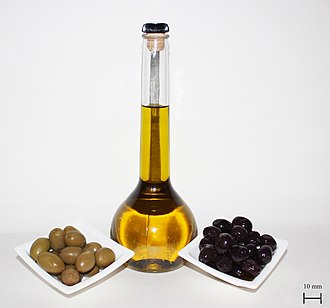
Gazpacho is made with simple ingredients like stale bread, tomatoes, cucumbers, bell peppers, garlic, olive oil, wine vinegar, water, and salt. In some northern recipes, you might also find cumin or smoked sweet paprika called pimentón.
Traditionally, gazpacho was made by pounding the vegetables in a mortar with a pestle. This method keeps the soup cool and gives it a special texture. First, garlic cloves are pounded with a little soaked bread, olive oil, and salt to make a paste. Then, ripe tomatoes and vinegar are added. Before refrigerators, gazpacho was left in an unglazed earthenware pot to cool by evaporation, with a bit of water added.
Gazpacho can be served plain or with garnishes like hard-boiled eggs, chopped ham, chopped almonds, mint, orange slices, or finely chopped green bell peppers, onions, tomatoes, or cucumbers. In Extremadura, local ham is added directly to the soup and called gazpacho extremeño. In Andalusia, gazpacho is usually slightly chilled but not iced.
Variations
The ingredients, texture, and thickness of gazpacho can change depending on where it is made and who is cooking it.
Similar cold soups like arjamolho in Portugal, porra antequerana, and ajoblanco are also popular in Andalusia, though not as common as gazpacho. Gazpacho and salmorejo are quite alike because they are both cold soups with tomatoes, but they are made differently. Gazpacho is a soup, while salmorejo is a creamy mixture. Both use tomatoes, olive oil, bread, and garlic, but gazpacho can also include cucumber, peppers, and vinegar.
Gazpacho manchego is not a cold vegetable soup; it is actually a hot meat stew.
In Spain
The original gazpacho recipe uses bread, water, vinegar, oil, and salt, and it dates back to Roman times in the Iberian Peninsula. Each central and southern region in Spain has its own version. Gazpacho started as a simple food for peasants and shepherds. There are many types of gazpacho, and some people try to group them by color: red (with tomatoes), white (without tomatoes but with dried fruits), and green (white with spices). All types share basic ingredients like garlic paste, bread, olive oil, vinegar, and salt. Sometimes, red fruits like strawberries and melon are added to make gazpacho a little sweeter. Gazpacho can be served as a starter, a main dish, or as a tapa.
Arranque roteño
A special kind of gazpacho comes from the town of Rota in the province of Cádiz. During dry times, there wasn’t enough water to make regular gazpacho, so people created arranque. It has the same ingredients as gazpacho but uses less water and bread, making it more like a creamy dip. Some people add more bread to make it thick enough to use as a spread.
Extremaduran variations
In Extremadura, gazpacho is made as a thick purée called cojondongo, or cojondongo del gañán. It is made from breadcrumbs, garlic, oil, and vinegar, and then topped with chopped onions, tomato, and peppers.
La Mancha variations
Gazpacho manchego comes from the east part of La Mancha, in Albacete and nearby places, and is also enjoyed in other parts of central and southwest Spain.
It is a hot meat stew with small game animals or birds like rabbit, hare, quail, or pigeon, along with flatbread. It may also include garlic, tomatoes, and mushrooms. The stew is cooked in a large pot and served hot. Another well-known dish from La Mancha is gazpacho de pastor or galiano.
Some other hot meat or fish dishes from different areas are also called gazpacho, like gazpacho jumillano, gazpacho de Yecla, and gazpacho de Requena.
Castilian variations
Gazpacho is often enjoyed during very hot and dry summers in Castilla y León. In La Moraña, a part of the province of Ávila, the gazpacho has big pieces of vegetables floating in a watery soup.
Keep exploring




This article is a child-friendly adaptation of the Wikipedia article on Gazpacho, available under CC BY-SA 4.0.
Images from Wikimedia Commons. Tap any image to view credits and license.