
Luiz Inácio Lula da Silva
Luiz Inácio Lula da Silva, known simply as Lula, is a Brazilian politician who has served as the president of Brazil. He was born on 27 October 1945 in Pernambuco and grew up in a poor family. Lula quit school after the second grade and started working as a metalworker when he was a teenager.
Lula became an important leader for workers' rights and helped start the Workers' Party in 1980. He ran for president several times before finally winning in 2002. During his first time as president from 2003 to 2011, he created programs that helped many Brazilians live better lives. He was very popular and left office with an approval rating of 80%.
Lula faced some legal troubles and spent time in prison, but his convictions were later overturned. In 2022, he ran for president again and won, becoming the oldest person to be sworn in as Brazil's president at the age of 77. Since 2023, he has been working on new reforms to help Brazil's economy and environment.
Early life
Luiz Inácio da Silva was born on 27 October 1945 in Caetés, a small place near Recife, the capital of Pernambuco, a state in the Northeast of Brazil. He was one of eight children in a family of farmers. His family moved to São Paulo when he was seven. They found that his father had started a new family there.
Lula grew up in a small room behind a bar. He didn’t get much schooling and had to work from a very young age. He later added the nickname “Lula” to his name.
Personal life
Lula has been married three times and has had relationships that led to children. His first wife, Maria de Lourdes Ribeiro, passed away in 1971. In 1974, he had a daughter with Miriam Cordeiro, and later that year married Marisa Letícia Rocco Casa, with whom he had three sons and also adopted her child from a previous marriage. Marisa passed away in 2017. Later, he met and married Rosângela da Silva, known as Janja, in 2022.
Lula is a Catholic and supports the football club SC Corinthians Paulista.
Education and work
Lula did not have much schooling. He stopped going to school after the second grade and began working at the age of eight, selling goods on the street. By the time he was twelve, he also shined shoes for people.
In 1960, when he was fourteen, Lula got his first formal job in a warehouse. Soon after, in 1961, he started learning to work with metal machines in a factory that made screws. This job helped him see how important it was for workers to stick together. Later, he worked at a bigger metal company called Villares Metals S.A from 1966 to 1980. During this time, he got involved in helping workers and took on many roles in the union.
Union career
Lula was inspired by his brother, who was part of a political group, to join the workers' movement. He worked at a metal factory and became leader of the metalworkers' union in the cities of São Bernardo do Campo and Diadema. These cities are where many car factories, like Ford, Volkswagen, Toyota, and Mercedes-Benz, are located.
During the late 1970s, when Brazil was ruled by the military, Lula helped plan big strikes. The government said these strikes were not allowed, and Lula was put in jail for a month. After the military government ended, he received a special pension for this.
Political career
On 10 February 1980, a group of academics and union leaders, including Lula, started the Workers' Party, a left-wing group with progressive ideas. In 1983, he helped create the Central Única dos Trabalhadores, a trade union group.
Elections
Lula first tried to become a leader in 1982 for the state of São Paulo, but he did not win. In 1986, he got a job in the National Congress with many votes.
In 1989, Lula tried to become president. Another person, Fernando Collor de Mello, won instead. Lula tried again in the next two elections but did not win. In 2002, Lula won and became the country’s first leftist president after the military dictatorship in Brazil. He won again in 2006.
In 2018, Lula could not run for president because of a legal problem. Another person, Fernando Haddad, ran instead but did not win.
Electoral history
| Year | Election | Party | Office | Coalition | Partners | Party | Votes | Percent | Result | ||
|---|---|---|---|---|---|---|---|---|---|---|---|
| 1982 | State Elections of São Paulo | PT | Governor | —N/a | Hélio Bicudo | PT | 1,144,648 | 10.77% | Not elected | ||
| 1986 | Parliamentary Elections | Federal Deputy | —N/a | 651,763 | 4.22% | Elected | |||||
| 1989 | Presidential election | President | Popular Brazil Front (PT, PSB, PCdoB) | José Paulo Bisol | PSB | 11,622,321 | 17.49% | Runoff | |||
| 31,075,803 | 46.97% | Not elected | |||||||||
| 1994 | Presidential election | Brazilian Popular Front for Citizenship (PT, PSB, PPS, PV, PCdoB, PCB, PSTU) | Aloizio Mercadante | PT | 17,122,127 | 27.04% | Not elected | ||||
| 1998 | Presidential election | Union of the People Change Brazil (PT, PDT, PSB, PCdoB, PCB) | Leonel Brizola | PDT | 21,475,211 | 31.71% | Not elected | ||||
| 2002 | Presidential election | Lula President (PT, PL, PCdoB, PMN, PCB) | José Alencar | PL | 39,455,233 | 46.44% | Runoff | ||||
| 52,793,364 | 61.27% | Elected | |||||||||
| 2006 | Presidential election | The Strength of the People (PT, PRB, PCdoB) | José Alencar | Republicanos | 46,662,365 | 48.60% | Runoff | ||||
| 58,295,042 | 60.83% | Elected | |||||||||
| 2022 | Presidential election | Brazil of Hope (PT, PCdoB, PV, PSOL, REDE, PSB, Solidariedade, Avante, Agir, PROS) | Geraldo Alckmin | PSB | 57,259,504 | 48.43% | Runoff | ||||
| 60,345,999 | 50.90% | Elected | |||||||||
First presidency (2003–2011)
Lula served two terms as president of Brazil from 2003 to 2011. During his time in office, he talked about feeling a big responsibility to prove he could lead well, especially because he came from a simple background. He wanted to show that ordinary people and those with less education could also govern successfully.
Many of the changes Lula planned for education and social programs were started but not fully carried out. Some people in his party disagreed with his more moderate approaches and left to form new groups. He worked with older, traditional leaders in politics, which disappointed some supporters.
Lula started several programs to help schools and students. He provided free meals to millions of children and tried to make education free for students who needed it most. He also wanted to make sure every child could go to school, but this didn’t work perfectly everywhere.
One of Lula’s biggest goals was to help end hunger in Brazil. He created programs to support poor families and give them help to improve their lives. Even though some of these programs started slowly, they did help reduce hunger and poor nutrition in the country. He also began big projects to build homes and improve living conditions in areas where people lived in tough conditions.
Lula’s time as president coincided with a period when Brazil’s economy grew strongly because global prices for things like soy, coffee, and iron ore went up. This helped Brazil pay off debts early and support many social programs. However, there were also problems with corruption and delays in big infrastructure projects.
Lula worked to protect forests and wildlife, though not all his efforts succeeded. He also made efforts to build stronger relationships with other countries around the world, supporting peace and development in many places.
Corruption scandals and controversy
See also: List of scandals in Brazil
Lula faced many questions about his time in office. One big question was about money and voting. Some people said he knew about wrong things that happened but he said he did not.
Some of the people who worked for him were found to have done wrong things. One of them was a leader in his party who had to go to jail for a long time.
People also said that Lula used friends who were on the side of the government to help him stay in power. He also tried to make new rules about movies and TV, but these rules did not work.
Lula was also asked about a man who was wanted for hurting people in another country. Lula decided not to send this man back to face those charges.
Later, Lula and some of his team were asked about money that may have been paid to help pass certain laws. A judge said there was not enough proof that Lula did anything wrong.
In 2014, Brazil started looking into a big problem with money at an oil company. This led to many people being asked about what they knew. Lula was one of them. Some said he helped get money for his friends, but Lula said this was not true and that he was being treated unfairly.
Lula was found to have taken money to help fix his house, and was told to spend time in jail. He said this was not fair and that he was being treated this way because he wanted to be president again.
Later, a court said that the judge who made the decision may not have been fair, and so Lula was let out of jail. The court also said that the cases against Lula should be looked at again in a different place.
Between terms (2011–2023)
Health
In October 2011, it was found that Lula had a growth in his voice box that needed treatment. He received medical care and announced he was better by March 2012.
In January 2021, Lula tested positive for a sickness that made many people very ill, but he got better without needing to stay in a hospital. In March 2021, he received a medicine to help protect him from getting very sick again. In October 2023, Lula had surgery to help with pain in his hip and also had a small operation to improve how his eyelids looked.
2018 presidential campaign
In 2017, Lula said he would try to become president again in the election of 2018. He traveled with many supporters through different parts of Brazil. Even though he was in prison in April 2018, his party still let him be their candidate for president.
In August 2018, Lula’s name was taken off the list of candidates by the group that decides who can run for president in Brazil. Because of this, Fernando Haddad became the candidate instead, and Lula supported him.
Second presidency (2023–present)
2022 election
Lula decided to run for a third term as president in the 2022 election, facing the current president, Jair Bolsonaro. In the first round of voting, Lula came in first with 48% of the votes, moving to a second round against Bolsonaro, who got 43%. In the second round, Lula won with 50.89% of the votes, the closest race in Brazil’s history. He was sworn in on January 1, 2023, becoming the first president elected three times and the oldest president at the time of taking office.
Tenure
Lula focused on rebuilding the country after an economic crisis, supporting democracy, peace, and economic growth. He aimed to reduce poverty, improve education, and create a national culture system. He also planned to expand housing programs.
Foreign policy
Lula met with leaders from China, Cuba, Iran, Nicaragua, Russia, Saudi Arabia, and others to strengthen Brazil’s international relationships. He discussed many topics, including trade, peace, and cooperation.
Economy
Lula brought back a program to help poor families, known as Bolsa Família, which was weakened under Bolsonaro. He also announced big plans to invest in infrastructure, including homes, energy, and roads. His goal was to help the economy grow and fight hunger by creating food banks and supporting local farms.
Environment
Lula promised to stop illegal logging and reduce deforestation in the Amazon. His plans included creating a sustainable economy in the region and protecting indigenous lands. However, some of his actions, like offering land for oil extraction, caused concern about the environment.
Health problems
Lula faced some health issues, including a fall that led to a small brain injury. He also had surgery for a brain hemorrhage and later needed treatment for inner ear problems and eye surgery.
Political positions and philosophy
See also: Lulism
Lula supports ideas known as "socialism of the 21st century," though his approach is often seen as similar to social liberalism. He has shown a moderate, centre-left economic view and has expressed support for the Bolivarian Republic of Venezuela. He is personally against certain medical choices but believes they should be handled as a public health issue.
Lula has spoken out about support for Palestine, calling for a two-state solution where Palestine is fully recognized as its own country. He has also talked about the situation in the Gaza Strip, emphasizing the need for peace and fairness for all people involved.
Honours and awards
Since 2003, Lula has received several important awards. In 2008, he was given the UNESCO Félix Houphouët-Boigny Peace Prize for working toward peace. In 2012, he received the Four Freedoms Award. In 2025, a type of Brazilian frog called Brachycephalus lulai was named after him.
National honours
State honours
Foreign honours
Foreign awards
| Ribbon bar | Honour | Date & Comment |
|---|---|---|
 | Grand Cross of the Order of the Southern Cross | 2003 – automatic upon taking presidential office |
 | Grand Cross of the Order of Rio Branco | 2003 – automatic upon taking presidential office |
 | Grand Cross of the Order of Military Merit | 2003 – automatic upon taking presidential office |
 | Grand Cross of the Order of Naval Merit | 2003 – automatic upon taking presidential office |
 | Grand Cross of the Order of Aeronautical Merit | 2003 – automatic upon taking presidential office |
 | Grand Cross of the Order of Military Judicial Merit | 2003 – automatic upon taking presidential office |
 | Grand Cross of the National Order of Merit | 2013 |
| Ribbon bar | Honour | Date & Comment |
|---|---|---|
 | Grand Cross of the Aperipê Order of Merit | 2008 – Given by Governor of Sergipe |
 | Grand Necklace of the Inconfidence Medal | 2008 – Given by Governor of Minas Gerais |
| Ribbon bar | Country | Honour | Date |
|---|---|---|---|
 |  Algeria Algeria | Grand Cross of the National Order of Merit | 7 February 2006 |
 |  Benin Benin | Grand Cross of the National Order of Benin | 17 March 2013 |
 |  Bolivia Bolivia | Collar of the Order of the Condor of the Andes | 17 December 2007 |
 |  Cape Verde Cape Verde | Grand Cross of Amílcar Cabral Order | 29 July 2004 |
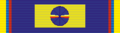 |  Colombia Colombia | Grand Collar of the Order of Boyacá | 14 December 2005 |
 |  Cuba Cuba | Grand Cross of the Order of Carlos Manuel de Céspedes | 20 December 2019 |
 |  Denmark Denmark | Knight of the Order of the Elephant | 12 September 2007 |
 |  Ecuador Ecuador | Grand Collar of the National Order of San Lorenzo | 6 June 2013 |
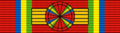 |  Gabon Gabon | Grand Cross of the Order of the Equatorial Star | 28 July 2004 |
 |  Ghana Ghana | Companion of the Order of the Star of Ghana | 13 April 2005 |
 |  Guinea-Bissau Guinea-Bissau | Member of the Order of Amílcar Cabral | 25 August 2010 |
 |  Guyana Guyana | Member of the Order of Excellence of Guyana | 25 November 2010 |
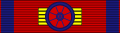 |  Japan Japan | Grand Cordon of the Supreme Order of the Chrysanthemum | 18 March 2025 |
 |  Mexico Mexico | Collar of the Order of the Aztec Eagle | 3 August 2007 |
 |  Norway Norway | Grand Cross of the Order of St. Olav | 7 October 2003 |
 | Norway | Grand Cross of the Royal Norwegian Order of Merit | 13 September 2007 |
 |  Palestine Palestine | Grand Collar of the State of Palestine | 2010 |
 |  Panama Panama | Grand Cross of the Order of Omar Torrijos Herrera | 10 August 2007 |
 Paraguay Paraguay | Grand Collar of the Order of Marshal Francisco Solano López | 2007 | |
 |  Peru Peru | Grand Cross with Diamonds of the Order of the Sun | 25 August 2003 |
 |  Portugal Portugal | Grand Cross of the Order of the Tower and Sword | 5 March 2008 |
 | Portugal | Grand Collar of the Order of Liberty | 23 July 2003 |
 | Portugal | Grand Collar of the Order of Camões | 22 April 2023 |
 |  Spain Spain | Knight of the Collar of the Order of Isabella the Catholic | 11 July 2003 |
 |  Saudi Arabia Saudi Arabia | Chain of the Order of Abdulaziz Al Saud | 16 May 2009 |
 |  South Africa South Africa | Member of the Order of the Companions of O. R. Tambo | 27 April 2011 |
 |  Sweden Sweden | Knight of the Royal Order of the Seraphim | 11 September 2007 |
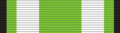 |  Syria Syria | Member First Class of the Order of the Umayyads | 2010 |
 |  Ukraine Ukraine | Member First Class of the Order of Prince Yaroslav the Wise | 2003 |
 | Ukraine | Member of the Order of Liberty | 2009 |
 |  United Kingdom United Kingdom | Knight Grand Cross of the Order of the Bath | 7 March 2006 |
 |  Zambia Zambia | Grand Commander of the Order of the Eagle of Zambia | 2010 |
| Country | Award | Date |
|---|---|---|
| Spain | Princess of Asturias Award for International Cooperation | October 2003 |
 India India | Jawaharlal Nehru Award | June 2007 |
| Portugal | Honoris Causa Doctor in Economics, University of Coimbra | March 2011 |
 France France | Doctor Honoris Causa, Sciences Po Paris | September 2011 |
 Poland Poland | Lech Wałęsa Prize | September 2011 |
| India | Indira Gandhi Prize | November 2012 |
| United Kingdom | Honorary President of Young Labour (UK) | October 2018 |
| France | Honorary citizen of Paris | March 2020 |
 Argentina Argentina | Doctor Honoris Causa, Universidad Nacional de Rosario | May 2020 |
 Uruguay Uruguay | Más Verde Prize | January 2023 |
| Bolivia | Key to the City of Santa Cruz de la Sierra | July 2024 |
 United States United States | Global Goalkeeper Award | September 2024 |
| France | Doctor Honoris Causa, Paris 8 University | June 2025 |
| France | Académie Française Award | June 2025 |
 Malaysia Malaysia | Doctor Honoris Causa, National University of Malaysia | October 2025 |
 Mozambique Mozambique | Doctor Honoris Causa, Maputo University | November 2025 |
In popular culture
A famous Brazilian director made a film in 2009 called Lula, Son of Brazil. The movie shows Lula's life up until he was 35 years old. Even though it cost a lot to make, it didn’t do well with viewers or critics.
Lula also appears in a Netflix series named The Mechanism, where he is called João Higino. In 2019, a documentary called The Edge of Democracy explored Lula’s time in politics and big changes in Brazil. Lula is also in another documentary from 2024 called Apocalypse in the Tropics.
Pictures
Keep exploring


This article is a child-friendly adaptation of the Wikipedia article on Luiz Inácio Lula da Silva, available under CC BY-SA 4.0.
Images from Wikimedia Commons. Tap any image to view credits and license.