 Safekipedia
Mughal painting
Adapted from Wikipedia · Discoverer experience
Mughal painting is a beautiful style of small paintings that started during the Mughal period in the Indian subcontinent. These paintings were used to show scenes from books or as special pieces kept in albums. They began from Persian miniature painting, which also had influences from Chinese art, and grew in the courts of the Mughal emperors from the 16th to 18th centuries.
These paintings show many interesting things like battles, famous stories, hunting, animals, plants, and life in royal courts. The Mughal emperors liked to show real people in their paintings more than Persian artists did. They also enjoyed painting animals and plants in a very lifelike way.
Mughal painting later spread to other places in India, including both Muslim and Hindu courts, and even Sikh courts. In northern India, new styles grew from this art, mixing Persian and Indian ideas in wonderful ways.
Subjects
Mughal painting often showed realistic pictures of people, usually in profile. Early portraits focused on men, sometimes with women nearby, though it’s unclear if these were real women from the court. Later, scenes of lovers and everyday holy people became popular.
The emperors, like Akbar, Jahangir, and Shah Jahan, were often painted, sometimes on horseback or in formal settings. They were shown receiving visitors or in public displays, reflecting their important roles. Artists also painted detailed pictures of animals and plants, borrowing some styles from other cultures.
Many books were illustrated with these paintings, including stories and biographies. Akbar’s Hamzanama had over 1,400 miniatures, telling exciting tales. Other books included memoirs and poetic works, all richly decorated with art.
Main article: Persian miniature
Main articles: Jahanara Begum , Mumtaz Mahal , Dara Shikoh , Riza Abbasi
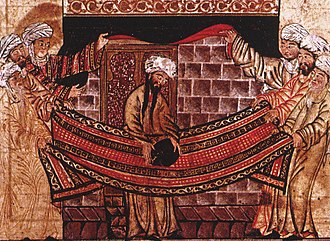
Further information: Baburnama , Ustad Mansur , Milo C. Beach , Cleveland Museum of Art , Tutinama , Akbar's Hamzanama , Muhammad , Mughal dynasty , Chaghtai Turkic , Akbarnama , Tuzk-e-Jahangiri , Shah Jahan , Padshahnama , Zafarnama , Timur , Gulbadan Begum , Humayun Nama , Persian poetry , Razmnama , Mahabharata , Ramayana , Bhagavata Purana , Harivamsa , Panchatantra
Further information: Jharokha Darshan , halos , iconography , Allah , in durbar , Rajput painting
Origins
Mughal painting began as a way to create beautiful small pictures, often used to show scenes from books or kept in special albums. It started in the courts of the Mughal Empire from the 16th to 18th centuries, growing from styles used in Persia and India. These paintings showed many things, like battles, stories from legends, animals, and life in royal homes.
Artists in the Mughal courts worked together, with some drawing the main lines and others adding colors. They aimed for realistic pictures, especially of people and animals, which made their work special compared to earlier styles. Even though no paintings from the very first Mughal ruler, Babur, have survived, later rulers like Akbar added their own touches, showing new animals and places they discovered in India.
Development
The great period of Mughal painting happened during the rules of Akbar, Jahangir, and Shah Jahan, covering more than a century.
Mughal painting began when Humayun saw Persian art during his time in Tabriz. He brought skilled artists back to India with him. Under Akbar, the style grew strongly. Artists worked on big projects like the Tutinama and the Hamzanama, mixing Persian styles with new ideas to create realistic scenes. Jahangir added softer colors and finer details, and liked paintings of nature and events from his own life. Shah Jahan made paintings that showed the royal court in a very formal way, focusing on the emperor and his important people.
Later paintings
Aurangzeb (1658–1707) did not support painting much because of his religious beliefs. After 1668, he stopped asking for new paintings and later moved to the Deccan to focus on his battles there.
Even though Mughal painting began to decline, some very beautiful works were still made. Later, during the rule of Muhammad Shah (1719–1748), there was a small comeback. But by the time of Shah Alam II (1759–1806), this style of art had lost its shine. New styles of Indian painting grew in places like the Rajputana courts and areas ruled by the British East India Company, such as the Company style.
Many famous museums around the world have important collections of these paintings, including the National Museum of India, the Rampur Raza Library, the Indian Museum, the British Library, the Walters Art Museum, the National Museum of Asian Art, the Victoria and Albert Museum, the Metropolitan Museum of Art, the Cleveland Museum of Art, the Chhatrapati Shivaji Maharaj Vastu Sangrahalaya, the San Diego Museum of Art, and the Royal Collection Trust.
Artists
Many talented artists helped create beautiful Mughal paintings. Some came from Persia, like Abd al-Samad and Mir Musavvir, while others were from India. Women artists also took part, adding their skills to important projects. Teams of artists worked together, with one person planning the picture, another painting it, and sometimes a third focusing on faces.
Important artists included Farrukh Beg, who came from Persia, and Daswanth, who helped paint big books about old stories. Ustad Mansur was famous for painting animals, while Abu al-Hasan created special pictures for the emperor. These artists made Mughal paintings colorful and full of life, showing many different scenes from history, nature, and everyday life.
Mughal style today
Mughal-style miniature paintings are still made today by a few artists in Lahore, especially at the National College of Arts. Many of these new paintings are copies of old ones, but some artists create modern works using the same old techniques.
The skills to make these paintings are taught from one generation to the next. Some artists work with many helpers to create paintings that carry the artist’s name.
Images
Related articles



This article is a child-friendly adaptation of the Wikipedia article on Mughal painting, available under CC BY-SA 4.0.
Images from Wikimedia Commons. Tap any image to view credits and license.