
National Mall
The National Mall is a beautiful landscaped park near the downtown area of Washington, D.C., the capital city of the United States. It is a popular place for visitors and includes many important monuments, museums, and open spaces. People come from all over the world to see places like the Lincoln Memorial, the Washington Monument, and the Jefferson Memorial, as well as many museums managed by the Smithsonian Institution.
The park was designed by Pierre L'Enfant to be a democratic and open space for everyone, unlike the palace gardens of other countries. It stretches from the United States Capitol to the west toward the Washington Monument and includes many memorials and monuments that honor important people and events in American history. The National Mall welcomes about 24 million visitors each year and is cared for by the National Park Service.
Landmarks, museums, and other features
The National Mall proper has many important places, including landmarks, museums, and special features. Some notable spots include the Joseph Henry statue from 1883 and the Andrew Jackson Downing Urn from 1856. There is also the Smithsonian Carousel, which was taken away for repairs in November 2023 but came back in April 2026 just in time for the United States' 250th anniversary celebration.
Most of the museums on the National Mall are part of the Smithsonian Institution, except for the National Gallery of Art. The Smithsonian Gardens also has beautiful gardens and landscapes near the museums. East and west of the main Mall area, you can find more interesting places such as Constitution Gardens, the Memorial to the 56 Signers of the Declaration of Independence, and the George Mason Memorial.
Boundaries and dimensions
The National Mall is a big, beautiful park in Washington, D.C. It stretches about 1.9 miles (3.0 km) from the Capitol steps to the Lincoln Memorial. At some points, it is about 1,586 feet (483 m) wide, but the open space in the middle is narrower, about 656 feet (200 m) wide.
The Mall is bordered by important streets. It sits between Constitution and Pennsylvania Avenues on the north, 1st Street NW on the east, Independence and Maryland Avenues on the south, and 14th Street NW on the west. Some parts are managed by different groups, like the U.S. Department of Agriculture. The area includes many important monuments and open spaces, making it a central part of the city’s design.
Main articles: Geography of Washington, D.C., L'Enfant Plan
Purposes
The National Mall is a special park in Washington, D.C., meant to be a grand and respectful place for important buildings, museums, and memorials. It was planned by two famous designs called the L'Enfant plan and the McMillan plan.
The park is kept beautiful for people to enjoy, with places to walk and see important statues and monuments. It is also used for big national events and gatherings where people can speak and come together peacefully. The park stays free from commercial signs but can still thank sponsors.
History
See also: History of Washington, D.C.
L'Enfant City Plan
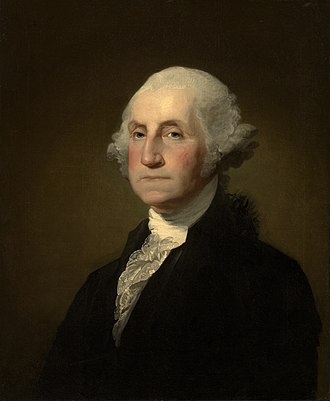
In 1791, Pierre (Peter) Charles L'Enfant designed a plan for Washington, D.C., featuring a grand avenue about 1 mile long and 400 feet wide. This avenue would run between the United States Capitol and a planned statue of George Washington. The area was named "the Mall" after a famous walkway in London.
The Washington City Canal was built along the old course of Tiber Creek to the Potomac River. Over time, parts of the canal were covered. The oldest building on the Mall today is the Smithsonian Institution Building, known as "The Castle," built between 1847 and 1855.
Downing Plan: Mid-19th century
In the 1850s, architect Andrew Jackson Downing created a landscape plan for the Mall. The area was divided into sections like the Public Grounds and the Agricultural Grounds. During the American Civil War, some buildings were turned into hospitals.
After the war, the Department of Agriculture began growing crops and gardens on the Mall. The Center Market was a busy marketplace that later became the site of the National Archives.
McMillan Plan: Early 20th century
In 1902, the McMillan Commission proposed a new design for the Mall. This plan called for open spaces with rows of trees and paths. The vision included building cultural institutions along the edges of the Mall.
Temporary war buildings
During World Wars I and II, the government built many temporary buildings on the Mall. Most of these were removed after the wars ended, restoring the planned layout of the area.
Later history
American elm trees were planted on the Mall starting in the 1930s. However, a disease called Dutch Elm Disease affected many of these trees. Efforts were made to protect and replace them.
The National Mall was listed on the National Register of Historic Places in 1966. In 2016, the historic district boundaries were expanded to include more areas around the Mall.
Demolished or moved structures
The National Mall has seen many changes over the years, with several buildings and structures being removed or relocated. For example, the Washington City Canal was covered over to make way for streets like Constitution Avenue. The old Baltimore and Potomac Railroad Station closed when a new train station opened. Other buildings such as the United States Department of Agriculture Building and the Army Medical Museum and Library were torn down to make space for new museums and gardens.
Some structures were moved instead of demolished. Uncle Beazley, a popular statue, was relocated to the National Zoo in 1994. These changes helped shape the National Mall into the beautiful park it is today, filled with important museums and memorials.
Main articles: Washington City Canal, Constitution Avenue, Baltimore and Potomac Railroad Station, Washington Union Station, United States Department of Agriculture Building, Center Market, National Archives Building, Armory Square Hospital, National Air and Space Museum, Army Medical Museum and Library, Hirshhorn Museum, Main Navy and Munitions Buildings, Constitution Gardens, Uncle Beazley, National Zoo
Usage
The National Mall is a beautiful park in Washington, D.C., and it is one of the most popular places for visitors to explore. Along with many museums and monuments, the Mall is used for many different activities and events.
The wide open spaces of the Mall make it a great place for people to gather for protests and rallies. One famous example was the 1963 March on Washington for Jobs and Freedom, where Martin Luther King Jr. gave his famous "I Have a Dream" speech. The Mall has also been the site of many other important events, including presidential inaugurations. During these ceremonies, thousands of people come to the Mall to watch the new president take office.
The National Mall is also a fun place for everyday activities. People enjoy jogging, having picnics, and relaxing there. The Mall has a fun carousel that runs during certain seasons, and it hosts many special events each year. These include a kite festival in the spring, Earth Day celebrations, concerts by military bands, and a big fireworks show on Independence Day. The Mall is a lively and important part of the nation’s capital.
Main article: List of rallies and protest marches in Washington, D.C.
Main articles: United States presidential inauguration
Improvements and refurbishment
From 2006 to 2010, plans were made to improve the National Mall. These plans included building new places for events, updating old buildings, and creating better spaces for visitors. The National Park Service worked with many people to make sure these changes would be good for the environment and the park.
Work began on these plans after 2010. One big project was fixing the Lincoln Memorial Reflecting Pool. The old pool got a new water system and looks better now. Other projects included fixing up the grass and adding new plants to make the Mall look nicer and stay healthy. These changes help keep the National Mall beautiful for everyone to enjoy.
Transportation
See also: Transportation in Washington, D.C.
The National Mall is easy to reach using public transportation. The Washington Metro has several stations nearby, including the Smithsonian station, which is close to many important places. Other stations like Federal Triangle, Archives, and Union Station are also not far away.
Bicycles are welcome on the National Mall, with special parking spots near major memorials. You can even rent a bike from March to October at the Thompson Boat Center. The Mall is also part of a long trail called the East Coast Greenway that stretches from Calais, Maine to Key West, Florida.
Riding electric scooters or Segways is only allowed on roads, not sidewalks, unless you have a special need. Some companies rent scooters in Washington, D.C., but they don’t usually allow riders to stop on the Mall.
You can also take pedicabs, which are human-powered carriages, for tours of the Mall. Parking for cars is limited, but there are some spots along Ohio Drive SW, especially for buses and people with special parking needs. In 2017, parking meters were put up in some areas to manage parking better.
Weather and climate
On July 16, 2016, a large event called Together 2016 gathered thousands of people on the National Mall. Because it became too hot, the event ended early at 4 p.m. instead of 9 p.m., and many people needed help because of the heat.
On July 1, 2021, a small tornado formed in Arlington County, Virginia, crossed the Potomac River near the Theodore Roosevelt Bridge, and moved along the National Mall. It had winds up to 90 mph and knocked down some temporary fencing set up for a celebration. The tornado disappeared near 16th Street NW and Constitution Avenue.
In popular culture
The National Mall is often used as a setting in movies, TV shows, and video games. It appears in famous films like Forrest Gump, where a memorable scene takes place, and National Treasure. Popular superhero movies such as Spider-Man: Homecoming, Captain America: The Winter Soldier, and Wonder Woman 1984 also feature the Mall. The comedy Wedding Crashers and the TV series House of Cards have scenes there too.
In the video game Fallout 3, the Mall is shown as a battlefield with trenches and groups fighting for control. News channels often film from the Mall when they are reporting from Washington, D.C., making it a familiar sight to many viewers.
Other attractions nearby
See also: Category:Tourist attractions in Washington, D.C.
The National Mall is close to many interesting places. Within walking distance, you can find famous buildings, memorials, and museums.
To the east of the Capitol, visit the Folger Shakespeare Library, the Library of Congress, and the United States Supreme Court Building.
North and northeast of the Mall, you can see the Holodomor Genocide Memorial, the Japanese American Memorial to Patriotism During World War II, the National Postal Museum, and Washington Union Station.
Further north, there is Ford's Theatre, the National Archives, the National Building Museum, the National Portrait Gallery, and the Old Post Office Building and Clock Tower.
To the northwest, you can find the Albert Einstein Memorial, the John F. Kennedy Center for the Performing Arts, and the White House.
West of the Mall, see the Arlington Memorial Bridge and the Marine Corps War Memorial.
Southwest, visit the Arlington National Cemetery, the Jefferson Memorial, and the United States Holocaust Memorial Museum.
Finally, south of the Mall, there is the Dwight D. Eisenhower Memorial and the Museum of the Bible.
Pictures
Keep exploring


This article is a child-friendly adaptation of the Wikipedia article on National Mall, available under CC BY-SA 4.0.
Images from Wikimedia Commons. Tap any image to view credits and license.