 Safekipedia
Norman Topping
Adapted from Wikipedia · Discoverer experience
Norman Topping (1908 – November 18, 1997) was the President of the University of Southern California from 1958 to 1970. He took over after Fred D. Fagg, Jr. and was later followed by John R. Hubbard. During his time as president, Topping shared a big plan called the "Master Plan for Enterprise and Excellence in Education." This plan helped USC grow its main campus from 95 to 150 acres, replacing many temporary buildings with permanent ones. It was the biggest growth for USC's campus and helped prepare the university for more research work in the future.
Topping also helped USC join the Association of American Universities, which showed that USC was becoming known as a top research university. Before becoming president of USC, Topping studied there and earned a BA and MD. He worked with the U.S. Public Health Service on a typhus vaccine used during World War II by millions of soldiers from the United States, Canada, and Britain. He also served in the Coast Guard and helped create the first effective treatment for Rocky Mountain spotted fever. Later, he worked as an associate director of the NIH and as Assistant Surgeon General from 1948 to 1952. After that, he was vice president for medical affairs at the University of Pennsylvania from 1952 to 1958.
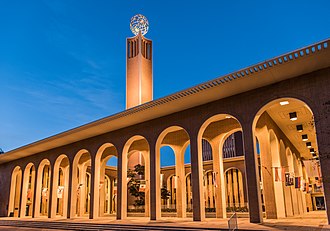
Today, USC’s Norman Topping Student Center carries his name as a reminder of his important work and leadership.
Related articles


This article is a child-friendly adaptation of the Wikipedia article on Norman Topping, available under CC BY-SA 4.0.
Images from Wikimedia Commons. Tap any image to view credits and license.