 Safekipedia
Office of Management and Budget
Adapted from Wikipedia · Discoverer experience
The Office of Management and Budget (OMB) is the largest office within the Executive Office of the President of the United States. It helps the president carry out his plans across the whole executive branch.
In 1921, Congress created the Bureau of the Budget to help the president prepare his budget. This budget would then go to the House of Representatives to be approved or rejected, as described in Article One of the Constitution. Later, in 1970, President Richard Nixon reorganized this bureau into what we now call the OMB. This change made the OMB report directly to the president and gave it more power.
Although it started as a neutral, analytical group, the OMB became one of the most powerful parts of the president’s team. Each president since then has added more duties and power to the OMB. In response, in 1974, Congress created its own budget office, called the Congressional Budget Office, and passed laws to limit some of the president’s control over money.
Today, Russell Vought serves as the director of the OMB. He was appointed by Donald Trump in February 2025.
History
The Bureau of the Budget, which later became the Office of Management and Budget (OMB), was created in 1921 by law under President Warren G. Harding. It helped the president plan the government’s spending.
In 1970, during President Nixon’s time in office, the Bureau was reorganized into the OMB. This new office reported directly to the president.
Purpose
The Office of Management and Budget (OMB) helps the president create a budget proposal for Congress and watches over how government agencies use their money and follow rules. It checks if agency programs work well, decides how money should be spent, and makes sure everything matches the president's plans.
OMB also helps manage how the government buys things, handles money, uses technology, and makes rules. Its job is to make these processes better, create good ways to measure success, and cut down on extra work for everyone.
OMB’s main jobs are:
- Creating and carrying out the budget, a big process led by the Executive Office of the President that helps the president put policies and priorities into action across places like the Department of Defense and NASA.
- Handling other agencies’ money, paperwork, and technology.
Structure
Overview
The Office of Management and Budget (OMB) is led mostly by staff members who stay in their jobs even when new leaders take over in the White House. There are six important jobs in OMB that are chosen by the president and approved by the Senate. These jobs include the director and several administrators of special offices.
OMB has five main groups that help manage money and resources for different parts of the government. These groups review budget requests from agencies, help decide what money gets sent to Congress, and give advice on many programs. They also check new rules and laws to make sure they fit with the president’s plans.
Other parts of OMB support the whole office. They help with legal matters, talking to Congress, and putting together the president’s budget each February. One part, called the Budget Review Division, works on the technical side of preparing the budget. Another part, the Legislative Reference Division, helps manage proposed laws and gives advice to the president about whether to sign bills into law.
Role in the executive budget process
OMB plays a big job in making the president’s budget. It gives instructions to government agencies about how to prepare their budget requests. In July, OMB sends out a circular called A-11 with rules for submitting budget proposals. Agencies send their ideas by September. Then OMB staff talk with agency leaders to make sure the plans match the president’s goals. By February, the president reviews the final budget and sends it to Congress.
If Congress does not pass a budget, the government can shut down. That means federal workers cannot get paid, buildings may close, and important programs can stop.
Suspension and debarment
An important committee at OMB helps watch over rules for removing people or companies from working with the government. This was set up by a president in 1986 to make sure everyone follows the same rules.
Circulars
OMB sends out special instructions called circulars to guide government agencies. One important circular, called A-119, talks about using common standards that many industries follow. This helps agencies use the same rules for things like environment, energy, safety, and health.
Organization
OMB is led by a director and has many different offices to help with jobs like legal work, talking to Congress, and managing money. There are also offices that focus on special areas like health, education, and national security.
Current appointees
Some of the top leaders in OMB today include Russell Vought as the director and Dan Bishop as the deputy director. Other important jobs are held by people like Mark Paoletta as General Counsel and Jeffrey Clark as the acting administrator of one office.
List of directors
List of OMB directors.
| Image | Name | Start | End | President | |
|---|---|---|---|---|---|
 | Charles Dawes | June 23, 1921 | June 30, 1922 | Warren G. Harding (1921–1923) | |
 | Herbert Lord | July 1, 1922 | May 31, 1929 | ||
| Calvin Coolidge (1923–1929) | |||||
| Herbert Hoover (1929–1933) | |||||
 | Clawson Roop | August 15, 1929 | March 3, 1933 | ||
 | Lewis Douglas | March 7, 1933 | August 31, 1934 | Franklin D. Roosevelt (1933–1945) | |
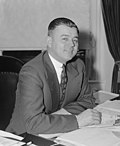 | Daniel Bell | September 1, 1934 | April 14, 1939 | ||
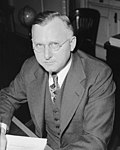 | Harold Smith | April 15, 1939 | June 19, 1946 | ||
| Harry S. Truman (1945–1953) | |||||
 | James Webb | July 13, 1946 | January 27, 1949 | ||
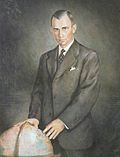 | Frank Pace | February 1, 1949 | April 12, 1950 | ||
| Fred Lawton | April 13, 1950 | January 21, 1953 | ||
| Joseph Dodge | January 22, 1953 | April 15, 1954 | Dwight D. Eisenhower (1953–1961) | |
| Rowland Hughes | April 16, 1954 | April 1, 1956 | ||
| Percival Brundage | April 2, 1956 | March 17, 1958 | ||
 | Maurice Stans | March 18, 1958 | January 21, 1961 | ||
 | David Bell | January 22, 1961 | December 20, 1962 | John F. Kennedy (1961–1963) | |
 | Kermit Gordon | December 28, 1962 | June 1, 1965 | ||
| Lyndon B. Johnson (1963–1969) | |||||
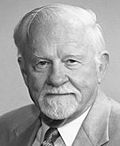 | Charles Schultze | June 1, 1965 | January 28, 1968 | ||
| Charles Zwick | January 29, 1968 | January 21, 1969 | |||
| Bob Mayo | January 22, 1969 | June 30, 1970 | Richard Nixon (1969–1974) | |
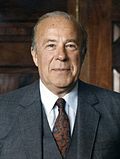 | George Shultz | July 1, 1970 | June 11, 1972 | ||
 | Caspar Weinberger | June 12, 1972 | February 1, 1973 | ||
 | Roy Ash | February 2, 1973 | February 3, 1975 | ||
| Gerald Ford (1974–1977) | |||||
 | James Lynn | February 10, 1975 | January 20, 1977 | ||
 | Bert Lance | January 21, 1977 | September 23, 1977 | Jimmy Carter (1977–1981) | |
| Jim McIntyre | September 24, 1977 | January 20, 1981 | ||
 | David Stockman | January 21, 1981 | August 1, 1985 | Ronald Reagan (1981–1989) | |
 | Jim Miller | October 8, 1985 | October 15, 1988 | ||
 | Joe Wright | October 16, 1988 | January 20, 1989 | ||
 | Dick Darman | January 25, 1989 | January 20, 1993 | George H. W. Bush (1989–1993) | |
 | Leon Panetta | January 21, 1993 | July 17, 1994 | Bill Clinton (1993–2001) | |
 | Alice Rivlin | October 17, 1994 | April 26, 1996 | ||
| Frank Raines | September 13, 1996 | May 21, 1998 | |||
 | Jack Lew | May 21, 1998 | January 19, 2001 | ||
| Mitch Daniels | January 23, 2001 | June 6, 2003 | George W. Bush (2001–2009) | ||
 | Josh Bolten | June 6, 2003 | April 15, 2006 | ||
 | Rob Portman | May 26, 2006 | June 19, 2007 | ||
| Jim Nussle | September 4, 2007 | January 20, 2009 | |||
 | Peter Orszag | January 20, 2009 | July 30, 2010 | Barack Obama (2009–2017) | |
 | Jeff Zients Acting | July 30, 2010 | November 18, 2010 | ||
| Jack Lew | November 18, 2010 | January 27, 2012 | ||
| Jeff Zients Acting | January 27, 2012 | April 24, 2013 | ||
 | Sylvia Mathews Burwell | April 24, 2013 | June 9, 2014 | ||
 | Brian Deese Acting | June 9, 2014 | July 28, 2014 | ||
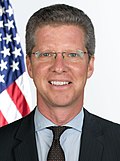 | Shaun Donovan | July 28, 2014 | January 20, 2017 | ||
 | Mark Sandy Acting | January 20, 2017 | February 16, 2017 | Donald Trump (2017–2021) | |
 | Mick Mulvaney | February 16, 2017 | March 31, 2020 On leave: January 2, 2019 – March 31, 2020 | ||
 | Russ Vought | January 2, 2019 | July 22, 2020 | ||
| July 22, 2020 | January 20, 2021 | ||||
| Rob Fairweather Acting | January 20, 2021 | March 24, 2021 | Joe Biden (2021–2025) | |
 | Shalanda Young | March 24, 2021 | March 17, 2022 | ||
| March 17, 2022 | January 20, 2025 | ||||
| Matthew Vaeth Acting | January 20, 2025 | February 7, 2025 | Donald Trump (2025–present) | |
 | Russ Vought | February 7, 2025 | Incumbent | ||
Related articles


This article is a child-friendly adaptation of the Wikipedia article on Office of Management and Budget, available under CC BY-SA 4.0.
Images from Wikimedia Commons. Tap any image to view credits and license.