 Safekipedia
Optical telescope
Adapted from Wikipedia · Discoverer experience
An optical telescope gathers and focuses light mainly from the visible part of the electromagnetic spectrum, to create a magnified image for direct viewing, making a photograph, or collecting data with electronic image sensors. These tools help us see faraway objects much more clearly.
There are three main types of optical telescopes. Refracting telescopes use lenses and sometimes prisms. Reflecting telescopes use mirrors. And catadioptric telescopes combine both lenses and mirrors.
The ability of a telescope to show tiny details depends on the size of its main lens or mirror, called the objective. A bigger objective collects more light and shows finer details. This makes optical telescopes useful for many activities, like observational astronomy, ornithology, and even watching performance arts or spectator sports.
History
Further information: History of the telescope
The telescope was discovered by people who made lenses and mirrors, not by scientists. People have known about lenses and how they bend light since ancient times. This knowledge was passed down through generations and improved over time. The big break came when people started making lenses for eyeglasses in places like Venice and the Netherlands.
The first telescope was made in the Netherlands in 1608 by a lens maker named Hans Lippershey. Soon after, Galileo Galilei heard about it and made his own version. He was the first to use a telescope for looking at the stars and planets. Later, Johannes Kepler suggested a small change that made telescopes better.
Reflecting telescopes, which use mirrors instead of lenses, were also thought about early on. It wasn’t until the late 1600s that Isaac Newton built the first working model. Over time, mirrors got better and better. Today, we even have telescopes in space that avoid problems caused by Earth’s atmosphere. With today’s technology, even everyday people can connect their telescopes to computers to take amazing pictures of the night sky.
Principles
For specific designs of telescope, see Reflecting telescope, Refracting telescope, and Catadioptric.
The main idea behind a telescope is simple: a big lens or mirror, called the objective, collects light from faraway objects and focuses it to a point. At that point, a clear picture forms. You can look through another lens called an eyepiece, which works like a magnifying glass, to see the picture up close and bigger.
Most telescopes turn the picture upside down and flip it left to right. For space telescopes, this isn’t a problem. But for telescopes used on Earth, like those for watching birds or looking at landscapes, special parts are added to fix the picture so it looks right-side up. Some telescopes, like the ones named after Galileo or Gregory, already show the picture the right way up without extra parts.
Characteristics
Optical telescopes gather and focus light, mainly from the visible part of the electromagnetic spectrum, to create magnified images, make photographs, or collect data through electronic sensors. There are three primary types: refracting telescopes, which use lenses; reflecting telescopes, which use mirrors; and catadioptric telescopes, which combine both lenses and mirrors.
The ability of a telescope to show small details depends on the size of its main lens or mirror, called the aperture. A larger aperture collects more light and can show finer details. This makes the aperture a key feature of any optical telescope, determining both how much light it can gather and the sharpness of the images it produces.
Observing through a telescope
Looking through a telescope can seem complicated, but two main things matter most: how far you can see (focal length) and how much light it gathers (aperture). These decide how much of the world you can see and how bright it looks.
When you look at something far away, like a star or planet, you need to know how much of it fits in your view. This depends on the telescope’s focal length and aperture, plus the eyepiece you use. Sometimes, very distant objects look dim, and you might not see all the details because of how light spreads out or the telescope’s limits.
The brightness of what you see can change a lot depending on how much you zoom in. Zooming in too much can make things look very dim, hiding details like rings or spiral arms. Younger eyes can see brighter images than older eyes because our pupils get smaller with age. There are ways to choose the right eyepiece to get the best view without losing too much light.
Imperfect images
No telescope can make a perfect picture. Even with the best mirrors or lenses, some blurry spots called image aberrations happen because of how light spreads out. These problems can be grouped into two types: monochromatic and polychromatic.
The five Seidel aberrations
Main article: Optical aberration
This happens when light rays focus at different points, making the picture blurry.
This makes points of light look like tiny comets with tails, which makes measuring things hard.
Here, a point of light looks like tiny lines instead of a dot.
This means the picture looks curved instead of flat, which can mess up photos.
This makes the picture look stretched out in a barrel or pincushion shape, which needs fixing when joining many photos together into a panoramic photo.
Longitudinal chromatic aberration: This is when colors focus at different points, similar to spherical aberration.
Transverse chromatic aberration (chromatic aberration of magnification)
Astronomical research telescopes
Optical telescopes have been used for studying the stars and other space objects since the early 1600s. There are many kinds, depending on the type of technology used, what they are looking at, and where they are placed, like in space telescopes or on the ground. Some are made just for looking at the Sun, called solar telescopes.
Most big research telescopes today use mirrors instead of lenses. Mirrors are easier to make perfectly smooth, and they can see more kinds of light than lenses. Big mirrors can be supported from behind, which helps keep them shaped right.
These large telescopes can have mirrors between 6 and 11 meters across. Some newer telescopes use many small mirrors together to act like one big mirror. There are also smaller, computer-controlled telescopes that can watch the sky all night long. Scientists use many kinds of tools with these telescopes to learn about stars and planets, like cameras and special light-measuring tools.
Images
Related articles


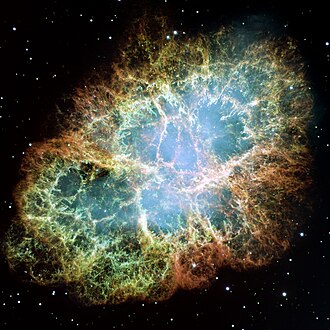


This article is a child-friendly adaptation of the Wikipedia article on Optical telescope, available under CC BY-SA 4.0.
Images from Wikimedia Commons. Tap any image to view credits and license.