 Safekipedia
Shanghainese
Adapted from Wikipedia · Discoverer experience
Shanghainese is a special way of speaking used in the city of Shanghai and nearby places. It is part of the bigger group of languages called Wu Chinese, which is different from the language most people in China speak today, called Mandarin. Even though many people in Shanghai can speak Mandarin, Shanghainese has its own special sounds and rules that make it unique.
There are almost 14 million people who can speak Shanghainese, making it the most widely spoken form of Wu Chinese. In the past, Shanghainese was very important for people living around the Yangtze River Delta area. But today, Mandarin is becoming more common.
Shanghainese has many interesting sounds, like lots of different vowels and special beginning sounds that are not found in many other Chinese languages. It also has fewer tones than some other languages in Southern China, making it sound quite different.
History
The way people spoke in Shanghai was shaped by dialects from nearby places like Jiaxing and Suzhou. Stories, songs, and literature from Suzhou influenced the early form of Shanghainese.
In the 1850s, Shanghai opened up as a port, and many people from places like Ningbo and Jianghuai moved there. Missionaries recorded the sounds of the language, and new words came from both Western and Eastern languages, including Ningbonese, Cantonese, and English. Over time, Shanghainese grew quickly and became more popular than Suzhounese in the Yangtze River Delta area. By the 1930s, many people had moved to Shanghai, and the language continued to grow.
After China’s government made Standard Chinese the main language, fewer people learned Shanghainese. But it stayed important in Shanghai’s culture. In the 1990s, local TV and radio still used Shanghainese. However, schools began to discourage its use, and many young people stopped learning it.
Since 2005, efforts have been made to save Shanghainese. It has been brought back into kindergartens, and there have been new TV shows, movies, and even smartphone tools that support the language. Today, about half of Shanghai’s people can still speak Shanghainese, and many want to keep it alive.
Status
Because China has many different groups of people, leaders have often tried to pick one language for everyone to use. As more people moved to cities, especially to Shanghai, the local language there, called Shanghainese, has been losing popularity.
Many people in Shanghai now speak Standard Mandarin instead of Shanghainese, especially in schools and public places. Surveys show that most young students think Mandarin is easier to use and prefer learning it over Shanghainese. However, many people still feel that Shanghainese is important for keeping Shanghai's culture strong and bringing people together.
Classification
Shanghainese is a special way of speaking used mainly in the city of Shanghai and some nearby places like eastern Nantong. It belongs to a group of languages called Wu Chinese, which is part of the bigger Sino-Tibetan language family. People who speak Shanghainese often find it hard to understand other Chinese languages like Mandarin, and the same goes the other way around.
Shanghainese can be split into different types based on where it is spoken. The main type is used in the city center of Shanghai, especially on the west side of the Huangpu River. There are also other types spoken in areas like Jiading, Baoshan, Qingpu, and the islands of Hengsha, Changxing, and Chongming. Even within Shanghai, there are smaller groups such as the type spoken in Pudong and other parts of the city.
Phonology
Shanghainese is a special way of speaking that belongs to the Wu group of Chinese languages. It is spoken mainly in Shanghai and nearby areas. Unlike Mandarin, Shanghainese sounds very different and people who speak it often cannot understand Mandarin speakers easily.
Shanghainese words are made from parts called initials and finals. The initial is the first part of the sound, and the final is the rest of the word. Tones, which change how a word sounds, are also important in Shanghainese. These tones help make words clear and different from each other.
Shanghainese has special sounds called voiced and unvoiced stops and fricatives, and some sounds only appear in this language.
When saying words together in Shanghainese, the tones can change based on the words around them. This makes speaking fluently more interesting and follows rules that help people understand each other better.
| Labial | Dental/ Alveolar | Palatal | Velar | Glottal | ||
|---|---|---|---|---|---|---|
| Nasal | m ⟨m⟩ 美悶梅門 | n ⟨n⟩ 拿囡內男 | ɲ ⟨gn⟩ 粘扭泥牛 | ŋ ⟨ng⟩ 砑我外鵝 | ||
| Plosive | plain | p ⟨p⟩ 布幫北 | t ⟨t⟩ 膽懂德 | k ⟨k⟩ 干公夾 | (ʔ) 鴨衣烏 | |
| aspirated | pʰ ⟨ph⟩ 怕胖劈 | tʰ ⟨th⟩ 透聽鐵 | kʰ ⟨kh⟩ 開擴康 | |||
| voiced | b ⟨b⟩ 步盆拔 | d ⟨d⟩ 地動奪 | ɡ ⟨g⟩ 葵共軋 | |||
| Affricate | plain | ts ⟨ts⟩ 煮增質 | tɕ ⟨c⟩ 舉精腳 | |||
| aspirated | tsʰ ⟨tsh⟩ 處倉出 | tɕʰ ⟨ch⟩ 丘輕切 | ||||
| voiced | dʑ ⟨j⟩ 旗羣劇 | |||||
| Fricative | voiceless | f ⟨f⟩ 飛粉福 | s ⟨s⟩ 書松色 | ɕ ⟨sh⟩ 修血曉 | h ⟨h⟩ 花荒忽 | |
| voiced | v ⟨v⟩ 扶服浮 | z ⟨z⟩ 樹從石 | ʑ ⟨zh⟩ 徐秦絕 | ɦ ⟨gh⟩, ⟨y⟩, ⟨w⟩ 鞋移胡雨 | ||
| Lateral | l ⟨l⟩ 拉賴領 | |||||
| Medial | Nucleus | ||||||||||||||
|---|---|---|---|---|---|---|---|---|---|---|---|---|---|---|---|
| ∅ | a | ɔ | o | ɤ | e | ø | ã | ɑ̃ | ən | oŋ | aʔ | oʔ | əʔ | liquid | |
| ∅ | ɿ ⟨y⟩ 知次住 | a ⟨a⟩ 太柴鞋 | ɔ ⟨au⟩ 寶朝高 | o ⟨o⟩ 花摸蛇 | ɤ ⟨eu⟩ 斗丑狗 | e ⟨e⟩ 雷來蘭 | ø ⟨oe⟩ 干最亂 | ã ⟨an⟩ 冷長硬 | ɑ̃ ⟨aon⟩ 黨放忙 | ən ⟨en⟩ 奮登論 | oŋ ⟨on⟩ 翁蟲風 | aʔ ⟨aq⟩ 辣麥客 | oʔ ⟨oq⟩ 北郭目 | əʔ ⟨eq⟩ 舌色割 | əl ⟨er⟩ 而爾耳 |
| i | i ⟨i⟩ 基錢微 | ia ⟨ia⟩ 野寫亞 | iɔ ⟨iau⟩ 條蕉搖 | iɤ ⟨ieu⟩ 流尤休 | ie ⟨ie⟩ 廿械也 | iã ⟨ian⟩ 良象陽 | iɑ̃ ⟨iaon⟩ 旺 | in ⟨in⟩ 緊靈人 | ioŋ ⟨ion⟩ 窮榮濃 | iaʔ ⟨iaq⟩ 藥腳略 | ioʔ ⟨ioq⟩ 肉浴玉 | iɪʔ ⟨iq⟩ 筆亦吃 | m ⟨m⟩ 呣畝嘸 | ||
| u | u ⟨u⟩ 波歌做 | ua ⟨ua⟩ 怪淮娃 | ue ⟨ue⟩ 回慣彎 | uø ⟨uoe⟩ 官歡緩 | uã ⟨uan⟩ 橫光 | uɑ̃ ⟨uaon⟩ 廣狂況 | uən ⟨uen⟩ 困魂溫 | uaʔ ⟨uaq⟩ 挖划刮 | uəʔ ⟨ueq⟩ 活擴骨 | ||||||
| y | y ⟨iu⟩ 居女羽 | yø ⟨ioe⟩ 園軟權 | yn ⟨iun⟩ 均雲訓 | yɪʔ ⟨iuq⟩ 血缺悅 | ŋ ⟨ng⟩ 五魚午 | ||||||||||
| Level (平) | Rising (上) | Departing (去) | ||
|---|---|---|---|---|
| Dark (阴; 陰) voiceless initials only | 53 (1) marked with acute | 334 (5) | 55ʔ (7) | |
| Light (阳; 陽) voiced initials only | 113 (6) | 12ʔ (8) | ||
| Tone | One syllable | Two syllables | Three syllables | Four syllables | Five syllables |
|---|---|---|---|---|---|
| 1 | 53 (˥˧) | 55 (˥˥) 21 (˨˩) | 55 (˥˥) 33 (˧˧) 21 (˨˩) | 55 (˥˥) 33 (˧˧) 33 (˧˧) 21 (˨˩) | 55 (˥˥) 33 (˧˧) 33 (˧˧) 33 (˧˧) 21 (˨˩) |
| 5 | 334 (˧˧˦) | 33 (˧˧) 44 (˦˦) | 33 (˧˧) 55 (˥˥) 21 (˨˩) | 33 (˧˧) 55 (˥˥) 33 (˧˧) 21 (˨˩) | 33 (˧˧) 55 (˥˥) 33 (˧˧) 33 (˧˧) 21 (˨˩) |
| 6 | 113 (˩˩˧) | 22 (˨˨) 44 (˦˦) | 22 (˨˨) 55 (˥˥) 21 (˨˩) | 22 (˨˨) 55 (˥˥) 33 (˧˧) 21 (˨˩) | 22 (˨˨) 55 (˥˥) 33 (˧˧) 33 (˧˧) 21 (˨˩) |
| 7 | 55 (˥˥) | 33 (˧˧) 44 (˦˦) | 33 (˧˧) 55 (˥˥) 21 (˨˩) | 33 (˧˧) 55 (˥˥) 33 (˧˧) 21 (˨˩) | 33 (˧˧) 55 (˥˥) 33 (˧˧) 33 (˧˧) 21 (˨˩) |
| 8 | 12 (˩˨) | 11 (˩˩) 23 (˨˧) | 11 (˩˩) 22 (˨˨) 23 (˨˧) | 11 (˩˩) 22 (˨˨) 22 (˨˨) 23 (˨˧) 22 (˨˨) 55 (˥˥) 33 (˧˧) 21 (˨˩) | 22 (˨˨) 55 (˥˥) 33 (˧˧) 33 (˧˧) 21 (˨˩) |
| Tone | Underlying Tone | Neutralized Tone |
|---|---|---|
| 1 | 53 | 44 |
| 5 | 334 | 44 |
| 6 | 113 | 33 |
| 7 | 55 | 44 |
| 8 | 12 | 22 |
Vocabulary
Shanghainese has many words that come from European languages, especially because Shanghai was an important port city. Most of these words come from English, but some also come from French. A few of these words, like 水门汀, are now used in other Chinese languages too, such as Sichuanese.
Like other Chinese languages, Shanghainese has two types of pronunciations for some words: everyday spoken words and more formal literary words that came from older standard languages like Mandarinic, Nanjingese, Hangzhounese, or Beijingese. It’s important to tell these two types apart when learning the language.
| Traditional | Simplified | Literary | Vernacular | Gloss | Mandarin |
|---|---|---|---|---|---|
| 家 | ciá | ká | house | jiā | |
| 顏 | 颜 | yi | nge | face | yán |
| 櫻 | 樱 | ín | án | cherry | yīng |
| 孝 | shiau | hau | filial piety | xiào | |
| 學 | 学 | yaq | ghoq | learning | xué |
| 物 | veq | meq | thing | wù | |
| 網 | 网 | waon | maon | web | wǎng |
| 鳳 | 凤 | von | bon | male phoenix | fèng |
| 肥 | vi | bi | fat | féi | |
| 日 | zeq | gniq | sun | rì | |
| 人 | zen | gnin | person | rén | |
| 鳥 | 鸟 | gniau | tiau | bird | niǎo |
Grammar
Shanghainese is a type of Chinese language that does not show tense, person, case, number, or gender. Verbs do not change to show these ideas, but word order and special words help show meaning. There are three main ways to change words in Shanghainese.
Shanghainese does not change verbs much, but it uses special words after verbs to show if something is happening now, finished, or will happen later. There are no special words to show if something is a question or a command, but there are helpers that show ideas like wanting or being able to do something.
Personal words do not change for boy or girl, and there are no special words to show if something is yours or someone else’s. Most basic describing words have just one sound, and they do not change for number or other details. To ask a question, a special word is added to the end of the sentence.
| 本 | 本 | |
| pen | - | pen |
| (classifier for books) | ||
| every [book] | ||
| 衣裳 | 買 | 來 | 了。 |
| 衣裳 | 买 | 来 | 了。 |
| í-zaon | ma | le | leq |
| clothes | buy | PFV | PF |
| The clothes have been bought. | |||
| 明朝 | 要 | 落雨 | 個。 |
| 明朝 | 要 | 落雨 | 个。 |
| min-tsau | iau | loq yu | gheq |
| tomorrow | FUT | rain | P |
| It's going to rain tomorrow. | |||
| 電影 | 散場 | 快了。 |
| 电影 | 散场 | 快了。 |
| di-in | se-zaon | khua-leq |
| movie | finish | IMM.FUT P |
| The movie is soon to finish | ||
| 我 | 到 | 海裡 | 去 | 游泳 | 游過 | 五趟。 |
| 我 | 到 | 海里 | 去 | 游泳 | 游过 | 五趟。 |
| ngu | tau | he-li | chi | yeu-yon | yeu-ku | ng-thaon |
| 1S | to | sea-in | go | swim | swim-EXP | five-times |
| I have swum the sea five times (so far). | ||||||
| 儂 | 就 | 讓 | 伊 | 做 | 下去 | 好了。 |
| 侬 | 就 | 让 | 伊 | 做 | 下去 | 好了。 |
| non | zhieu | gnian | yi | tsu | gho-chi | hau-leq |
| 2S | even | let | 3S | do | DUR | good-PF |
| Please let him continue to do it. | ||||||
| 功課 | 做 | 好 | 快了。 |
| 功课 | 做 | 好 | 快了。 |
| kón-khu | tsu | hau | khua-leq |
| homework | do | PFV | IMM.FUT PF |
| The homework will have been completed before long. | |||
| "can" | 能 (nen); 能夠 (nen-keu); 好 (hau) |
| "be able" | 會/会 (ue); 會得/会得 (ue-teq) |
| "may" | 可以 (khu-i) |
| "would like" | 要 (iau) |
| "should" | 應該/应该 (ín-ké) |
| "willing to" | 情願/情愿 (zhin-gnioe); 願意/愿意-hans (gnioe-i) |
| "happy to" | 高興/高兴 (káu-shin) |
| "want to" | 想 (shian); 好 (hau) |
| 餅乾 | 撥 | 人家 | 吃脫了。 |
| 饼干 | 拨 | 人家 | 吃脱了。 |
| pin-kóe | peq | gnin-ká | chiq-theq-leq |
| biscuit | by | someone | eat-PF |
| The biscuits were eaten by someone. | |||
| Singular | Plural | ||
|---|---|---|---|
| 1st person | 我 | 阿拉 | |
| ngu | aq-la aq-laq | ||
| 2nd person | 儂 | 侬 | 㑚 |
| non | na | ||
| 3rd person | 伊 | 伊拉 | |
| yi | yi-la yi-laq | ||
| 儂 | 好 | 𠲎? |
| 侬 | 好 | 𠲎? |
| non | hau | va |
| 2S | good | Q |
| How are you? (lit. "Are you good?") | ||
Writing
See also: Romanization of Wu Chinese
People often use Chinese characters to write Shanghainese, but there isn’t a single official way to do it. Sometimes, special characters are used that match how Shanghainese sounds, not always the standard Chinese characters. For example, the word for “lemon” in Standard Chinese is written as 檸檬 or 柠檬, but in Shanghainese it might be written as 人門 or 人门, which means “person-door” in Standard Chinese.
In the 1800s, English and American Christian missionaries developed ways to write Shanghainese using the Latin alphabet. These systems were mostly used for translating Bibles and making dictionaries to help foreigners learn the language. Today, online tools like Wu MiniDict and Wugniu are the most common ways to write Shanghainese using the alphabet.
Missionaries also created a special set of phonetic symbols to write Shanghainese sounds, similar to the Japanese kana system. This older system isn’t used much today and is mostly found in old books.
Media
In recent years, Shanghainese has started to appear more often on Chinese television. Some shows now include Shanghainese dialogue, and a few are entirely in Shanghainese. However, there are still not many TV shows based in Shanghai or using the Shanghainese language.
[relevant?]
| Name | Release year |
|---|---|
| 繁花 (Blossoms Shanghai) | 2023 |
| Nothing But Thirty | 2020 |
| All Out of Love | 2018 |
| Women in Shanghai | 2018 |
| If You Are the One | 2010 |
| Shanghai Bund | 2007 |
| Home with Kids | 2005 |
| Once Upon a Time in Shanghai | 1996 |
| Sinful Debt | 1995 |
Images
Related articles


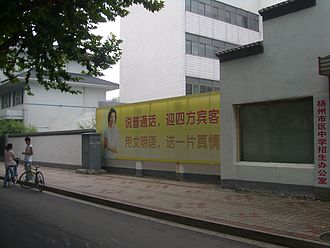

This article is a child-friendly adaptation of the Wikipedia article on Shanghainese, available under CC BY-SA 4.0.
Images from Wikimedia Commons. Tap any image to view credits and license.