 Safekipedia
Sosnowiec
Adapted from Wikipedia · Discoverer experience
Sosnowiec is an industrial city county in the Dąbrowa Basin of southern Poland. It is located in the Silesia region and is part of the larger Metropolis GZM area. Sosnowiec is one of the cities in the Katowice urban area, which is a big group of cities close together home to over 2.7 million people.
As of December 2022, Sosnowiec had a population of 189,178 people. The city is found in the eastern part of the Upper Silesian Industrial Region, an area known for its factories and work. It is also near the even bigger Katowice-Ostrava metropolitan area, which has about 5.3 million people living in it.
Geography
The name Sosnowiec likely comes from the Polish word for pine, as pine forests once grew in the area. Originally, the village was called Sosnowice, and it has had several other names over time.
Sosnowiec is an important town in the Dąbrowa Basin, a part of southern Poland. It is located near the border of Lesser Poland and Silesia, sitting on the rivers Brynica and Przemsza, which flow into the Vistula River. The city has been part of the Silesian Voivodeship since 1999.
History
Early history
The history of Sosnowiec begins in 1902 when it became an official city after combining several older villages. But the area has a much longer history. Records first mention a small settlement called Sosnowiec way back in 1227. It was part of the Polish Duchy of Kraków and close to bigger villages like Sielce and Zagórze, which are now parts of the city. Other areas like Milowice were mentioned even earlier, in 1123.
Sosnowiec was part of the Polish–Lithuanian Commonwealth and later became a border town. Over time, it changed hands between different countries and empires. In 1863, during a big uprising called the January Uprising, Polish fighters won a battle against Russian forces near Sosnowiec.
City rights
In 1902, the Russian Emperor Nicholas II of Russia officially made Sosnowiec a city. This helped the town grow in many ways. New factories, schools, and cultural places opened up. The town grew because of its natural resources and good location, especially after a new railway line opened in 1859.
After Poland became independent in 1918, Sosnowiec faced hard times during both World Wars. But after the wars, the city kept growing. By 1975, several nearby areas became part of Sosnowiec, and the population reached its highest point in 1987.
World War II
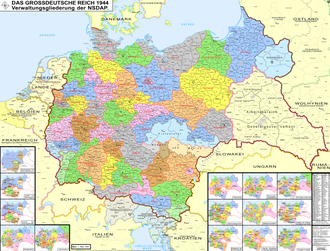
When World War II started in 1939, Sosnowiec was taken over by Nazi Germany and renamed Sosnowitz. The city suffered greatly during the war. Many people were hurt or killed, and the Germans set up camps where people were forced to work.
In 1943, thousands of Jewish people were moved from Sosnowiec to a place called Auschwitz. The city was finally freed in 1945 when the Red Army arrived.
Post-war
After World War II, Sosnowiec continued to grow. New areas became part of the city, and factories helped bring jobs. The population grew until 1987 and then started to go down. In 1992, Sosnowiec became an important place for the Roman Catholic Diocese of Sosnowiec.
Economy
Sosnowiec is a busy city with lots of activity, culture, and nature. It used to be known for mining and heavy industries, but it has grown into a place for trade and services. The city still has important coal mines, steel factories, and other big plants. A Special Economic Zone helps bring new businesses to the area, and many companies have started working there. The city’s office has earned a quality award for serving the community well.
Demographics
Districts
For Sosnowiec's 100th birthday, the downtown area was redesigned to look more modern and beautiful. In 2004, Sosnowiec won a big award for this work in a contest for the best public space in the Śląskie Provinces. The city also started a program to make its appearance nicer, including coloring buildings and ads called “rainbow city”. Some of the districts in Sosnowiec are:
- Dańdówka
- Dębowa Góra
- Jęzor
- Juliusz
- Kazimierz Górniczy
- Klimontów
- Maczki
- Milowice
- Modrzejów
- Niwka
- Ostra Górka
- Ostrowy Górnicze
- Pogoń
- Porąbka
- Radocha
- Rudna
- Sielec
- Stary Sosnowiec
- Środula
- Sosnowiec Śródmieście
- Zagórze
Points of interest
Sosnowiec has many interesting places from its industrial past, especially homes of wealthy factory owners. Most of these are found along the Czarna Przemsza river, away from the city center. One of the oldest buildings is a 17th-century castle called the Sielecki Castle. Other popular spots include:
- The Dietel Palace
- Schöen Palace and museum
- Franz Schöen's Palace, also called New Schöen Palace
- Wilhelm Palace
- Cathedral Basilica of the Assumption of the Blessed Virgin Mary
- Orthodox Church of the Holy Virgin, Hope, Luby and their mother Zofia
- St. John Evangelical Church
- St Thomas Church
- Railway Station Sosnowiec Główny
- Railway Station Sosnowiec Maczki
- Old Jewish cemetery
- Three Emperors' Corner
Parks and gardens
Sosnowiec has many green spaces such as parks, garden squares, protection zones, and forests. These areas cover more than 2,250 hectares and include historic parks, forests that grew after mining stopped, and places near rivers.
One of the most famous parks is Sielec Park near the castle. It began in the 19th century and now has many tall trees, places to walk, and a swimming pool. The river Czarna Przemsza runs through the park.
Other historic parks are: Dietel Park; the Park-Palace Complex of Schöen with two palaces and the Wanda Malczewska Park.
People enjoy visiting Millennium Park and the Środula Park with a sports complex.
Another popular area is Jacek Kuroń Park in the Kazimierz Górniczy district. It was created by miners from an old coal mine and has wooded areas, playgrounds, paths for walking and biking, and a small zoo with both common and exotic animals. In 2011, the park was named after Polish politician Jacek Kuroń. Inside the park is Leśna reservoir, a peaceful spot with trees and plants along the water.
Besides formal parks, Sosnowiec has many urban forests, often growing on old mining sites. These forests cover about 1,354 hectares and are important for nature and recreation.
Some areas in Sosnowiec are protected because of their natural beauty. In the Maczki area, there is a special bog called “Torfowisko Bory”, part of the Natura 2000 program, which protects rare plants. In the south-east, the “Śródleśne Łąki w Starych Maczkach” protects wet meadows and woodlands with rare plants and animals.
In 2025, part of the Zagórze Forest was named “Mokradła Lasu Zagórskiego” because of its many ponds, wetlands, and birds. The city is also creating green paths along the Czarna Przemsza river to connect parks and neighborhoods.
Rivers and water bodies
Sosnowiec is located in the basin of the Czarna Przemsza river, which flows into the Vistula. The Brynica river also meets the Czarna Przemsza here. The Biała Przemsza river forms part of the city’s edge.
Even though these rivers were harmed by old factories and mines, some parts of the Czarna Przemsza in Sosnowiec are now nice places to walk with paths and parks nearby.
The city has several artificial lakes and ponds, often made from old sand or clay pits. Three larger ones are Balaton, Leśna, and Stawiki. Stawiki has a sandy beach and places for sports. Balaton is used for swimming and fishing. Leśna reservoir is inside Jacek Kuroń Park and has a natural feel with woodland around it.
These rivers, lakes, and wetlands, together with forests and parks, help make the city a pleasant place to live.
Education and science
Sosnowiec has several places where people can study. The University of Silesia in Katowice offers courses in languages, science, and technology. The Medical University of Silesia in Katowice has a school for learning about medicine and pharmacy. There is also a private school focused on marketing and management.
The city also has many high schools, including ones named after famous people like Emilii Plater, Bolesława Prusa, and Stanisława Staszica.
Sports
Sosnowiec has many strong sports teams. Zagłębie Sosnowiec is a men's football team that has won the Polish Cup four times. KH Zagłębie Sosnowiec is an ice hockey team that plays in the top league, Polska Hokej Liga, and has been Polish champions five times. Płomień Sosnowiec is a men's volleyball team in the top league, the Polish Volleyball League. They have won the Polish championship three times and the 1977–78 CEV Champions League. Czarni Sosnowiec is the most successful Polish women's football club, having won the league 12 times and playing in the top division, Ekstraliga.
Notable people
Sosnowiec is the hometown of many interesting people. Some of them are Ignaz von Szyszylowicz, a botanist who studied plants, and Jan Kiepura, a famous Polish singer and actor. Others include Władysław Szpilman, a pianist known around the world, and Edward Gierek, an important Polish political leader. The city has also produced athletes, writers, and artists who have made their mark in many fields.
International relations
Consulates
Sosnowiec has an Honorary Consulate of Bangladesh.
Twin towns – sister cities
See also: List of twin towns and sister cities in Poland
Sosnowiec is twinned with:
- Derhachi, Ukraine
- Dziwnów, Poland
- Idar-Oberstein, Germany
- Komárom, Hungary
- Maârif (Casablanca), Morocco
- Les Mureaux, France
- Roubaix, France
- Suceava, Romania
- Sambir, Ukraine
Images
Related articles


This article is a child-friendly adaptation of the Wikipedia article on Sosnowiec, available under CC BY-SA 4.0.
Images from Wikimedia Commons. Tap any image to view credits and license.