 Safekipedia
Timeline of Washington, D.C.
Adapted from Wikipedia · Discoverer experience
This is a dynamic list and may never be able to satisfy particular standards for completeness. You can help by editing the page to add missing items, with references to reliable sources.
The following is a timeline of the history of Washington, D.C., the capital city of the United States. It shows important events and changes from when the city was first planned until today. Learning about these events helps us understand how the city grew and why it looks the way it does now. Washington, D.C. is where many important decisions for the country are made, and its history is full of interesting moments that shaped the nation.
17th century
In 1632, an explorer named Henry Fleete wrote the first description of the land that would later become Washington, D.C., in his journals. This marked the beginning of recorded history for the area.
18th century
In the 1700s, many important events helped create Washington, D.C. In 1751, the town of Georgetown was founded. By 1789, Georgetown was officially a town, and Georgetown University was established. On July 16, 1790, a law was passed choosing a spot along the Potomac River for the country's new capital.
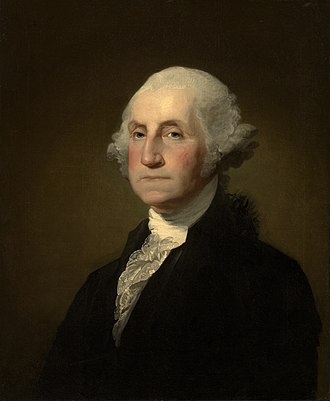
In 1791, President George Washington announced the creation of a special area for the nation’s capital. Surveys began to mark the borders of this new district, and plans were made for designing the city. Construction started on the White House in 1792. By 1800, the nation’s capital moved from Philadelphia to Washington, D.C. President John Adams was the first to live in the White House. Work continued on the United States Capitol, and the Washington Navy Yard was set up along the river. At that time, the population of the area was about 14,093 people.
19th century
In the early 1800s, Washington, D.C. was established as the capital of the United States. In 1801, the US Congress created the District of Columbia, and President Jefferson was inaugurated. Over the next few decades, important buildings and services were added, like schools, a canal, churches, and heating in the U.S. Capitol.
During the Civil War in the 1860s, big changes happened. Slavery was ended, and schools for all children opened. In 1865, President Lincoln was sadly killed. New institutions like Howard University and children's hospitals were created. By the end of the century, Washington grew with new transportation, parks, and important organizations. The city’s population also grew a lot during this time.
20th century
1900s–1940s
Many important buildings and traditions started in Washington, D.C. during the early 1900s. The McMillan Plan for city design was introduced in 1902, and the District Building (city hall) was constructed in 1906. Major landmarks like Union Station and the Washington National Cathedral began taking shape around this time. The city’s population grew steadily, and cherry trees were planted around the Tidal Basin in 1912. New institutions such as the Association for the Study of Negro Life and History were established, and cultural spots like the Lincoln Memorial and the Freer Gallery of Art opened their doors. The National Symphony Orchestra was formed in 1931, and the National Cherry Blossom Festival began in 1935.
1950s–1990s
The second half of the century brought more growth and change to Washington, D.C. The city’s population continued to rise, and important events shaped its history. In 1963, a large gathering for jobs and freedom took place, where a famous speech was given. New transportation systems like the Washington Metro started in 1976, and cultural centers such as the Kennedy Center for the Performing Arts opened. The city also saw the beginning of television broadcasting and the establishment of many newspapers. By the end of the century, Washington, D.C. had become a vibrant hub of culture, government, and history.
21st century
The 21st century brought many important events to Washington, D.C. In 2001, there were attacks involving anthrax. In 2002, the International Spy Museum opened, and in 2003, the Washington Convention Center was rebuilt. In 2007, Adrian Fenty became mayor, and in 2008, Nationals Park and the Newseum opened.
In 2009, President Obama was inaugurated on January 20. In 2010, the city's population was 601,723. Vincent C. Gray became mayor in 2011, and construction began on CityCenterDC. In 2014, voters approved a measure related to a plant that grows naturally. Muriel Bowser became mayor in 2015. In 2016, the DC Streetcar started operating, and the National Museum of African American History and Culture opened. In 2017, President Trump was inaugurated, and in 2018, the Washington Capitals won their first Stanley Cup. The Washington Nationals won the World Series in 2019. In 2020, the city locked down due to a health concern. In 2021, there was a serious event at the United States Capitol on January 6, and President Biden was inaugurated on January 20.
In 2022, several important meetings took place, and in 2023 and 2024, more events are expected. In 2025, there will be the funeral of Jimmy Carter, a second inauguration of Donald Trump, and several other significant happenings.
Main article: 2023 in Washington, D.C.
Main article: 2024 in Washington, D.C.
Main article: 2025 in Washington, D.C.
Related articles




This article is a child-friendly adaptation of the Wikipedia article on Timeline of Washington, D.C., available under CC BY-SA 4.0.