
Wilhelm II
Wilhelm II (Friedrich Wilhelm Viktor Albert) was the last German Emperor from 1888 until his abdication in 1918. He was born on January 27, 1859, and was the son of Prince Frederick William and Victoria, Princess Royal. Through his mother, he was one of the eldest grandchildren of Queen Victoria of the United Kingdom.
When his father became Frederick III in 1888, Wilhelm took over just 99 days later after his father's death, becoming Kaiser Wilhelm II. In 1890, he dismissed the longtime Chancellor Otto von Bismarck and took direct control of Germany's policies. Under his rule, Germany grew as a world power, building up its navy and acquiring new territories.
However, Wilhelm's aggressive statements and actions often upset other countries. His support for Austria-Hungary during the July Crisis in 1914 helped start World War I. During the war, he gave much power to military leaders. After Germany lost the war in 1918, Wilhelm lost the support of many people and was forced to step down. He fled to the Netherlands, where he lived until his death in 1941.
Early life
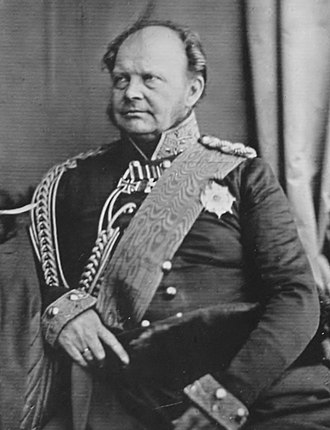
Wilhelm was born in Berlin on 27 January 1859 to Victoria, Princess Royal and Prince Frederick William of Prussia. His mother was the eldest child of Queen Victoria of the United Kingdom. At the time, his granduncle Frederick William IV was the king of Prussia, but he was unable to rule due to health issues, so his grandfather acted as regent.
Wilhelm's birth was difficult. Doctors had to help, and he was born feet first, which caused some problems. This led to Wilhelm having a shorter left arm, which he often tried to hide. Despite this challenge, he grew up learning many things, including riding a horse, which was very important to his mother. As he got older, Wilhelm was taught by tutors and later attended university. He was deeply influenced by the military culture of Prussia, which shaped much of his personality and views.
Accession
Kaiser Wilhelm I passed away in Berlin on March 9, 1888. Prince Wilhelm’s father then became Frederick III, but he was already very sick and only ruled for 99 days before he also passed away. On June 15 of that same year, Wilhelm, who was 29 years old, became the German Emperor and King of Prussia.
Wilhelm had admired Otto von Bismarck when he was young, but soon after becoming emperor, they began to disagree. Wilhelm wanted Germany to grow quickly and strongly, while Bismarck preferred a more careful approach. Wilhelm also wanted to be more involved in ruling than his grandfather had been. These differences caused problems in their relationship, especially after Bismarck tried to pass strict laws against socialist groups in 1890.
Dismissal of Bismarck
Wilhelm II, the young German Emperor, disagreed with Chancellor Bismarck on many important matters. Wilhelm was especially concerned about how workers were treated and supported labor unions, while Bismarck strongly opposed them.
The main reason for Bismarck's dismissal was a disagreement over forming a new government. Bismarck started talks with the opposition without telling Wilhelm first. Wilhelm felt this was disrespectful and refused to support Bismarck's plans. After a heated argument, Wilhelm decided to dismiss Bismarck as Chancellor. This change led to new policies and affected Germany's relationships with other countries.
Wilhelm in control
Wilhelm wanted to have more control over the government, so he chose new leaders who were not as powerful as the old leader, Bismarck. He hoped this would let him make more decisions himself.
Wilhelm also cared about improving life for workers and supporting education and science. He helped start groups for scientific research and tried to make schools better. He also supported modern medicine and nursing.
Personality
Wilhelm II had a complex personality that shaped his time as leader. He was clever and interested in new ideas like technology and science, but he often acted quickly without thinking things through. He wanted to impress others and was very eager to show off, which sometimes led to unstable decisions.
Wilhelm had a mixed relationship with his family, especially with his British relatives. He wished to be accepted by them, particularly by his grandmother, Queen Victoria, but often felt rejected. This led to disagreements, especially with his uncle, Edward VII. Despite these challenges, Wilhelm was there when Queen Victoria passed away and also attended important family events like the wedding of his daughter.
Foreign affairs
German foreign policy under Wilhelm II faced many big problems. Wilhelm was impatient and often let his feelings guide his decisions, which made it hard for him to lead Germany wisely in foreign affairs. One famous example was the Kruger telegram in 1896, where Wilhelm sent a message to support President Paul Kruger of the Transvaal Republic against the British Empire.
British people liked Wilhelm at first, but their feelings changed in the late 1890s. During the First World War, he became a main target of British propaganda and was seen as an enemy.
Wilhelm tried to spread fears about a "yellow peril" to get other European leaders worried about invasions from China. He also used Japan’s win in the Russo-Japanese War to make people in the west fear a rising Imperial Japan. Wilhelm worked to grow the German colonial empire in Africa and the Pacific, but most of these places didn’t make money and were lost during the First World War. In South West Africa (now Namibia), a local revolt against German rule happened, and though Wilhelm later asked it to stop, many people suffered.
One of Wilhelm’s few successes was in 1900, when he helped arrange the marriage of Archduke Franz Ferdinand of Austria to Countess Sophie Chotek, ending some of the opposition to their wedding.
A happy moment for Wilhelm was in 1913 when his daughter Victoria Louise married the Duke of Brunswick. This helped heal a rift between the House of Hanover and the Hohenzollern family after the invasion and takeover of the Kingdom of Hanover in 1866.
Political visits to the Ottoman Empire
Wilhelm visited Constantinople in 1889 and bought German-made rifles for the Ottoman Army. In 1898, he visited again and traveled to places like Haifa, Jerusalem, Bethlehem, Jaffa, Beirut, Aley, Zahlé, and Damascus. In Damascus, he gave a speech thanking the people for their welcome and spoke about friendship between Germany and the Ottoman Empire.
On one visit, Wilhelm promised help for German companies to build the Berlin–Baghdad railway, and he also put up the German Fountain in Constantinople to remember his trip.
His third visit was in 1917, when he met with Sultan Mehmed V Reşâd.
Hun speech of 1900
Main article: Hun speech
The Boxer Rebellion in China was stopped in 1900 by an international group of soldiers. When Wilhelm said goodbye to the German soldiers leaving for China, he spoke strongly, telling them to be very tough in battle. There were two versions of his speech. The German government used a milder version, but the original had very harsh words.
The term “Hun” later became a name the enemy used for Germans during the First World War.
Assassination attempt
On 6 March 1901, while visiting Bremen, someone threw a sharp iron object at Wilhelm. The person, Johann-Dietrich Weiland, was thought to be insane. Wilhelm was hurt but recovered, and later spoke about how he was fine.
Eulenberg Scandal
Main article: Harden–Eulenburg affair
From 1906 to 1909, a journalist named Maximilian Harden wrote about accusations involving some important people, including Wilhelm’s close friend, Prince Philipp zu Eulenberg. These accusations caused big problems and led to trials and resignations. This scandal made Wilhelm very upset and affected his health. It also changed German policies in ways that helped lead to World War I.
Moroccan Crisis
Main article: First Moroccan Crisis
In 1905, Wilhelm visited Tangier in Morocco and spoke in support of the Sultan’s control, which upset France because they wanted more influence there. This led to tension between Germany and France and a meeting of world powers to discuss changes in Morocco.
Daily Telegraph Affair
Main article: Daily Telegraph Affair
In 1908, an article in a British newspaper included some of Wilhelm’s strong opinions, which upset many people. Wilhelm felt very embarrassed and kept a low profile for months. This event reduced his influence in government decisions.
Naval arms race with Britain
Main articles: Anglo-German naval arms race and Alfred von Tirpitz
Wilhelm really wanted Germany to have a strong navy. He asked Alfred von Tirpitz to help build up the German navy. Tirpitz made plans to make the German navy strong enough to threaten Britain, hoping this would make Britain listen to Germany. Building the navy cost a lot of money and caused problems for Germany’s finances by 1914. Britain saw Germany as its biggest enemy because of this.
The Kiel Canal was opened in 1895 to help ships move faster between the North Sea and the Baltic Sea. Wilhelm also set up new ways to organize the navy, creating a Naval Cabinet to handle promotions and orders for the navy.
World War I
Further information: German entry into World War I
During World War I, Wilhelm II mostly had ceremonial duties. He reviewed many parades and awarded honors, but had little real power.
When Archduke Franz Ferdinand of Austria was killed in 1914, Wilhelm was very upset. He supported Austria in wanting to take strong action against Serbia. However, Wilhelm was on a vacation when the crisis grew worse. He tried to follow events from far away but returned to Berlin when war seemed likely.
As the war began, Wilhelm gave speeches to encourage the German people. But as the war continued, he had less and less say in important decisions. By 1916, two generals, Paul von Hindenburg and Erich Ludendorff, were mainly in charge. Wilhelm still had some power to approve important changes, but his influence grew smaller.
Wilhelm hoped Germany would win, but he also sometimes worried about defeat. His support among the German people and leaders faded, especially as the war dragged on. By late 1918, it was clear that Germany would lose, and Wilhelm had to step down from his position as leader.
Abdication and exile
Main article: Abdication of Wilhelm II
Wilhelm II was surprised by uprisings in Berlin and other cities in late 1918 while he was at the Imperial Army headquarters in Spa, Belgium. When sailors in his navy refused to follow orders, he was deeply shocked. As the German Revolution grew, Wilhelm was unsure whether to give up his position as emperor. He thought he might keep his title as king of Prussia, but this was not possible under the rules of the empire.
On November 9, 1918, the leader of Germany announced that Wilhelm had given up both his titles. Later that day, Germany was declared a republic. Wilhelm agreed to leave only after learning that his army would not fight for him anymore. On November 10, he crossed into the Netherlands and lived there in exile. Although there were discussions about putting him on trial, the Netherlands refused to send him to stand for judgment, and he spent the rest of his life in a house called Huis Doorn.
Life in exile
In 1922, Wilhelm published the first part of his memoirs. In it, he said he did not start the Great War and defended his actions during his time as leader. For the rest of his life, he met with important guests and stayed informed about what was happening in Europe. He grew a beard and learned the Dutch language. Wilhelm enjoyed archaeology and often thought about grand buildings and ships.
Wealth
Before 1914, Wilhelm was considered the richest person in Germany. Even after he stepped down, he kept much of his wealth, including many valuable items and several homes. After World War II, many of his properties were taken.
Views on Nazism
In the early 1930s, Wilhelm hoped that the success of a political group might bring back the leadership of his family. However, the leader of that group did not respect Wilhelm and ignored requests for help. Wilhelm was upset by some of the group's actions and felt ashamed to be German at times.
Anti-English, antisemitic, and anti-Freemason views
In his later years, Wilhelm held strong beliefs about other countries and groups, feeling that certain people were causing problems in the world. He wrote about these views in letters to family and friends.
Wilhelm in Amerongen, 1919
[Huis Doorn](/wiki/Huis_Doorn) in 1925
Wilhelm in 1933
Huis Doorn in October 2004
Death
Wilhelm passed away from a health issue in Doorn, Netherlands, on 4 June 1941, at the age of 82. He was buried in a special building on the grounds of Huis Doorn. This place later became important to people who remembered the German monarchy and visit each year on the anniversary of his death.
Historiography
Historians have had different views about Wilhelm II. Some early writers, influenced by the royal court, saw him as a hero and martyr, often agreeing with what he wrote in his own memoirs. Others thought he was not able to handle the big responsibilities of being a ruler, calling him too reckless with power.
After 1950, scholars tried to look at Wilhelm more fairly, without the strong feelings from the early 1900s. Even before the First World War began, in 1913, The New York Times praised him as a peacemaker who helped stop wars. Some thought Germany under Wilhelm was almost like an absolute monarchy, but this was partly misleading. Later historians said that important officials often made decisions without telling the Kaiser. Recently, some historians, like John C. G. Röhl, have suggested that Wilhelm was important in understanding why Germany faced problems, especially with its expansion that affected its relationship with Britain.
Marriages and issue
Wilhelm married Augusta Victoria of Schleswig-Holstein on 27 February 1881, and they had seven children together. Augusta Victoria was a close companion to Wilhelm, and her passing in 1921 was very difficult for him.
The following year, Wilhelm married Princess Hermine Reuss of Greiz. Despite some opposition, their marriage brought him comfort in his later years. Hermine stayed by his side until his death.
| Name | Birth | Death | Spouse | Children |
|---|---|---|---|---|
| Crown Prince Wilhelm | 6 May 1882 | 20 July 1951 | Duchess Cecilie of Mecklenburg-Schwerin (Married 1905) | Prince Wilhelm (1906–1940) Prince Louis Ferdinand (1907–1994) Prince Hubertus (1909–1950) Prince Frederick (1911–1966) Princess Alexandrine (1915–1980) Princess Cecilie (1917–1975) |
| Prince Eitel Friedrich | 7 July 1883 | 8 December 1942 | Duchess Sophia Charlotte of Oldenburg (Married 1906; Divorced 1926) | |
| Prince Adalbert | 14 July 1884 | 22 September 1948 | Princess Adelaide of Saxe-Meiningen (Married 1914) | Princess Victoria Marina (1915) Princess Victoria Marina (1917–1981) Prince Wilhelm Victor (1919–1989) |
| Prince August Wilhelm | 29 January 1887 | 25 March 1949 | Princess Alexandra Victoria of Schleswig-Holstein-Sonderburg-Glücksburg (Married 1908; Divorced 1920) | Prince Alexander Ferdinand (1912–1985) |
| Prince Oskar | 27 July 1888 | 27 January 1958 | Countess Ina Marie von Bassewitz (Married 1914) | Prince Oskar (1915–1939) Prince Burchard (1917–1988) Princess Herzeleide (1918–1989) Prince Wilhelm-Karl (1922–2007) |
| Prince Joachim | 17 December 1890 | 18 July 1920 | Princess Marie-Auguste of Anhalt (Married 1916; Divorced 1919) | Prince Karl Franz (1916–1975) |
| Princess Victoria Louise | 13 September 1892 | 11 December 1980 | Ernest Augustus, Duke of Brunswick (Married 1913) | Prince Ernest Augustus (1914–1987) Prince George William (1915–2006) Princess Frederica (1917–1981) Prince Christian Oscar (1919–1981) Prince Welf Henry (1923–1997) |
Religion
Own views
As the King of Prussia, Emperor Wilhelm II followed the Lutheran faith. He was part of the Evangelical State Church of Prussia's older Provinces, which combined both Reformed and Lutheran traditions.
Attitude towards Islam
Wilhelm II had a friendly relationship with the Muslim world. After visiting Constantinople three times — more than any other European monarch — in 1898, he shared his thoughts with Nicholas II.
Antisemitism
Wilhelm held negative views about Jewish people, believing they had too much influence in Germany. Though he respected some Jewish individuals in business and the arts, he limited their opportunities in the military and diplomacy. He often spoke harshly about them. During a difficult time in 1918, he made troubling comments suggesting violent actions against Jewish people.
Ancestry
Wilhelm II was born on January 27, 1859. He was the son of Prince Frederick William and Victoria, Princess Royal. His birth happened during the time when his granduncle, Frederick William IV of Prussia, was the ruler. Wilhelm later became the last German Emperor, ruling from 1888 until he stepped down in 1918. This marked the end of the German Empire and the long rule of the Hohenzollern dynasty over Prussia.
Documentaries and films
Several films and TV shows have featured Wilhelm II, the last German Emperor. One documentary is titled William II. – The last days of the German Monarchy, which looks at his abdication and escape. In 2013, a TV program called Queen Victoria and the Crippled Kaiser explored his life.
Actors have portrayed Wilhelm II in many productions. Barry Foster played him in a 1974 British series called Fall of Eagles. Christopher Neame appeared as Wilhelm II in a 1975 series named Edward the Seventh. Rupert Julian took the role in a 1918 film titled The Kaiser, the Beast of Berlin. Alfred Struwe played Wilhelm in a 1987 Polish film called Magnat. Robert Stadlober acted as a young Wilhelm in the 2006 film Kronprinz Rudolf. Ladislav Frej appeared as the Kaiser in the 2008 film The Red Baron. Rainer Sellien played Wilhelm II in the 2014 BBC miniseries 37 Days. Christopher Plummer portrayed Wilhelm II in the 2016 film The Exception. Sylvester Groth showed Wilhelm II during his final days as emperor in the 2018 miniseries Kaisersturz. Tom Hollander played Wilhelm II in the 2021 film The King's Man.
Arms, orders and decorations
See also: Coat of arms of Germany § German Empire, and Coat of arms of Prussia
Wilhelm II received many honors and decorations from Germany and other countries. Some of the important ones include:
German honours
- Prussia: Knight of the Black Eagle, Grand Cross of the Red Eagle, and many others.
- Other German states: Honors from Baden, Bavaria, Brunswick, and more.
Foreign honours
- Austria-Hungary: Grand Cross of the Royal Hungarian Order of St. Stephen.
- Belgium: Grand Cordon of the Order of Leopold.
- Many other countries including Brazil, Bulgaria, Denmark, and more also awarded him honors.
| Lesser coat of arms of the German Emperor | Middle coat of arms of the German Emperor | Greater coat of arms of the German Emperor |
| Middle coat of arms of the King of Prussia | Greater coat of arms of the King of Prussia |
Pictures
Keep exploring




This article is a child-friendly adaptation of the Wikipedia article on Wilhelm II, available under CC BY-SA 4.0.
Images from Wikimedia Commons. Tap any image to view credits and license.