 Safekipedia
World war
Adapted from Wikipedia · Discoverer experience
A world war is an international conflict that involves most or all of the world's major powers. The term is most commonly used to describe two huge fights that happened in the early part of the 1900s: World War I, which lasted from 1914 to 1918, and World War II, from 1939 to 1945. These wars had a big effect on the whole world because so many countries were involved and they changed how countries worked together afterward.
Because these wars were so big, they shaped modern history in many ways. Countries had to work harder to keep peace and prevent such large fights from happening again. Even today, people study these wars to learn about leadership, teamwork, and how to solve problems without fighting.
Some people also call other big fights like the Cold War or the war on terror “world wars,” but usually when someone says “world war,” they mean World War I or World War II. These wars remind us why it’s important to talk things out and find peaceful solutions.
Etymology
The term "world war" was first used in 1848 by a Scottish newspaper, The People's Journal, which described a war among major powers as a "world-war." German writer August Wilhelm Otto Niemann used the term in the title of his 1904 anti-British novel, Der Weltkrieg: Deutsche Träume (The World War: German Dreams).
In September 1914, German biologist Ernst Haeckel used the term "first world war" to describe what was happening at the time. The term "World War II" was first used by Time magazine in June 1939, and appeared in a Danish newspaper the next month after war began. Many other languages have their own versions of the term "world war."
History
First World War
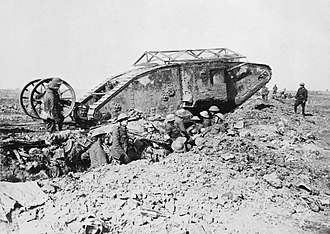
The First World War took place from 1914 to 1918. It happened because of a complex web of alliances among major world powers. When a small conflict broke out, these alliances pulled many countries into a larger war. New technologies and global connections made this war affect the entire world.
Second World War
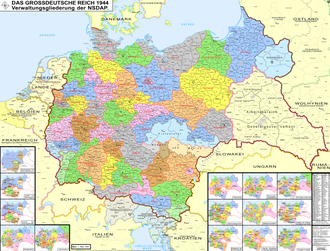
The Second World War lasted from 1939 to 1945. It involved many countries, with the main fighting happening between the Axis powers, like Nazi Germany and Japan, and the Allied powers, including the United Kingdom, the United States, the Soviet Union, and China. This war had a huge impact on the world. New technologies changed everyday life, and after the war, new international groups were formed to help keep peace.
Potential third world war
Since the atomic bombings of Hiroshima and Nagasaki during the Second World War, many people have worried about the possibility of a third world war between countries that have nuclear weapons. Some believe such a war could involve nuclear weapons and be even more destructive than the first two world wars. Famous scientists like Albert Einstein have been quoted talking about future wars.
Some leaders and writers have used the idea of a “Third World War” to describe big global conflicts since the Second World War, like the Cold War and the war on terror. Today, some conflicts around the world are seen as connected struggles between major powers, leading some to call this time a “proto-world war.”
Other global conflicts
The Seven Years' War (1756–1763) was fought in many parts of the world, including North America, Europe, Asia, Africa, and South America. Many major powers at the time took part, and some people call it "World War 0."
Historians have suggested many other wars could be considered "world wars." These include the Nine Years' War (1689–1697), the War of the Spanish Succession (1701–1714), the War of the Austrian Succession (1740–1748), the French Revolutionary Wars (1792–1802), and the Napoleonic Wars (1803–1815). Some also mention the American Revolutionary War (1775–1783) and even earlier conflicts like the Italian Wars and Dutch wars.
More recent examples include the Second Congo War (1998–2003), which involved many countries in Africa and has been called "Africa's World War."
Images
Related articles




This article is a child-friendly adaptation of the Wikipedia article on World war, available under CC BY-SA 4.0.
Images from Wikimedia Commons. Tap any image to view credits and license.