 Safekipedia
3
Adapted from Wikipedia · Explorer experience
The Magic Number Three
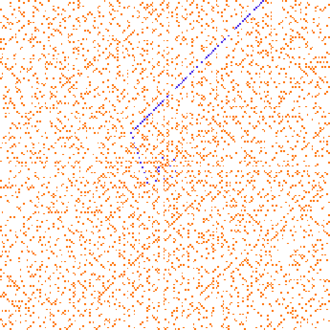
The number 3 is a special friend in the world of numbers. It comes right after 2 and before 4. It is the smallest odd prime number, which means it can only be divided by 1 and itself.
Shapes and Patterns
In the world of shapes, 3 is very important. Triangles have three sides and are one of the simplest shapes. Because triangles are strong, builders and engineers often use them in bridges, buildings, and many designs.
3 also shows up in many fun patterns. For example, if you add the digits of a number and the total is 3, then that number can be divided by 3. Try it with 12: 1 + 2 = 3, and 12 ÷ 3 = 4!
Around the World
Many cultures and religions see the number 3 as very special. In Christianity, there is the Trinity, which talks about three important parts that make one whole. In Hinduism, there is the Trimurti, three forms of a god. In Buddhism, there are the three Jewels, guiding ideas for good living.
In Chinese culture, the number 3 is lucky because it sounds like the word for “alive.” People often say, “third time’s the charm,” meaning that if you try something three times, it will probably work the third time!
Fun with Multiples
Let’s see what happens when we multiply 3:
| Multiplication | Result |
|---|---|
| 3 × 1 | 3 |
| 3 × 2 | 6 |
| 3 × 3 | 9 |
| 3 × 4 | 12 |
| 3 × 5 | 15 |
You can see that 3 makes lots of fun numbers when we multiply it!
Related articles



This article is a child-friendly adaptation of the Wikipedia article on 3, available under CC BY-SA 4.0.
Images from Wikimedia Commons. Tap any image to view credits and license.