Cnidocyte
What Is a Cnidocyte?
A cnidocyte is a tiny cell. It is found in animals that belong to the group Cnidaria. This group also includes corals, sea anemones, hydrae, and jellyfish.
Each cnidocyte has a storage part called a cnidocyst. The cell can pop out a small tube to reach other living things. This helps it catch food and keep itself safe.
How It Works
When the cell is set off, a tube shoots out quickly, faster than you can blink. Scientists have studied this process in Hydrozoans and in the sea anemone Nematostella vectensis. They are still learning how it all works.
Each cnidocyte can only be used one time. Because of this, the body keeps making new ones. In Hydra, new cells start from stem cells and then move to the tentacles.
Cnidarian Friends
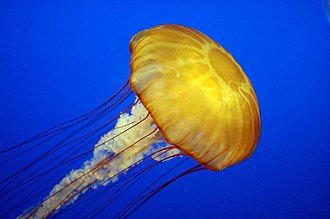
Some cnidarians have gentle cells, and some have cells that can sting people. The box jellyfish is one animal with these cells. Its relative, the sea wasp, is also known for them. The Lion's Mane jellyfish was made famous in a story by Sherlock Holmes. The Portuguese man o' war is another animal with stinging cells.
Some sea animals are much gentler. The Ctenophora group, also called "comb jellies," is clear and jelly-like. These animals have no cnidocytes and are safe for people. Certain sea slugs, called nudibranchs, even borrow stinging cells from the animals they eat. This is called kleptocnidy.

Quiz time!
3 questions about Cnidocyte
What is a cnidocyte?
Pictures
Keep exploring




This article is a child-friendly adaptation of the Wikipedia article on Cnidocyte, available under CC BY-SA 4.0.
Images from Wikimedia Commons. Tap any image to view credits and license.