Epistemology
What Is Epistemology?
Epistemology is a branch of philosophy. It looks at what knowledge is, where it comes from, and how far it can reach. It is also called the theory of knowledge.
Epistemology studies different kinds of knowledge. Knowing facts is called propositional knowledge. Knowing how to do things, like using a skill, is practical knowledge. Familiarity gained through experience is knowledge by acquaintance.
Where Does Knowledge Come From?
To learn how knowledge arises, thinkers look at sources such as perception, introspection, memory, reason, and testimony. They also study belief, truth, and justification.
Different groups of thinkers give different answers. The school of skepticism asks whether people can really reach knowledge at all. Empiricists say all knowledge comes from the senses. Rationalists believe some knowledge does not depend on the senses. Fallibilism says knowledge is never completely certain.
Epistemology and Other Fields
Some branches of epistemology focus on areas like science, mathematics, morality, and religion. Social epistemology looks at knowledge that is shared by communities. Formal epistemology uses careful tools from logic.
Epistemology is closely linked to psychology. It also connects with education and anthropology.
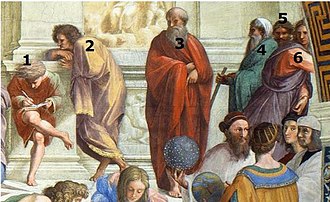
People have thought about knowledge for a very long time. Early ideas can be found in ancient Greek, Indian, and Chinese philosophy. The philosopher Plato thought knowledge was better than a true opinion because it is more stable.

Quiz time!
3 questions about Epistemology
What is epistemology a branch of?
Pictures
Keep exploring




This article is a child-friendly adaptation of the Wikipedia article on Epistemology, available under CC BY-SA 4.0.
Images from Wikimedia Commons. Tap any image to view credits and license.