Safekipedia

Galaxy

Explorer · ages 7 and underAdapted from Wikipedia
The Pinwheel Galaxy (Messier 101), a giant spiral galaxy about 21 million light-years away in the constellation Ursa Major, photographed by the Hubble Space Telescope.

What Is a Galaxy?

A galaxy is a huge group of stars, planets, and other objects in space. It also holds interstellar gas and dust. Gravity keeps everything together.

Our galaxy is called the Milky Way. Our Solar System is inside it. The word "galaxy" comes from a Greek word that means "milky."

Galaxies Come in Many Sizes

Galaxies come in many sizes. Some small ones have fewer than a thousand stars. The biggest ones, called supergiants, can have one hundred trillion stars.

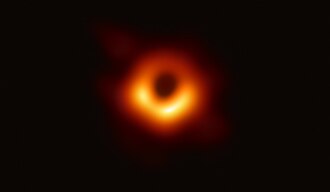
Scientists sort galaxies by how they look. The Milky Way is a spiral galaxy, which looks a bit like a spinning pinwheel. Often, there is a supermassive black hole at the center of a galaxy.

Our Galaxy Neighbors

Scientists think there are between 200 billion and 2 trillion galaxies in the observable universe. The closest big neighbor of the Milky Way is the Andromeda Galaxy. It is just over 2.4 million light years away.

The Milky Way is part of a group called the Local Group. That group belongs to the Virgo Supercluster.

Looking at Galaxies

Long ago, people wondered what the bright band in the night sky was. In 1610, Galileo Galilei looked at it through a telescope. He saw that it was made of many faint stars.

Later, Edwin Hubble showed that some clouds of light were much too far away to be part of the Milky Way. Today, the Hubble Space Telescope helps scientists see galaxies very clearly.

Quiz time!

3 questions about Galaxy

Question 1 of 3

What is a galaxy?

Pictures

The Antennae galaxies, two spiral galaxies colliding and merging. The bright blue and pink patches are new star-forming regions, where billions of new stars are being born.
The barred spiral galaxy NGC 1300, photographed by the Hubble Space Telescope. Its center has a smaller spiral inside the big one, and it lies about 69 million light-years away in the constellation Eridanus.
The Cigar Galaxy (M82), photographed by the Hubble Space Telescope. Its bright center is full of young stars being born, and glowing hydrogen gas streams out into space.
The spiral galaxy NGC 4414, photographed by the Hubble Space Telescope. It is about 60 million light-years away, and its outer arms glow blue with young stars while dark dust clouds stretch across them.
William Herschel's 1785 drawing of our Milky Way galaxy, made by counting stars in different directions. He placed our Solar System near the center.
The Andromeda galaxy (Messier 31), photographed by NASA's Galaxy Evolution Explorer. Blue regions show young, hot stars along its spiral arms, while the orange-white center holds older, cooler stars.
The Hubble sequence is a way astronomers sort galaxies by their shape, from smooth elliptical galaxies to spiral galaxies with arms.
The Hubble Space Telescope captured this view of Abell 1413, a huge group of more than 300 galaxies held together by gravity, located over 2 billion light-years away. The curved arcs in the picture are caused by gravitational lensing, where a cluster's gravity bends light from galaxies behind it.
NGC 3923, an elliptical galaxy about 90 million light-years away in the constellation Hydra. Its faint, layered shells of stars are arranged like the rings of an onion.
Hoag's Object, a ring galaxy photographed by NASA's Hubble Space Telescope. Its bright blue ring of young, hot stars wraps around a yellow center made of older stars. Scientists think the ring may have formed when another galaxy passed by long ago.
Radio galaxy Hercules A, shown by combining a visible-light image from the Hubble Space Telescope with a radio image from the Very Large Array in New Mexico.
A powerful jet of electrons and tiny particles shoots out from the center of the galaxy M87, powered by a supermassive black hole. The bright dots are star clusters, each holding hundreds of thousands of stars.
Seyfert's Sextet is a group of six galaxies held close together in space, as seen by the Hubble Space Telescope. Galaxies like these sometimes pull on each other with their gravity and can even merge over millions of years.
A photograph of the Great Andromeda Nebula, taken by astronomer Isaac Roberts and published in 1899. Today we know it as the Andromeda Galaxy, a huge group of stars far beyond our own.
Southern plane of the Milky Way from submillimeter wavelengths
Artist's impression of a protocluster forming in the early universe
Artist impression of a young galaxy accreting material

Keep exploring

This article is a child-friendly adaptation of the Wikipedia article on Galaxy, available under CC BY-SA 4.0.

Images from Wikimedia Commons. Tap any image to view credits and license.