Invertebrate
What Are Invertebrates?
Invertebrates are animals that do not have a backbone. A backbone is a bony spine, called a vertebral column. Animals with a backbone are called vertebrates.
Most animals on Earth are invertebrates. Some invertebrates are tiny, and some are very big. The smallest ones are too small to see without help. The colossal squid can grow to be about 9 to 10 meters long, which is longer than a bus!
Many Kinds of Invertebrates
Invertebrates come in many shapes. Arthropods have hard outer shells called exoskeletons. This group includes insects. Molluscs include snails and squids. Annelids include earthworms, and flatworms are flat and soft.
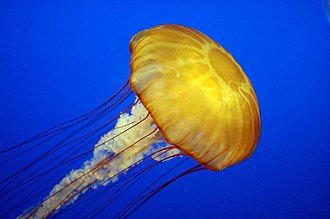
Some invertebrates live in the sea, such as starfish, sea anemones, and jellyfish. Sea sponges are among the oldest animals of all. Some invertebrates, like roundworms, live in water too.
Living Without a Backbone
Invertebrates do not have bones inside their bodies. Some are soft, like jellyfish and worms. They use water inside their bodies to help them keep their shape. Others have hard shells on the outside. Fiddler crabs and hermit crabs often have one claw that is bigger than the other.
Why People Study Invertebrates
Scientists have studied invertebrates for a very long time. The scientist Carl Linnaeus and the scientist Jean-Baptiste Lamarck helped people learn more about them. Today, invertebrates help scientists learn about medicine, nature, and how life began on Earth.

Quiz time!
3 questions about Invertebrate
What is a backbone?
Pictures
Keep exploring


This article is a child-friendly adaptation of the Wikipedia article on Invertebrate, available under CC BY-SA 4.0.
Images from Wikimedia Commons. Tap any image to view credits and license.