
Kharosthi
Ancient Writing from Faraway Lands
The Kharosthi script is an old way of writing used a long time ago. People first used it in a place called Gandhara, in the north-western part of the Indian subcontinent. It started between the 5th and 3rd century BCE, which is a very, very long time ago!
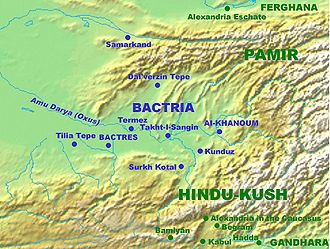
Many people in South Asia and Central Asia used Kharosthi for their writing. It stayed in use for many years, until around the 5th century CE. Some places far away, like Bactria, the Kushan Empire, Sogdia, and along the Silk Road, also used this special script. We even find signs of it in cities like Khotan and Niya in the Tarim Basin.
How Kharosthi Looks and Works
Kharosthi is written from right to left, which is the opposite way we write today! It has special letters and signs to make words. One fun fact is that it was based on the Aramaic alphabet, but with many changes to fit the sounds of the languages people spoke.
People used Kharosthi to write many things, including old Buddhist books called the Gandhāran Buddhist texts. These books were found near a city called Hadda close to the Khyber Pass in Pakistan. They are very old and help us learn about history.
Kharosthi even appeared on coins from kings a long time ago. Researchers learned to read it by using coins that had text in both Greek and Kharosthi.
Letters and Numbers
The Kharosthi alphabet has a special order of letters, and it includes marks to change the sounds of letters. It also has its own way to write numbers, like using symbols for 1, 2, 3, and so on, similar to how we use numbers today.
People loved this ancient script, and it helps us understand how people communicated many years ago.
Pictures
Keep exploring




This article is a child-friendly adaptation of the Wikipedia article on Kharosthi, available under CC BY-SA 4.0.
Images from Wikimedia Commons. Tap any image to view credits and license.