 Safekipedia
Ozone
Adapted from Wikipedia · Explorer experience
What is Ozone?
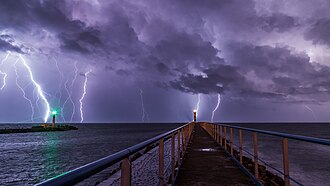
Ozone is a special kind of molecule made of three oxygen atoms. It looks like a pale-blue gas and has a sharp smell, a bit like chlorine bleach. This gas can form when ultraviolet light from the Sun or lightning changes normal oxygen into ozone.
Where Do We Find Ozone?
You can find ozone high above the Earth in a layer called the ozone layer. This layer is very important because it absorbs most of the Sun’s harmful ultraviolet radiation, protecting all living things on Earth.
Even though ozone is helpful up high, it can be irritating closer to the ground. Because it is very reactive, ozone is used in many industries for cleaning and purifying things, but it must be handled carefully.
A Little History
The name “ozone” comes from a Greek word meaning “to smell.” This is because ozone has a sharp, noticeable odor. A scientist named Christian Friedrich Schönbein discovered ozone after lightning strikes in 1839. He named it “ozone” from the Greek word for “to smell.” For many years, people thought ozone was healthy because of its fresh smell.
Ozone is a pale blue gas that can dissolve in water. When it gets very cold, ozone can change into a dark blue liquid or a violet-black solid. Small amounts of ozone in the air can irritate your eyes, nose, and throat. It can also change the shape of materials like rubber and plastics.
Ozone is used in industry to make medicines and clean materials. It also helps kill germs in air and water. Many drinking water systems use ozone to keep water clean. Ozone is strong but breaks down fast, so it leaves no harmful remains in water.
Images
Related articles



This article is a child-friendly adaptation of the Wikipedia article on Ozone, available under CC BY-SA 4.0.
Images from Wikimedia Commons. Tap any image to view credits and license.