 Safekipedia
Sino-Tibetan languages
Adapted from Wikipedia · Explorer experience
Sino-Tibetan Languages
Sino-Tibetan languages are a big group of more than 400 languages. About 1.4 billion people speak these languages. That makes them one of the largest language families in the world!
The most spoken group is the Sinitic languages. This includes Mandarin and other Chinese dialects. Around 1.3 billion people speak these languages. They live mostly in eastern China.
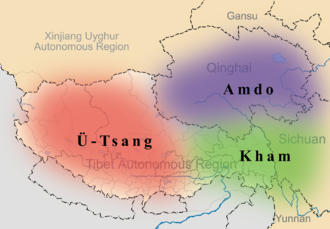
Other important Sino-Tibetan languages are Burmese and the Tibetic languages. Burmese is spoken by about 33 million people in Myanmar. Tibetic languages are spoken by around 6 million people on the Tibetan Plateau and nearby areas.
Many smaller Sino-Tibetan languages are spoken in the Himalayas, the Southeast Asian Massif, and the eastern edge of the Tibetan Plateau. These languages are often found in remote, mountainous areas.
Scientists are still learning about how all these languages are related. They used to think they split into two big groups: Sinitic and Tibeto-Burman. But now they are not sure.
Fun Facts
- The first Chinese writing is from around 1250 BC. It was called oracle bone inscriptions.
- Burmese became the main language of Myanmar in the ninth century.
- The Tibetic languages come from Old Tibetan, spoken in the Yarlung Valley.
Sino-Tibetan languages have many different ways of building sentences and using sounds. Most follow a special order when they speak. Some, like Chinese, say who does something and then what happens. These languages also use tones — changes in how high or low a sound is — to tell words apart.
Images
Related articles


This article is a child-friendly adaptation of the Wikipedia article on Sino-Tibetan languages, available under CC BY-SA 4.0.
Images from Wikimedia Commons. Tap any image to view credits and license.