
Taxonomic rank
What is Taxonomic Rank?
Taxonomic rank is like a special level or group that helps scientists organize living things. It shows how these living things are related to each other. Think of it like putting toys in different boxes — some boxes hold bigger groups, and some hold smaller groups.
Big Groups and Small Groups
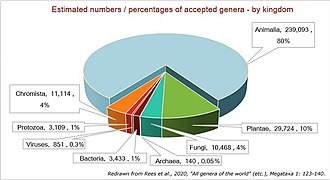
The biggest groups are called domains and kingdoms. For example, animals and plants are in different kingdoms. Smaller groups are called species. Humans are a species called Homo sapiens.
Here’s a simple way to remember the main groups, from biggest to smallest: Kingdom, Phylum, Class, Order, Family, Genus, Species. You can think of it like this fun phrase: "King Phillip Came Over For Great Spaghetti".
How It Works with Animals
Let’s look at the red fox. Its full name is Vulpes vulpes. Here’s how it fits into the groups:
- Kingdom: Animalia (all animals)
- Phylum: Chordata (animals with a backbone)
- Class: Mammalia (warm-blooded animals that have babies)
- Order: Carnivora (animals that eat meat, like dogs and bears)
- Family: Canidae (dogs, wolves, and foxes)
- Genus: Vulpes (the fox group)
- Species: Vulpes vulpes (the red fox)
Why It Matters
This system helps scientists all over the world talk about living things in the same way. It makes it easier to study and learn about all the amazing creatures on Earth. Even though some scientists think these groups don’t always fit perfectly, they are still very useful.
Fun Fact
Scientists sometimes use fun phrases to remember these groups. One popular one is "King Phillip Came Over For Great Spaghetti". This helps kids and adults remember the order of the groups from biggest to smallest!
Keep exploring



This article is a child-friendly adaptation of the Wikipedia article on Taxonomic rank, available under CC BY-SA 4.0.