Visible spectrum
What is the visible spectrum?
The visible spectrum is the band of the electromagnetic spectrum that the human eye can see. The light in this range is called visible light, or just light. Some people call it the optical spectrum.
Colors we can see
A typical human eye can see light with wavelengths from about 380 to 750 nanometers. Colors made from only one wavelength are called spectral colors. Pink and purple shades like magenta are not in the spectrum, because they are made by mixing several wavelengths.
Visible light passes mostly unchanged through the Earth's atmosphere. Clean air scatters blue light more than red light, which is why the sky looks blue during the day.
Learning about light
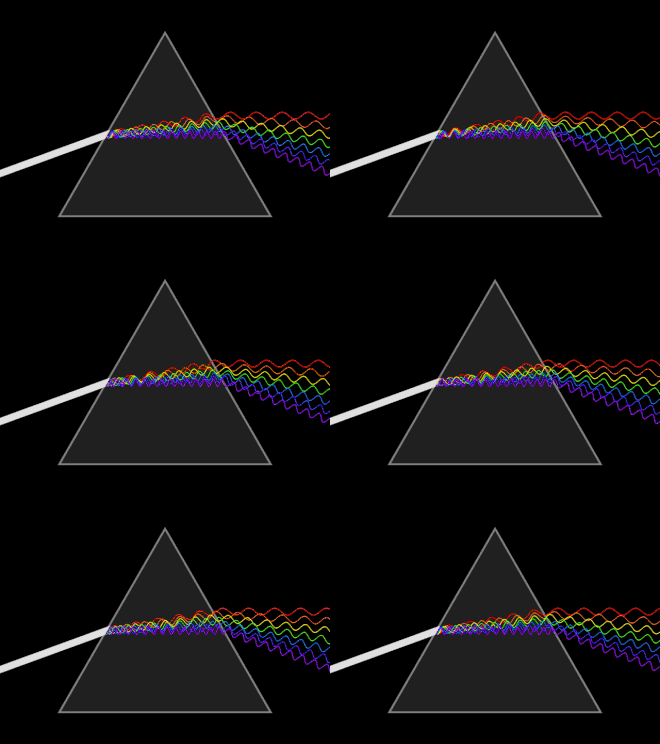
Long ago, Isaac Newton showed that a prism could split white light into colors. In 1671, he was the first to use the word spectrum in print. It comes from Latin and means "appearance." He first named six colors: red, orange, yellow, green, blue, and violet. Later, he added indigo.
Some animals see light differently than we do. Mantis shrimp can see light that people cannot see. Bees use ultraviolet light to find nectar in flowers.
Scientists use spectroscopy to learn about faraway objects in astronomy. For example, helium was first found by studying light from the Sun.

Quiz time!
3 questions about Visible spectrum
What can the human eye see?
Pictures
Keep exploring



This article is a child-friendly adaptation of the Wikipedia article on Visible spectrum, available under CC BY-SA 4.0.
Images from Wikimedia Commons. Tap any image to view credits and license.