Safekipedia

Woolly mammoth

Explorer · ages 7 and underAdapted from Wikipedia
Mural depicting a herd walking near the Somme River in France, by Charles R. Knight, 1916

What Is a Woolly Mammoth?

The woolly mammoth was a kind of elephant with thick, woolly fur. It lived a very long time ago, from the Middle Pleistocene until it died out in the Holocene time period. Its closest living relative is the Asian elephant.

Woolly mammoths were built for the cold. They had a coat of long hair on the outside and a short, thick layer underneath. Their ears and tails were small, which helped keep them warm. They had long, curved tusks and a trunk that they used to pick up things and find food.

Where They Lived

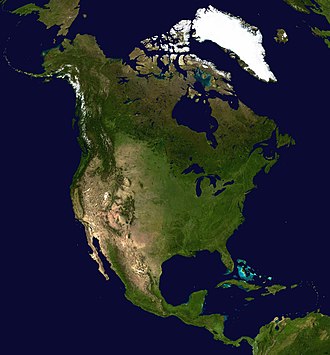
Woolly mammoths lived during the last ice age. They roamed a cold, grassy land called the mammoth steppe. This land stretched across northern Asia, parts of Europe, and northern North America. The last woolly mammoths lived on small islands, such as St. Paul Island and Wrangel Island.

How Big They Were

Woolly mammoths were about the same size as modern African elephants. Males were taller and heavier than females. A newborn baby mammoth, called a calf, weighed about 90 kilograms.

Why We Know About Them

Scientists have learned a lot about woolly mammoths. They studied frozen bodies, skeletons, and teeth. They also looked at pictures of mammoths in ancient cave paintings. In 1796, Georges Cuvier showed that the mammoth was an elephant species that had become extinct. Long ago, people sometimes thought the bones came from legendary creatures.

Some scientists have talked about bringing the woolly mammoth back someday. For now, though, none of those ideas are possible.

Quiz time!

3 questions about Woolly mammoth

Question 1 of 3

What kind of animal was the woolly mammoth?

Pictures

Mounted "family group" from Tomsk
A model of a woolly mammoth on display at the Royal BC Museum in Victoria, British Columbia, Canada.
An 18th-century scientific drawing comparing the jaw of a living Indian elephant with the fossil jaw of a woolly mammoth, from Georges Cuvier's study of elephants.
An early 19th-century attempt to reconstruct the Adams mammoth, a woolly mammoth skeleton, drawn as a copy of the first restoration made by scientists studying the fossil bones.
Drawings of fossil teeth from the woolly mammoth, Mammuthus primigenius, based on casts held in a museum. Scientists study teeth like these to learn about how ancient mammoths lived and ate.
A comparison of mammoth teeth: the lower back molar of a woolly mammoth (top) next to that of a southern mammoth. Both are shown at one-eighth of their natural size.
A cast of a woolly mammoth skeleton from the Steinheim an der Murr area, shown in a museum. This ancient elephant relative is an in-between form linking two earlier kinds of mammoth.
A mounted mammoth skeleton on display at the American Museum of Natural History. Scientists think this type of mammoth may have been a mix of two related mammoth species.
A size comparison of several mammoth species, showing how large they were next to a human silhouette. The woolly mammoth (M. primigenius) stood about 3.4 meters tall, while the pygmy mammoth (M. exilis) was only about 1.8 meters.
A scientific comparison of two woolly mammoth skeletons, shown at the same scale next to a human figure to illustrate how large these ancient animals were.
Preserved woolly mammoth hair on display at the Naturhistorisches Museum in Vienna, showing the thick fur that helped these ancient animals survive the Ice Age.
A woolly mammoth skull from Bzianka, Poland, showing one of its curved, spiralling tusks that bend downward.
A woolly mammoth tooth found at the Champdamoy spring in Quincey, France, now displayed in a museum in Vesoul.
The preserved trunk of a woolly mammoth found at Sanga-Yuryakh in Siberia. Frozen remains like this one, from the Ice Age, help scientists learn how these giant animals lived.
Life restoration of fauna during the Pleistocene epoch in northern Spain, by Mauricio Antón, 2004
Woolly mammoth engraved on ivory found in 1864, the first known contemporary depiction of a prehistoric animal
Map showing climatic suitability for woolly mammoths in the Late Pleistocene and Holocene of Eurasia: red is increasing suitability, green is decreasing suitability. Black points are records of mammoths, black lines are the northern limit of humans

Keep exploring

This article is a child-friendly adaptation of the Wikipedia article on Woolly mammoth, available under CC BY-SA 4.0.

Images from Wikimedia Commons. Tap any image to view credits and license.