Food storage
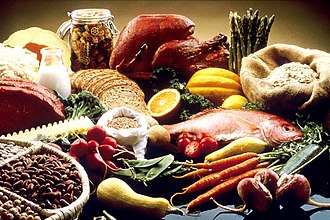
Food storage is a way of handling the ups and downs of food supplies. These ups and downs come from nature and cannot be avoided. Food storage lets people eat food for some time, usually weeks to months, after harvest, not just right away. Storing food is an old household skill, and it is often done through root cellaring. It is also an important business activity, called food logistics. Food preservation, storage, and transport are all part of it. This includes getting food to consumers on time. These steps are important for food security, especially for the many people around the world who depend on others to grow their food.
When storage conditions are poor, or when decisions made earlier in the supply chain shorten how long food stays fresh, a lot of food is lost. Good cold storage is especially important for keeping food from being lost, both in amount and in quality.
Almost every human society stores food, and some animals do too. Storing food has several main purposes. It helps prevent foodborne illness, which is sickness caused by eating food that has gone bad. It reduces food waste by saving food that has not been eaten for later. It allows harvested and processed plant and animal foods to be kept for distribution to consumers. It also makes it possible to have a balanced diet all year long. It keeps pantry foods, such as spices or dry ingredients like rice and flour, ready for cooking.
People also store food to get ready for disasters, emergencies, and times when food is hard to find or there is famine. For most people, this is basic emergency preparedness. A more extreme form is called survivalism (prepping). Food storage can also be done for religious reasons. For example, leaders in the LDS Church (Church of Jesus Christ of Latter-day Saints) tell church members to store food. Stored food can also help protect people from animals or theft.
Domestic food storage
Further information: Food safety and Food preservation
Food kept at home should follow safety advice from trusted sources, such as the United States Department of Agriculture or the European Food Safety Authority. Keeping the kitchen clean helps stop germs that cause food poisoning, such as Botulism, Listeriosis, Salmonellosis, and E. coli. There are also safety rules for home canning, such as how long to boil food.
Food kept frozen at 0 °F (−18 °C) or colder can be stored for a long time, but its quality may drop over time. Refrigerators should stay at 4 °C (39 °F) or colder, but not below 1 °C (34 °F).
Oils go bad quickly. Keep them in a dark place in sealed containers, and use opened oil within a few weeks.
Dry foods need care too. Different vegetables need different conditions. For example, onion should be kept cool and dry, while sweet potatoes should be kept warm and dry. Grain should be stored in metal cans to keep insects and rodents out. Spices and herbs lose their flavor after 6 months to a year. Meat spoils quickly unless it is refrigerated, frozen, dried, or cured.
Good storage also means using the oldest food first. This is called food rotation. Writing the date on containers when you store them can make this easier. Guides for surviving emergency conditions often recommend keeping a supply of essential foods at home. Stored staple foods can cost less than fresh food from a supermarket, but eating the same food every day can make people lose their appetite.
Commercial food logistics
Grain and beans are stored in tall grain elevators, usually at a railhead near where they are grown. Grain is shipped to the people who use it in hopper cars. In the former Soviet Union, grain was sometimes irradiated. In the U.S., grain is dried in the field and moved in large containers that keep pests out, so irradiation is not needed. Fresh fruits and vegetables are cooled as early as possible. They usually stay fresh for two weeks or less.
In the United States, livestock is usually moved alive and slaughtered at a major distribution point. The meat then travels for two days to a week in refrigerator cars. After that, it is cut up and sold nearby. Before refrigerated rail cars, animals had to be moved alive, so meat was very expensive. Only farmers and wealthy people could afford it every day. In Europe, much meat is moved alive and slaughtered close to where it is sold. In Australia and New Zealand, where much meat is sent to other countries, meat is kept cold from early on. It is stored in large freezer plants and then shipped overseas in freezer ships. The chain of cold storage that keeps it safe is called the cold chain.
Food storage facilities
People can keep food fresh in many ways, such as canning, food dehydration, and pickling. Some families used to store food at home in a pantry, a larder, or a root cellar.
Some buildings are used only for storing food. A cool store is a large room or building that is kept cold. A cool warehouse is an even bigger cold building. A silo stores grains such as wheat and maize. The 2800 Polar Way is the world's largest food freezer. Controlled atmosphere storage facilities control the air around fruit, including the oxygen, carbon dioxide, and humidity. This slows down how fast the fruit ripens and spoils, so it can last longer.

Quiz time!
4 questions about Food storage
About how long can food storage help people keep food after it is harvested?
Pictures
Keep exploring


This article is a child-friendly adaptation of the Wikipedia article on Food storage, available under CC BY-SA 4.0.
Images from Wikimedia Commons. Tap any image to view credits and license.