
Smithsonian Institution
The Smithsonian Institution is a group of museums, education and research centers created by the United States federal government "for the increase and diffusion of knowledge". It was founded on August 10, 1846, and is named after James Smithson, a British scientist who donated money to start it. It works closely with the government but is not part of any government branch.
Today, the Smithsonian has over 21 museums, 21 libraries, 14 research centers, a zoo, and many important historical buildings. Most of these are in Washington, D.C., with others in Maryland, New York, and Virginia. There are also many Smithsonian Affiliates in 47 states, Puerto Rico, and Panama.
The Smithsonian holds more than 157 million objects and artworks, making it one of the largest museum systems in the world. Almost all of its visitors can enter for free, except at the Cooper Hewitt, Smithsonian Design Museum in New York City, which charges a small fee.
Founding
The Smithsonian Institution started with people in Washington who wanted to share useful knowledge. They formed a group called the Columbian Institute in 1816. They planned to study plants, minerals, and more, but ran out of money.
The institution that became the Smithsonian was named after James Smithson, a British scientist. When his nephew died without children in 1835, Smithson left his money to the United States to create a place for learning and sharing knowledge. Congress accepted this gift in 1836. After many discussions, President James K. Polk signed the law creating the Smithsonian Institution on August 10, 1846. It was set up as a trust to be managed by a Board of Regents and a secretary.
Development
The Smithsonian Institution started to help with science and to keep many collections from the U.S. government. These included items from trips around the world and surveys of the American West, like plants, animals, rocks, and cultural objects.
Construction began on the main Smithsonian building, called "the Castle," in 1849. Over time, the Smithsonian grew by adding many museums and buildings. The first new museum was the Arts and Industries Building, which opened in 1881. Other museums came later, including the National Zoological Park in 1889 and the National Museum of Natural History in 1911. More museums opened over the years, such as the Freer Gallery in 1923 and the National Museum of African American History and Culture in 2016.
Museums
Main article: List of Smithsonian museums
The Smithsonian Institution has nineteen museums and galleries, including the National Zoological Park. Eleven of these museums are in the National Mall, a park in Washington, D.C., between the Lincoln Memorial and the United States Capitol. You can also find museums in other parts of Washington, D.C., New York City, and Chantilly, Virginia.
The Smithsonian works with 168 museums in 39 states, Panama, and Puerto Rico. These museums borrow items from the Smithsonian to show people. The Smithsonian also travels exhibitions around the country.
Collections
The Smithsonian has a huge collection of more than 156 million items, such as artworks, artifacts, and specimens. The National Museum of Natural History keeps many of these items, mostly preserved animals. You can search 9.9 million digital records online. The Smithsonian also has a big library and archives.
Some famous items in the museums include the Star-Spangled Banner, President Abraham Lincoln's hat, the ruby slippers from The Wizard Of Oz, and the original Teddy Bear named after President Theodore Roosevelt. In 2016, the Air & Space museum restored a large model of the starship Enterprise from the Star Trek TV series.
In 2022, the Smithsonian changed its rules to return items that were collected unfairly. That same year, artworks called Benin Bronzes were returned to Nigeria.
Open access
In February 2020, the Smithsonian began sharing 2.8 million digital items online for everyone to use freely, with plans to share more in the future.
Research centers
The Smithsonian has eight research centers in different places such as Washington, D.C.; Front Royal, Virginia; Edgewater, Maryland; Suitland, Maryland; Fort Pierce, Florida; Cambridge, Massachusetts; and Panama. In 2020, the Smithsonian Libraries and Smithsonian Archives joined together to become one research center.
| Research center | Area of focus | Location | Opened |
|---|---|---|---|
| Archives of American Art | History of the visual arts in the United States | Washington, D.C. New York City | 1954 1970 |
| Smithsonian Astrophysical Observatory | Astrophysics | Cambridge, Massachusetts | 1890 |
| Museum Conservation Institute | Conservation | Suitland, Maryland | 1965 |
| Smithsonian Conservation Biology Institute (affiliated with the National Zoo) | Veterinary medicine, reproductive physiology and conservation biology | Front Royal, Virginia | 1974 |
| Smithsonian Environmental Research Center | Coastal ecosystems | Edgewater, Maryland | 1965 |
| Smithsonian Libraries and Archives | Science, art, history and culture, and museology information and reference | Washington, D.C. | 1968 2020 |
| Smithsonian Marine Station at Fort Pierce (affiliated with the National Museum of Natural History) | Floridian marine ecosystems and lifeforms | Fort Pierce, Florida | 1981 1999 |
| Smithsonian Tropical Research Institute | Tropical ecology and its interactions with human welfare | Panama | 1923 1946 1966 |
Cultural centers
The Smithsonian Institution includes three cultural centers:
- Center for Folklife and Cultural Heritage
- Smithsonian Asian Pacific American Center
- Smithsonian Latino Center
The Smithsonian Latino Center was created in 1997 to show how Latino people have helped shape the arts, history, science, and culture at the Smithsonian. It is part of the Smithsonian and is led by a director.
The center started because a report showed that Latino contributions were not well shown at the Smithsonian. It has grown to support research, exhibitions, educational programs, and online content. It also offers programs to help Latino young people become leaders in arts and culture.
Publications
The Smithsonian Institution publishes the Smithsonian magazine every month and Air & Space Quarterly. The Smithsonian magazine began when a leader asked a former editor of Life magazine to make a publication about topics the Smithsonian cares about. Later, another leader started Air & Space magazine, which came out every two months from 1986 to 2022.
The Smithsonian also publishes books and scholarly works through different publishing names.
Awards
The Smithsonian gives special awards to people who do great work. The James Smithson Medal is the highest award and is given for amazing work in art, science, history, education, and technology. Another award, the James Smithson Bicentennial Medal, goes to people who help make big steps in areas that the Smithsonian cares about.
There are other awards too, like the Hodgkins Medal for helping us understand nature better, and the Langley Gold Medal for important studies about flying aircraft and aviation.
Administration
The Smithsonian Institution was created by an act of Congress and runs as a trust. Most of its workers are federal government employees. The Smithsonian Institution Office of Protection Services helps keep the Smithsonian safe and works with the National Capital Parks and the United States Park Police.
Congress approved the creation of the Smithsonian on August 10, 1846, and set up a Board of Regents to manage it. This board has seventeen members and meets at least four times a year. It includes the chief justice of the United States and the vice president of the United States.
Other board members include three members from the U.S. House of Representatives, three from the Senate, and nine citizen members chosen by the board and approved by Congress.
The Smithsonian’s top leader is called the secretary, chosen by the Board of Regents. The secretary is currently Lonnie Bunch, who began in 2019 after leading the National Museum of African American History and Culture.
Current Board of Regents
The current board members as of August 4, 2025[update]:
Secretaries of the Smithsonian Institution
The following persons have served as secretary of the Smithsonian Institution:
| Position | Name | Party | Residence | Assumed office | Term expiration | Appointed by |
|---|---|---|---|---|---|---|
| Chair | Risa Lavizzo-Mourey | Democratic | Pennsylvania | February 21, 2014 | March 2, 2026 | Barack Obama, Donald Trump |
| Vice chair | Franklin Raines | Democratic | Washington, D.C. | October 2, 2020 | October 2, 2026 | Donald Trump |
| Member | Barbara Barrett | Republican | Arizona | January 10, 2013 | September 17, 2026 | Barack Obama, Donald Trump, Joe Biden |
| Member | Toni Bush | Democratic | Washington, D.C. | December 21, 2023 | December 21, 2029 | Donald Trump |
| Member | John Fahey | Democratic | Massachusetts | February 21, 2014 | March 2, 2026 | Barack Obama, Donald Trump |
| Member | Roger W. Ferguson | Democratic | Florida | May 6, 2017 | December 21, 2029 | Donald Trump, Joe Biden |
| Member | Michael Govan | Democratic | California | May 6, 2017 | December 21, 2029 | Donald Trump, Joe Biden |
| Member | Michael Lynton | Democratic | New York | September 29, 2014 | October 2, 2026 | Barack Obama, Donald Trump |
| Member | Denise O'Leary | Independent | Colorado | April 10, 2020 | April 10, 2026 | Donald Trump |
| Senator (ex officio) | Catherine Cortez Masto | Democratic | Nevada | February 2, 2021 | January 3, 2029 | President pro tempore |
| Senator (ex officio) | Gary Peters | Democratic | Michigan | January 24, 2023 | January 3, 2027 | President pro tempore |
| Senator (ex officio) | John Boozman | Republican | Arkansas | May 21, 2015 | January 3, 2029 | President pro tempore |
| U.S. Representative (ex officio) | Carlos A. Giménez | Republican | Florida | January 24, 2025 | January 3, 2027 | Speaker of the House |
| U.S. Representative (ex officio) | Adrian Smith | Republican | Nebraska | April 8, 2021 | January 3, 2027 | Speaker of the House |
| U.S. Representative (ex officio) | Doris Matsui | Democratic | California | January 17, 2017 | January 3, 2027 | Speaker of the House |
| Chief Justice (ex officio) | John Roberts | Independent | Maryland | September 29, 2005 | — | George W. Bush |
| Vice President (ex officio) | JD Vance | Republican | Washington, D.C. | January 20, 2025 | January 20, 2029 | — |
| No. | Portrait | Secretary | Term start | Term end |
|---|---|---|---|---|
| 1 |  | Joseph Henry | 1846 | May 13, 1878 |
| 2 | 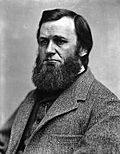 | Spencer Fullerton Baird | May 17, 1878 | August 19, 1887 |
| acting |  | Samuel Pierpont Langley | August 19, 1887 | November 18, 1887 |
| 3 | November 18, 1887 | February 27, 1906 | ||
| acting |  | Richard Rathbun | February 27, 1906 | January 24, 1907 |
| 4 |  | Charles Doolittle Walcott | January 24, 1907 | February 9, 1927 |
| acting | 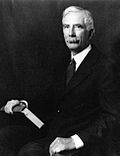 | Charles Greeley Abbot | February 10, 1927 | January 10, 1928 |
| 5 | January 10, 1928 | June 30, 1944 | ||
| acting |  | Alexander Wetmore | July 1, 1944 | January 12, 1945 |
| 6 | January 13, 1945 | December 31, 1952 | ||
| 7 | 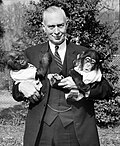 | Leonard Carmichael | January 1, 1953 | December 31, 1963 |
| 8 |  | Sidney Dillon Ripley | January 1, 1964 | September 16, 1984 |
| 9 |  | Robert McCormick Adams Jr. | September 17, 1984 | September 18, 1994 |
| 10 |  | Ira Michael Heyman | September 19, 1994 | December 31, 1999 |
| 11 | Lawrence M. Small | January 1, 2000 | March 26, 2007 | |
| acting | Cristián Samper | March 26, 2007 | June 30, 2008 | |
| 12 |  | G. Wayne Clough | July 1, 2008 | December 31, 2014 |
| acting | Albert G. Horvath | January 1, 2015 | June 30, 2015 | |
| 13 |  | David J. Skorton | July 1, 2015 | June 14, 2019 |
| 14 |  | Lonnie Bunch | June 15, 2019 | present |
Controversies
In 1995, there was a disagreement about an exhibit at the National Air and Space Museum showing the Enola Gay, an airplane from World War II. Some people thought the exhibit did not tell the whole story, so the Smithsonian changed it.
In 2003, an exhibit at the National Museum of Natural History with photographs of the Arctic National Wildlife Refuge was moved to a less visible area. Some people thought the topic was too political.
The Smithsonian has rules about who can use its images and films. Some images can be used freely, while others need permission.
In 2025, there was a request to review Smithsonian content to check its tone. No major changes have been announced yet.
Pictures
Keep exploring


This article is a child-friendly adaptation of the Wikipedia article on Smithsonian Institution, available under CC BY-SA 4.0.
Images from Wikimedia Commons. Tap any image to view credits and license.