The Explorers Club
The Explorers Club is an American-based international group that brings together people from many different fields. It is a professional society that works to promote scientific exploration and field study. The club was founded in New York City in 1904 and has served as a meeting point for explorers and scientists from around the world.
Each year, the club hosts a dinner to honor achievements in exploration. The dinner is known for its exotic, "adventurous" food.
In 2023, the club reported total revenue of $5,352,688 and total assets of $17,108,895. That year, it also reported total giving of $750,479.
For other uses, see Explorers Club (disambiguation).
History
In 1904, a group of men active in exploration met at the request of journalist, historian and explorer Henry Collins Walsh. They formed a club to unite explorers and promote exploration. Other early members included Adolphus Greely, Donaldson Smith, Carl Lumholtz, Marshall Saville, Frederick Dellenbaugh and David Brainard. The Explorers Club was officially incorporated on October 25, 1905. Women were first admitted in 1981, with a group that included Sylvia Earle and Kathryn Sullivan. Among the club's famous firsts are Robert E. Peary and Matthew Henson reaching the North Pole in 1909, Roald Amundsen reaching the South Pole in 1911, Sir Edmund Hillary and Tenzing Norgay reaching the summit of Mt. Everest in 1953, and Neil Armstrong and Buzz Aldrin reaching the surface of the Moon in 1969. The club has 34 chapters in the United States and around the world. These chapters act as local contact points for explorers, scientists and students, and many hold monthly dinners, lectures and seminars.
The club's first regular meeting was held at its original headquarters in the Studio Building in New York City. Later, it finished building a new headquarters at 544 Cathedral Parkway in 1928. In 1965, spurred by Lowell Thomas, the club bought its current headquarters on the Upper East Side. In the 1920s, the club began inviting explorers and scientists to share their experiences, and it still provides weekly lectures and programs. In 2022, the club and Discovery Channel created a series called Tales from the Explorers Club, hosted by Josh Gates. Today the club is formally associated with the United Nations Department of Global Communications and has a partnership with UNESCO. In 2026, it was granted Special Consultative Status with the United Nations Economic and Social Council.
Notable fellows and members
Main page: Category:Explorers Club people
The Explorers Club has about 3,500 members from every continent and more than 60 countries. The club sees exploration for field science as different from exploring for tourism. Members are people who take part in or support field science expeditions that explore unfamiliar or poorly understood places or things, to gain knowledge that helps humanity. The club wants its membership to include explorers of many kinds, including people of different races, cultures, genders, ages, sexual orientations, places, and income levels, as well as explorers with disabilities.
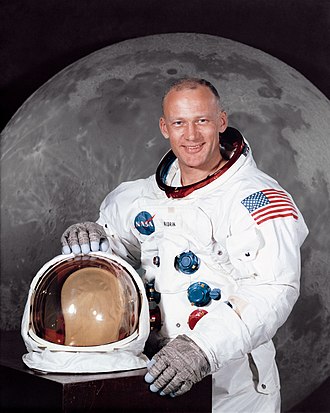
The club has several kinds of membership. Fellows have made documented contributions to science through field expeditions, often shown through scientific publications, books, or media. Members show a lasting interest in field exploration. Term memberships are open to full-time graduate students and teaching instructors. "Friends of the Club" support the club's mission. Student Members are full-time students aged 16 to 30 at accredited schools who want to pursue exploration or field science. Well-known members, fellows, and honorary members include Theodore Roosevelt, John Glenn, Jim Fowler, Walter Cronkite, Philip Johnston, Prince Philip, Duke of Edinburgh, Sir Edmund Hillary, Elon Musk, Jeff Bezos, Buzz Aldrin, Richard Wiese, and Albert I, Prince of Monaco.
The Explorers Club flag
The Explorers Club flag has been carried on hundreds of expeditions by club members since 1918. Before a member can take the flag, they must show that the expedition promises scientific results. The flag must be shown at every suitable chance during the expedition, and it must be returned to the club with a written record called the Flag Report. The club's Research Collections keeps these reports, including the original "Flag Book," a bound journal of handwritten reports, old prints, clippings, and other records from the explorers who first carried the flag.
There are currently 242 numbered flags, and many of the older ones have been retired. The flag has been carried on expeditions such as:
- Flag #2 – Roy Chapman Andrews – the Gobi Desert expeditions
- Flag #7 – Sir George Hubert Wilkins – the first trans-Arctic flights
- Flag #32 – Capt. Robert A. "Bob" Bartlett – the Effie M. Morrissey expeditions
- Flag #50 – Bertrand Piccard and André Borschberg – Solar Impulse across America
- Flag #61 – Luc Hardy – the Pax Arctica expedition (Canadian Arctic)
- Flag #71 – Raphaël Domjan – PlanetSolar, the first around the world with solar energy
- Flag #80 – Tim Taylor FN'04, Citation of Merit Laureate 2008 – Discovery of three lost US WWII submarines: Expedition R-12, Expedition S-26, Expedition S-28
- Flag #81 – Victor Vescovo and Patrick Lahey – the Five Deeps expedition
- Flag #105 – L. Ron Hubbard – The Alaska Radio Experimental Expedition
- Flag #123 – Thor Heyerdahl – the Kon-Tiki expedition
- Flag #132 – David Concannon for Jeff Bezos and Bezos Expeditions – the Saturn V F-1 engine search and recovery expedition
- Flag #134 – Gino Caspari – Discovery of Royal Scythian Tomb Tunnug 1
- Flag #150 – George Kourounis – collecting soil samples from the Darvaza gas crater
- Flag #161 – James Cameron – the Deepsea Challenger expedition
- Flag #163 – L. Ron Hubbard – The Oceanographic-Archeological Expedition (1961) and the Hubbard Geological Survey Expedition (1966)
- Flag #179 – David Isserman – introducing the endangered Sorraia horses to the Alentejo as a rewilding initiative
- Flag #193 – Naomi Uemura – first solo North Pole expedition
NASA missions Apollo 8, Apollo 11, Apollo 13 and Apollo 15 each carried miniature club flags on board.
Honors and grants
The Explorers Club Medal is the highest honor the Club can give. It is awarded for "extraordinary contributions directly in the field of exploration, scientific research, or to the welfare of humanity." Past winners include Robert E. Peary in 1914, Roald Amundsen in 1927, Sir Edmund P. Hillary in 1986, Neil Armstrong, Buzz Aldrin and Michael Collins for NASA in 1971, Dame Jane Goodall in 1993, James Cameron in 2013, and Neil deGrasse Tyson in 2015. The Legendary Explorer Medal honors "a feat of such courage and incredible accomplishment that has transcended the ordinary bounds of history." Recipients include John Glenn and Scott Carpenter in 2013, Dame Jane Goodall in 2020, and Rusty Schweickart in 2024. The Club also gives other awards, such as the Lowell Thomas Award, the Finn Ronne Memorial Award, the Buzz Aldrin Space Exploration Award, the Tenzing Norgay Award, and the William Beebe Award. Since 2021, The Explorers Club 50 award has recognized fifty people across all fields of natural history.
The Club also gives grants for field science and exploration, including the Youth Activity Fund Grant, the Exploration Fund Grant, and the President's Award for Exploration and Technology. The Scott Pearlman Field Award for Science and Exploration is named for one of the Club's youngest members, who joined at age 22. He was a photographer on three flag expeditions and died at age 38. He was the son of Club member and officer Robert E. Pearlman.
Presidents
The Board of Directors elects the presidents of the Explorers Club by vote after the Annual Meeting. Both men and women may offer their names for consideration.
| # | From | To | President |
|---|---|---|---|
| 1 | 1905 | 1906 | Adolphus Greely |
| 2 | 1907 | 1908 | Frederick Cook |
| 3 | 1909 | 1911 | Robert Peary |
| 4 | 1912 | 1913 | David Legge Brainard |
| 5 | 1913 | 1916 | Robert Peary |
| 6 | 1917 | 1918 | Carl Akeley |
| 7 | 1919 | 1922 | Vilhjalmur Stefansson |
| 8 | 1922 | 1925 | George Gustav Heye |
| 9 | 1926 | 1927 | James Ford |
| 10 | 1928 | 1930 | George Gustav Heye |
| 11 | 1931 | 1934 | Roy Chapman Andrews |
| 12 | 1935 | 1937 | Walter W. Granger |
| 13 | 1937 | 1939 | Vilhjalmur Stefansson |
| 14 | 1940 | 1943 | Herbert Spinden |
| 15 | 1944 | 1946 | Alexander Wetmore |
| 16 | 1947 | 1948 | Clyde Fisher |
| 17 | 1949 | 1950 | James Chapin |
| 18 | 1951 | 1952 | John Tee-Van |
| 19 | 1953 | 1954 | Edward Weyer Jr. |
| 20 | 1955 | 1958 | Serge A. Korff |
| 21 | 1959 | 1961 | Charles Hitchcock |
| 22 | 1961 | 1963 | John Pallister |
| 23 | 1963 | 1965 | Serge A. Korff |
| 24 | 1965 | 1967 | Edward C. Sweeney |
| 25 | 1967 | 1971 | Walter Wood |
| 26 | 1971 | 1973 | Hobart Van Dressen |
| 27 | 1973 | 1975 | Russell Gurnee |
| 28 | 1975 | 1976 | E. Lovell Becker |
| 29 | 1976 | 1978 | Virgil Kauffman |
| 30 | 1978 | 1981 | Charles Brush |
| 31 | 1981 | 1985 | George V.B. Cochran |
| 32 | 1985 | 1987 | John Levinson |
| 33 | 1987 | 1989 | John Bruno |
| 34 | 1989 | 1991 | Nicholas Sullivan |
| 35 | 1991 | 1993 | David Swanson |
| 36 | 1993 | 1996 | John Loret |
| 37 | 1996 | 2000 | Alfred S. McLaren |
| 38 | 2000 | 2002 | Faanya Rose |
| 39 | 2002 | 2006 | Richard Wiese |
| 40 | 2006 | 2009 | Daniel Bennett |
| 41 | 2009 | 2012 | Lorie Karnath |
| 42 | 2012 | 2015 | Alan Nichols |
| 43 | 2015 | 2018 | Ted Janulis |
| 44 | 2018 | 2021 | Richard Wiese |
| 45 | 2021 | 2025 | Richard Garriott |
| 46 | 2025 | 2026 | Richard Wiese |
| 47 | 2026 | Barbara Doran |

Quiz time!
5 questions about The Explorers Club
In which city was the Explorers Club founded?
Keep exploring




This article is a child-friendly adaptation of the Wikipedia article on The Explorers Club, available under CC BY-SA 4.0.
Images from Wikimedia Commons. Tap any image to view credits and license.