Scientific method
The scientific method is a way of learning about the world through careful observation, questioning, testing ideas, and checking results by experiment. It grew out of ancient and medieval practices. It also recognizes that people's own assumptions can change how they understand what they see. Science has used this method since at least the 17th century. Scientists usually start by creating a testable idea, called a hypothesis, using inductive reasoning. They then test it with experiments and statistical analysis, and they change or drop the idea depending on what the results show.
Although the details differ from one field of study to another, the basic process is often similar. Scientists make a guess, or conjecture, which is a possible explanation. They then predict what should happen if the guess is right, and carry out experiments or careful observations to check those predictions. A hypothesis is based on what someone has learned while searching for an answer to a question. It can be very specific or very broad, but it must be falsifiable. This means there must be a possible result of an experiment or observation that would go against what the hypothesis predicts. Otherwise, the hypothesis cannot be properly tested.
The scientific method is often shown as a fixed list of steps, but it is really a set of general ideas. Not every step happens in every scientific inquiry, and they do not always happen in the same order or to the same degree. Many discoveries did not follow the textbook version of the method, and in some cases, luck played a part.
[Main article: History of scientific method]
For a chronological guide, see Timeline of the history of the scientific method.
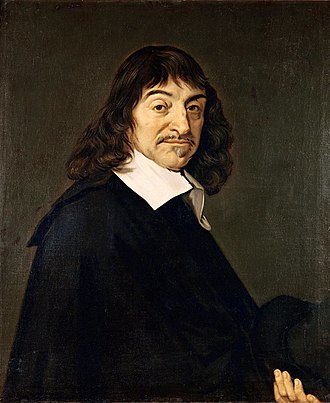
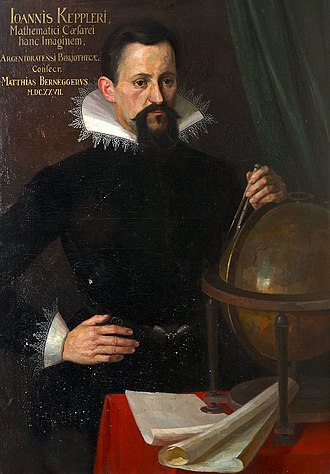
The history of science is not the same as the history of the scientific method. Rules for scientific reasoning did not develop in a straight line, and scientists and thinkers have long argued about which approach is best. Early forms of empiricism, which means learning from observation, and the scientific method appear in the ideas of the ancient Stoics, Aristotle, Epicurus, Alhazen, Avicenna, Al-Biruni, Roger Bacon, and William of Ockham. During the Scientific Revolution of the 1500s and 1600s, Francis Bacon and Robert Hooke pushed empiricism further, and René Descartes described a rationalist approach. Inductivism became especially important through scientists such as Isaac Newton and those who followed him. Newton set out four principles that form the basis of modern science and improved the scientific method. Experiments were recommended by Francis Bacon and carried out by Giambattista della Porta, Johannes Kepler, and Galileo Galilei. Thinkers such as the doubter Francisco Sanches, and John Locke, George Berkeley, and David Hume, also helped with their theories. In the 20th century, C. S. Peirce formulated the hypothetico-deductive model, which has changed a lot since. The term scientific method appeared in the 1800s, as science grew into institutions and new words such as scientist and pseudoscience helped draw boundaries between science and non-science. In the 1830s and 1850s, when Baconianism was popular, naturalists including William Whewell, John Herschel, and John Stuart Mill debated "induction" and "facts." In the late 1800s and early 1900s, a debate over realism and antirealism took place as powerful theories reached beyond what could be observed.
The term scientific method became widely used in the 1900s, after Dewey's 1910 book, How We Think, inspired popular guidelines. It appeared in dictionaries and textbooks, though people did not agree on its meaning. By the 1960s and 1970s, philosophers such as Thomas Kuhn and Paul Feyerabend questioned whether one universal "scientific method" existed, and they described science as a varied, local practice. In his 1975 book Against Method, Feyerabend argued that there are no universal rules of science, while Karl Popper disagreed. Later, physicist Lee Smolin wrote the 2013 essay "There Is No Scientific Method," in which he supports two ethical principles. In 2015, historian of science Daniel Thurs concluded that the scientific method is a myth or, at best, an idealization. Because myths are beliefs, they are subject to the narrative fallacy, as Taleb pointed out. Philosophers Robert Nola and Howard Sankey said in their 2007 book Theories of Scientific Method that debates continue. Staddon (2017) argues that "science is best understood through examples." However, methods such as disproof of existing theory by experiment have been used since Alhacen (1027) and his Book of Optics, and since Galileo (1638) and his Two New Sciences and The Assayer, which still stand as scientific method.
Elements of inquiry
Main article: Hypothesis formation
Further information: Prediction § Science
Main article: Experiment
See also: Scientific literature and Scholarly communication
Main article: Reproducibility
The scientific method is the process by which science is carried out. Science can build on earlier knowledge and bring together what is understood about its topics over time. The method usually involves making a guess, called a hypothesis, predicting what would follow from that guess, and then running experiments to see whether the guess was right. Each step is checked by other experts through peer review. The method is not a strict recipe, and its steps do not always happen in the same order. It needs thinking, imagination, and creativity.
Scientists collect careful observations and measurements, form possible explanations, make predictions, and test them. They share their results so that other scientists can repeat the work and check it. This cycle keeps repeating, and new information can lead to new questions and new explanations. Some thinkers, including Paul Feyerabend, argue that these simple descriptions of the method do not match how science is really done.
Foundational principles
See also: Scientific integrity and Open science
Science aims for accuracy and honesty, and openness is a matter of degree, limited by careful doubt. In 2013, Smolin shared ethical principles rather than a strict definition of how inquiry should work. He said honesty grew more important with big science, where reproducibility matters, and that science is a community effort by people who have accreditation and work within the community. Popper went further and said a theory has value only if it is falsifiable, meaning it can be shown to be wrong. This separates science from astrology, since both "explain" what we see, but a scientific theory makes predictions that can show whether it is right or wrong.
Science has limits, such as questions of faith, and the nature of truth is best left to the philosophy of science. Because theory is needed to understand data, observation is shaped by the observer's ideas, as noted above, which can lead to false conclusions. Johannes Kepler and Tycho Brahe saw the same sunrise but reached different conclusions, and the discovery of Neptune was made through mathematics. Scientists rely on empiricism, the idea that knowledge comes from observation, rather than rationalism, revelation, dogma, or tradition alone. In 1877, C. S. Peirce described inquiry as moving from real doubt to a belief one is ready to act on, in line with his pragmatic views. This was different from Cartesian doubt, linked to René Descartes. Today, scientific modelling is widely accepted, and in 2010, Hawking suggested that models should be accepted when they make useful predictions, calling this model-dependent realism.
Rationality
Main articles: Deductive reasoning and Inductive reasoning
Scientists try to test their hypotheses in controlled conditions whenever they can. This careful testing helps reduce the effect of bias. Beliefs can change how people read results. Confirmation bias makes a person see things that support what they already believe, even when others see it differently. A famous example is the old belief about how a galloping horse's legs move, which was shown in paintings. The photographs taken by Eadweard Muybridge showed that this belief was false, and that the legs are gathered together instead.
Scientists use two kinds of reasoning. Inductive reasoning builds general ideas from what is observed, so its conclusions are likely but not certain. Deductive reasoning starts from general principles to reach specific conclusions. Science uses both: observations suggest hypotheses, and hypotheses predict results that can be tested. Scientists also need to be careful about uncertainty in measurements, and statistics must be checked closely. For example, Bayes' theorem explains how probabilities change when new information arrives.
Methods of inquiry
Scientists use a few different ways to find out what is true. In the hypothesis testing method, a scientist makes a guess, tests it through experimentation, and then describes the results. A hypothesis makes predictions, and experiments check whether those predictions come true. A hypothesis can never be fully proven, but it can be shown to be wrong. If a theory's results turn out to be false in a test, then the idea behind them was wrong too. If the results are not false, they support the idea but do not prove it. Popper said that good hypotheses must be falsifiable, meaning they can be tested and shown wrong. Abductive reasoning is another approach, and it leads to a conclusion about what is likely, rather than what is true or false. The inductive method, which grew from the work of Francis Bacon and Isaac Newton, often starts with a research question instead of a hypothesis. Scientists collect and study large amounts of data and then draw conclusions. This approach is used for tasks such as finding large primes, which are used in encryption software.
Mathematical modelling builds mathematical versions of a system that can be tested instead of doing physical lab experiments. Scientists simplify the system to focus on what matters, and then use rules to connect the model back to reality. The model is studied with mathematics and computers, and the results are translated back to the real world. Some models use random data, such as Monte-Carlo simulations, which can still be useful even if they do not reveal universal rules. The idea of keeping things simple is explored below.
Scientific inquiry
Scientists aim to gain knowledge through testable explanations that they can use to predict the results of future experiments. A good explanation helps scientists understand a topic better and can later be used to act on its causes, such as finding a cure for a disease. The most successful explanations, which make accurate predictions in many different situations, are often called scientific theories. Most experiments do not change human understanding much. Instead, understanding usually grows slowly over time, sometimes across different fields of science. Explanations become accepted as evidence builds up and they explain that evidence better than other ideas do.
Scientific knowledge is closely tied to empirical findings and can always be checked again, since new observations that do not fit a theory can lead to changes. No theory is ever completely final, and a theory is stronger the longer it lasts without big changes to its main ideas. Theories can also be absorbed by other theories. Newton's laws explained the movements of the planets almost perfectly for thousands of years, but they were later found to be special cases of a more general theory, relativity, which also explained the bending of light by gravity. Newer theories can often explain more than older ones. The theory of evolution explains the diversity of life on Earth, how species adapt, and many patterns in nature. Its most recent major change came when it joined with genetics to form the modern evolutionary synthesis, and it later absorbed ideas from fields such as biochemistry and molecular biology.
Heuristics
Over history, one scientific theory has often replaced another, and the reasons are not always simple. Scientists and philosophers have long asked what makes a "good" theory, so that they can choose between theories without letting cognitive bias affect the choice. Good theories are usually accurate, consistent inside themselves, able to explain more than the data they were built from, able to join different phenomena together, and useful for future research. When evidence is limited, scientists favor parsimony and observations that do not change. These ideas are heuristics, or helpful guides, rather than final rules, and they do not always decide between two theories. As Bird explains, it can be unclear which features count, the rules are not exact, and they can conflict with each other. Some goals may also not yet be reached by any current theory.
Parsimony, the idea that the simplest explanation is usually best, has been discussed for centuries, perhaps even before Occam's razor. However, simplicity does not mean being narrow-minded. Paul Krugman encouraged scientists to "dare to be silly," and in his work on international trade he reviewed prior work with an open mind. Some thinkers also link good theories to elegance and invariance, meaning patterns that stay the same from different viewpoints. This idea goes back to Mill's Methods, and David Deutsch wrote that "the search for hard-to-vary explanations is the origin of all progress." In one of Einstein's thought experiments, a floating experimenter in a lab cannot tell gravity from acceleration, a clear example of an unchanging observation. The physicist Max Born also described reality as a kind of invariance that does not depend on viewpoint. Related ideas include symmetry, falsifiability, and testability. A theory that cannot be tested was described by Wolfgang Pauli as "not even wrong."
Philosophy and discourse
See also: Philosophy of science and Sociology of scientific knowledge
Philosophy of science studies the underpinning logic of the scientific method, what separates science from non-science, and the ethic that is built into science. Some basic assumptions form the base of the method. They say that reality is objective and consistent, that people can perceive reality accurately, and that rational explanations exist for the real world. These ideas come from methodological naturalism. Logical positivist, empiricist, falsificationist, and other theories have criticized these assumptions, but each of those theories has also been criticized. Some thinkers, called unificationists, believe one useful definition of the method works in every area of science. Pluralists believe science is too varied for one definition. Others think that trying to define the method can harm the free flow of ideas. Thinkers have also studied the social setting in which science is done and how it affects research. The idea of a single "scientific method" was made popular in education by Dewey and Karl Pearson, and was often used without much questioning.
Main article: Scientific pluralism
Scientific pluralism rejects the idea that science has one unified method and subject matter. Pluralists say science is not unified in its metaphysics, its epistemology, or its research methods. Some believe this is natural, while others say that scientific disciplines already differ in practice and that unity must first be empirically shown. Main article: Unity of science
Unificationism was a central idea of logical positivism. It was understood in several ways, such as reductionist claims that the special sciences reduce to physics, or that all sciences share one common method. The idea has been challenged by fast changes in technology. As Steven Weinberg said in 1995, "We do not have a fixed scientific method to rally around and defend." Main article: Epistemological anarchism
Paul Feyerabend studied the history of science and denied that science is truly a single method. In his 1975 book Against Method, he argued that no description of method could possibly be broad enough to cover all the ways scientists work, and that no methodological rulesare free of exceptions. He jokingly said the only universal rule should be 'anything goes'. Others replied that this approach wastes resources, and that problem solvers must use their time carefully. In science education, the idea of one universal method has been influential, but scientists have argued that the step-by-step version taught in schools does not match how scientists really work. The US standards of NGSS replaced those of NRC, and they moved away from one hypothesis-testing method. Thinkers in the sociology of knowledge, such as Fleck, Kuhn, and Karin Knorr Cetina, argued that research is shaped by shared assumptions and different epistemic cultures. Norwood Russell Hanson showed that observation is shaped by the observer's conceptual framework. Later, the strong programme explained scientific beliefs through social factors, and the science wars continue to debate whether science reveals real truth. See also: Philosophy of education and Scientific literacy
Limits of method
Main article: Role of chance in scientific discoveries
Somewhere between 33% and 50% of all scientific discoveries are estimated to have been stumbled upon rather than sought out, which may be why scientists often say they were lucky. Louis Pasteur is credited with the saying "Luck favours the prepared mind," and some psychologists study what it means to be prepared for luck. Nassim Nicholas Taleb calls this "anti-fragility." While some systems are weakened by human error, human bias, and randomness, the scientific method can benefit from them. Psychologist Kevin Dunbar says discovery often starts when researchers find bugs in their experiments. When these unexpected results keep happening, the careful and curious methods of science help researchers find the cause.
Statistics can also make science less reliable. A popular 2005 paper, "Why Most Published Research Findings Are False," by John Ioannidis, is considered foundational to metascience, which studies poor use of statistics, such as the misuse of p-values. Research findings are less likely to be true when studies are small, when study designs are flexible, or when money, bias, and competition are high. Still, most new discoveries come from research that begins with low chances of success, so exploring areas outside the mainstream matters. Complex systems can be hard to study with the scientific method. Fields such as transdisciplinarity, systems theory, control theory, and scientific modelling help with these challenges. Big data practices like predictive analytics may clash with the method when data is stripped of details that could matter, leaving data that only supports the null hypothesis. Fleck (1979) notes that a scientific discovery remains incomplete without considerations of the social practices that shape it.
Relationship with mathematics
Science is the process of gathering, comparing, and testing proposed models against observables. A model can be a simulation, a mathematical or chemical formula, or a set of steps. Science is like mathematics because researchers in both try to tell what is known from what is unknown. In both, models need to be internally consistent and should be falsifiable, meaning they can be shown to be wrong. Mathematical and scientific work can also inspire each other. For example, the idea of time arose in science, and timelessness was a feature of a mathematical topic. Today, the Poincaré conjecture has been proved using time as a mathematical idea in which objects can flow (see Ricci flow). Still, the connection between mathematics and reality remains unclear. Eugene Wigner's paper, "The Unreasonable Effectiveness of Mathematics in the Natural Sciences", is a well-known account of this question by a Nobel Prize-winning physicist. Some observers, including Gregory Chaitin and Lakoff and Núñez, suggest that mathematics comes from the biases and limits of the people who practice it, including cultural ones. George Pólya's work on problem solving, the building of proofs, and heuristics shows that the mathematical method and the scientific method differ in detail but both use repeated steps.
Imre Lakatos built on Pólya's work and argued that mathematicians use contradiction, criticism, and revision to improve their work. In Proofs and Refutations, he showed that no theorem of informal mathematics is final or perfect. We cannot say a theorem is ultimately true, only that no counterexample has been found yet. When one is found, the theorem is adjusted, sometimes to cover more cases. Lakatos also believed that mathematical 'thought experiments' are a valid way to discover conjectures and proofs. When asked how he came up with his theorems, Gauss once replied "durch planmässiges Tattonieren" (through systematic palpable experimentation).
| Mathematical method | Scientific method | |
|---|---|---|
| 1 | Understanding | Characterization from experience and observation |
| 2 | Analysis | Hypothesis: a proposed explanation |
| 3 | Synthesis | Deduction: prediction from the hypothesis |
| 4 | Review/Extend | Test and experiment |

Quiz time!
5 questions about Scientific method
What is a hypothesis in the scientific method?
Pictures
Keep exploring




This article is a child-friendly adaptation of the Wikipedia article on Scientific method, available under CC BY-SA 4.0.
Images from Wikimedia Commons. Tap any image to view credits and license.