
Sion, Switzerland
Sion is a town in Switzerland, located in the beautiful Rhône valley. It is the capital of the canton of Valais and has a population of about 34,978 people. The town has a rich history and many interesting landmarks, such as the Basilique de Valère and the Château de Tourbillon.
Over the years, Sion has grown by merging with nearby areas. In 1968, Bramois became part of Sion, followed by Salins in 2013 and Les Agettes in 2017. Sion also has an airfield that is used for both civilian flights and military purposes, including important air rescue missions.
History
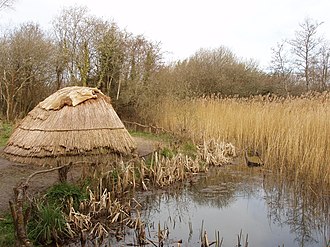
Sion is one of the most important prehistoric sites in Europe. People have lived there since around 6200 BC, during the late Mesolithic period. Early Neolithic farmers settled in Sion around 5800 BC. Over time, the settlements grew, and by about 4500 BC, farming and grazing expanded throughout the valley. They buried their dead in stone burial boxes with carved stones.
Later, during the Celtic period, Sion was the capital of the Seduni tribe. The Romans conquered the area in the 10s BC and renamed the town Sedunum. Roman buildings, including baths and homes, have been found in Sion.
Sion became an important religious center when the Catholic diocese was established there. The first cathedral was built in the 6th century, and the city grew as the bishop settled there. In 999, the bishop was granted control of the entire County of Valais, and Sion became its capital.
During the Middle Ages, Sion developed its own city government and freedoms. By the 14th century, Sion had city walls, a market, and its own council. The city faced wars and attacks but managed to keep many of its rights.
In more recent times, Sion has been a peaceful place. It has tried to host the Winter Olympics several times but was not selected. Archaeologists have also made interesting discoveries, like standing stones from around 2,500 BC.
Geography
Sion covers an area of 34.86 km2 (13.46 sq mi). Much of the land is used for growing crops, while some areas are covered with forests. A portion of the land is built up with buildings and roads, and a small part is unproductive.
Sion is one of the driest and sunniest places in Switzerland, with about 82 days of rain or snow each year. The wettest month is December, while April is the driest. The climate is warm and humid, classified as "Cfb" on climate maps.
Coat of arms
The coat of arms of Sion has a special design. It is split into two parts. The top part is silver with two red five-pointed stars, and the bottom part is red. This design represents the town's unique identity and history.
Demographics
Sion has a population of 34,978 people as of December 2020. Many people living in Sion come from other countries, making up almost 27% of the population. Most people speak French, with smaller groups speaking German, Portuguese, Italian, and Romansh.
About a quarter of the population are children and teenagers, while most people are adults. There are many married people, along with some who are single, divorced, or widows/widowers. The town has many homes, most of which are lived in year-round, with fewer being used for holidays or standing empty.
Historic population
Sion, Switzerland, has grown over time. A chart shows how the number of people living there has changed through the years. This helps us see how the town has developed and become more populated.
Politics
Sion has a municipal council with 15 members who are elected every four years by the people. This council helps make decisions for the town.
Sion also has a special group called the Bourgeoisie, made up of seven people, including a president, a vice-president, and five counselors. This group helps protect the rights of the original inhabitants.
In recent elections, different parties have been popular. For example, in the 2015 federal election, the most popular party was the CVP, followed by the FDP, the SVP, and the SP. Voter turnout has varied over the years, with around half to more than half of eligible people voting in different elections.
Economy
The main economic activity in Sion happens in the tertiary sector, which includes services. This is mostly because of the local government offices, the Valaisan parliament, and the canton's courthouse. Tourism is also very important, thanks to Sion's historic castles and museums.
Sion is the third largest place for making wine in Switzerland. However, there is less space for farming and vineyards now because of growing cities. Sion is also a key place for healthcare, with a large hospital and a clinic for physical rehabilitation. The town also has a waste facility that safely disposes of trash from many nearby areas and uses the heat from burning waste to make electricity.
Heritage sites of national significance
Sion has 14 important buildings and places that are protected as special heritage sites of Switzerland. These include museums, old castles, churches, and even the remains of a very old village from long ago.
One special feature of Sion is its old town, with two hills that have important churches and castles. The Valère Basilica on one hill has the oldest working organ in the world, made in the 1400s.
Airshows
Public air shows have taken place at the airfield in Sion. Famous aerobatic teams like the Frecce Tricolori from Italy and the Patrouille de France have given performances there.
Sport
Sion is a great place for sports! The football club FC Sion plays in the Swiss Super League, and their home games are at the Stade Tourbillon. The city’s main ice hockey team is HCV Sion, and they compete in the Swiss Premiere League at the Ancien Stand arena, which can seat 1,200 fans.
In 2021, Sion opened a special surfing wave pool made by Wavegarden, the first of its kind in mainland Europe. Although Sion has never hosted the Olympics, the city has tried to be a host in the years 1976, 2002, 2006, and 2026.
Media
Sion has several newspapers, television, and radio stations. One of these is Le Nouvelliste, a daily newspaper printed in Sion. The town also has its own regional television station called Canal 9 and a private radio station named Rhône FM. Additionally, Sion receives public Swiss television through TSR.
Education
In Sion, many people have gone to school beyond the basic years. About 31.5% of the people finished upper secondary school, and 13.5% went to university or a similar school. Of those who went to university, most were Swiss men, followed by Swiss women and people from other countries.
Sion has many places to learn and read. There are four libraries in the town with lots of books and other things to explore. The town also has special schools, including two main high schools, a school for farming, a circus school, a jazz school, and a technical university. These schools help students learn many different subjects, from science to music.
Transport
Sion has a railway station that offers train links to Geneva, Milan, Venice, and other parts of Switzerland. The city is also located along the E62 motorway. Sion Airport has only a few flight routes, so the biggest airport nearby is Geneva Airport, which is about 160 km (99 mi) west of the city.
Religion
In the year 2000, most people in Sion were Roman Catholic, with about 78% belonging to this church. Another 4% were part of the Swiss Reformed Church. Smaller groups included people who followed Islamic beliefs, Jewish faith, Buddhist practices, and Hindu traditions. Some people did not belong to any church or chose not to answer questions about their beliefs.
Crime
In 2014, Sion had a crime rate of 72.2 crimes for every thousand people. This was a bit higher than the average for all of Switzerland. There were also more drug-related crimes in Sion compared to the rest of the country. However, crimes related to immigration and work permits were much less common in Sion than nationwide.
Notable people
Sion has been home to many interesting people throughout history. Some well-known figures include Saint Theodore of Octodurum, a patron saint of the region, and Saint Guarinus of Sitten, a bishop from the middle ages. More recent notable individuals include Micheline Calmy-Rey, a politician who served as president of Switzerland, and Jean Zermatten, a lawyer who works to protect children’s rights around the world.
In sports, Sion has produced athletes like Sophie Lamon, who won a silver medal in fencing at the 2000 Summer Olympics, and football players such as Marco Pascolo and Johnny Leoni, both of whom played for the Swiss national team.
Twin towns
Sion has partnerships with several cities around the world. These partnerships help the cities learn from each other and work together on important projects. The cities twinned with Sion are:
Pictures
Keep exploring



This article is a child-friendly adaptation of the Wikipedia article on Sion, Switzerland, available under CC BY-SA 4.0.
Images from Wikimedia Commons. Tap any image to view credits and license.