
Food energy
What is Food Energy?
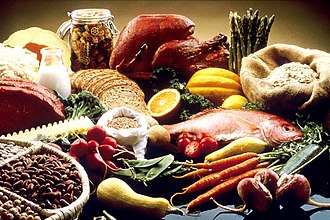
Food energy is the power we get from the food we eat. It helps our bodies work and move. We measure this energy in special units called Calories or joules.
How Our Bodies Use Food Energy
Our bodies use food energy in many ways. It keeps our hearts beating, helps us stay warm, and gives us the strength to play and learn. Even our brains need energy to think and remember!
Most of the energy we get comes from three main things in food: carbohydrates, fats, and proteins. These mix with oxygen we breathe to make energy.
Different Foods, Different Energy
Some foods give more energy than others. For example, foods with lots of fat give more energy than foods with mostly carbohydrates. There are special tables that tell us how much energy is in different foods.
Here is a simple table showing how much energy some food parts give:
| Food component | Energy (kJ/g) | Energy (kcal/g) |
|---|---|---|
| [fat](/wiki/Fat) | 37 | 9 |
| [ethanol](/wiki/Ethanol) | 29 | 7 |
| proteins | 17 | 4 |
| carbohydrates | 17 | 4 |
This helps us understand which foods give us more energy to play and grow.
Pictures
Keep exploring

This article is a child-friendly adaptation of the Wikipedia article on Food energy, available under CC BY-SA 4.0.
Images from Wikimedia Commons. Tap any image to view credits and license.