
Permian–Triassic extinction event
The Great Dying
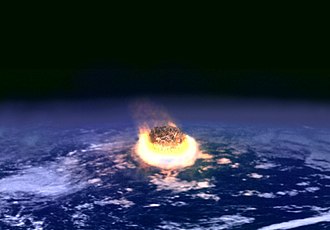
A very long time ago, about 251.9 million years ago (mya), Earth went through a hard time for plants and animals. This sad moment is called the Permian–Triassic extinction event or the Great Dying. It happened when the time called the Permian ended and the Triassic began. Many sea creatures and land animals could not live through this change.
Scientists think huge volcanic eruptions in a place now called Siberia let out lots of carbon dioxide. This made Earth warmer and changed the oceans. Life was very hard for many years after this.
Even though this was a sad time, Earth slowly started to heal. New sea animals like bivalves and snails grew more, and new land animals like tiny dinosaurs began to appear. It took millions of years for everything to come back.
People study this old event to learn about how Earth can change and why it is important to keep our planet healthy. The Permian–Triassic boundary at Frazer Beach in New South Wales shows us a place where scientists found clues about this time.
Pictures
Keep exploring


This article is a child-friendly adaptation of the Wikipedia article on Permian–Triassic extinction event, available under CC BY-SA 4.0.
Images from Wikimedia Commons. Tap any image to view credits and license.