United States House of Representatives
The United States House of Representatives is one of two groups in the bicameral United States Congress. It is the lower house. The other group is the United States Senate. Together, these two groups help make the laws for the whole country.
What the House Does
The House and the Senate can pass new laws, which are called bills. When both groups agree on a bill, it goes to the president. The House also has some special jobs of its own. For example, all bills about money must start in the House.
Who Are the Members?
Members of the House are called representatives. They serve two-year terms, and voters choose them directly. Each representative speaks for a small area in a state. These areas are based on how many people live there, which is counted in the United States census. Every state has at least one representative. California has the most, with 52 representatives.
A Long History
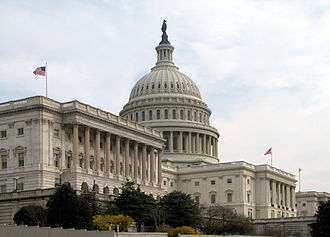
The House first met in 1789 in New York City. Later, it met in Philadelphia for a while. Today, it meets in Washington, D.C., the capital of the country. Over time, more and more people were allowed to vote for their representatives.
Who Leads the House?
The House chooses its own leader, called the speaker of the House. The speaker helps keep the House running in an orderly way. Members from the two main political parties also choose leaders to help them work together.

Quiz time!
3 questions about United States House of Representatives
What are new laws called?
Pictures
Keep exploring




This article is a child-friendly adaptation of the Wikipedia article on United States House of Representatives, available under CC BY-SA 4.0.
Images from Wikimedia Commons. Tap any image to view credits and license.