 Safekipedia
Ultimate fate of the universe
Adapted from Wikipedia · Discoverer experience
The ultimate fate of the universe is a fascinating idea studied in physical cosmology. It explores what might happen to the entire universe in the far future. Scientists use observations and theories to understand how the universe began and what might happen to it over time.
Important discoveries were made by Edwin Hubble in the 1930s and 1950s. He noticed that galaxies are moving away from each other. This helped form the Big Bang theory, which says the universe began about 13.787 billion years ago from a very dense point and has been expanding ever since.
Today, most cosmologists believe the universe is shaped like a flat surface, where parallel lines stay parallel. They think the universe will keep expanding forever. To understand the universe's fate, scientists look at how galaxies move, the shape of the universe, and the amounts of dark matter and dark energy it contains. These factors help scientists predict what might happen in the very far future.
Emerging scientific basis
The idea of what might happen to the universe in the far future became a real scientific question thanks to Albert Einstein's theory of general relativity. This theory helps scientists understand the universe on its largest scales. Different solutions to Einstein's equations suggest different possible fates for the universe.
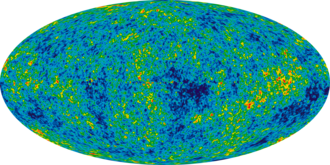
In 1929, Edwin Hubble discovered that the universe was expanding. This discovery led scientists to seriously study both the beginning and possible end of the universe. Two major theories developed: the Big Bang theory and the Steady State theory. The Big Bang theory suggested the universe began with a sudden explosion, while the Steady State theory proposed the universe constantly creates new matter as it expands. Observations of cosmic microwave background radiation in 1965 strongly supported the Big Bang theory, making it the most widely accepted view today. Scientists also study the density parameter and the role of dark energy to better understand the universe's future.
Role of the shape of the universe
See also: Shape of the universe
The ultimate fate of the universe depends on its shape and the amount of dark energy it contains. Scientists believe the universe is either flat or very close to flat, based on observations made by the Wilkinson Microwave Anisotropy Probe.
If the universe is closed like the surface of a sphere, gravity might eventually stop its expansion and cause it to collapse into a point called the "Big Crunch". However, dark energy might prevent this collapse and allow the universe to continue expanding forever. In an open universe, the expansion would continue forever, leading to a scenario called the "heat death," where the universe grows colder and darker over time.
Other possible fates of the universe
Some theories suggest the universe might go through big changes without being completely destroyed. One idea is called the Big Slurp, where the universe could shift from a false vacuum to a true vacuum. This might change the basic rules of physics and could destroy some parts of the universe very quickly. However, because parts of the universe are moving away from each other faster than the speed of light, many areas would remain safe and unchanged. The universe is so vast that only a small part near this change would be affected.
Observational constraints on theories
Scientists try to predict what will happen to the universe by studying its contents. They look at how much matter, radiation, dark matter, and dark energy there is, and compare this to a special amount called the critical density. They also use information from how galaxies group together, distant supernovas, and differences in the cosmic microwave background to help decide which prediction is most likely.
Images
Related articles


This article is a child-friendly adaptation of the Wikipedia article on Ultimate fate of the universe, available under CC BY-SA 4.0.
Images from Wikimedia Commons. Tap any image to view credits and license.