
Mathematical physics
Mathematical Physics
Mathematical physics is a special place where math and science work together like best friends. It uses math to help us understand how the world works. Imagine you are solving a big puzzle, and math gives you the pieces you need. That is what mathematical physics does!
One big part of mathematical physics is making new math ideas. When scientists find a hard problem, they sometimes need new math to solve it. This helps both math and physics grow and learn new things.
Math makes tricky physics ideas easier to understand. For example, equations can show how planets move around the Sun or how light shines. This helps us predict and explain many wonderful things in nature.
Mathematical physics is very important because it helps us discover new things. Many of today’s cool technologies, like computers and space travel, depend on this field. It shows us how closely math and physics are linked, like two sides of the same coin.
Famous Friends in Math and Physics
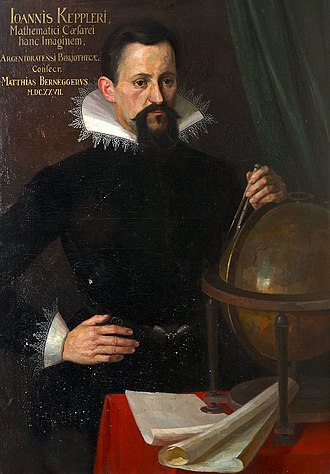
Many smart people have helped us understand math and physics better. Long ago, Euclid, Archimedes, and Ptolemy started asking big questions about the world. Later, Nicolaus Copernicus shared his idea that Earth orbits the Sun. Johannes Kepler showed that planets move in oval paths, and Galileo Galilei used experiments to learn about falling objects.
In the 1600s, Isaac Newton used new math to explain how things move and how gravity works. His work brought together many earlier ideas and helped everyone understand the universe a little more.
Later, Albert Einstein changed how we think about space and time with his theory of relativity. He showed that space and time are linked and can bend, especially around big objects like planets.
Today, scientists continue to use math to explore tiny particles and the vast universe. They help us understand how everything works, from the tiniest atoms to the biggest galaxies!
Pictures
Keep exploring


This article is a child-friendly adaptation of the Wikipedia article on Mathematical physics, available under CC BY-SA 4.0.
Images from Wikimedia Commons. Tap any image to view credits and license.