Cuddalore
Cuddalore, also spelt Kadalur, is a city with many heavy industries and a busy port. It is the main town of the Cuddalore District in the Indian state of Tamil Nadu. It lies 5.3 km south of Puducherry (union territory). The city was an important port during the British Raj. The Cuddalore district is famous for the Pichavaram Mangrove Forest. For its namesake district, see Cuddalore district.
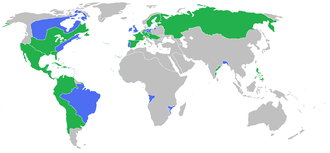
The early history of Cuddalore is not fully clear. The city first became important under the Pallavas' and Medieval Cholas' reign. After the Cholas fell, many rulers controlled the town, including the Pandyas, Vijayanagar Empire, Madurai Nayaks, Thanjavur Nayaks, Thanjavur Marathas, Tipu Sultan, the French and the British Empire. Cuddalore was also a place of fighting during the Seven Years' War. The Battle of Cuddalore took place there in 1758 between the French and British. It has been part of independent India since 1947.
During the 2004 Indian Ocean earthquake and tsunami, Cuddalore was one of the towns that were harmed by the disaster. Apart from fishing and port work, the city has chemical, medicine and energy industries in SIPCOT, an industrial area set up by the state government. The city is run by a municipal corporation and covers 101.6 km². It had a population of 308,781 in 2011.
Cuddalore is part of the Cuddalore legislative assembly constituency, which is part of the Cuddalore Lok Sabha constituency. The city is known for its schools and medical centres, with 25 schools, two science colleges and two engineering colleges. Roads are the main way to travel, though the town also has railway links. The nearest airport is Pondicherry Airport, 24 km (15 mi) away, and the nearest international airport is Chennai International Airport, 179 km (112 mi) away. Another local airport is Neyveli Airport, in the district at Neyveli township. The nearest seaport is Cuddalore Port, which handles small cargo ships. The closest major seaport is Karaikal port, 100 km (62 mi) away.
Etymology
Before the English took control, Cuddalore was called Kūṭalūr in Tamil, which means a place where waters meet. The city sits on a backwater where several rivers join. These rivers include the Ponnaiyar, which is also called the South Pennar river and flows through Karnataka and Tamil Nadu. Others are the Kedilam, the Uppanar, and the Paravanar.
The Cuddalore district once included Chola Nadu and Nadu Naadu. The name Nadu Naadu means "middle country." It may come from the area's location between Chola Nadu and Tondaimandalam. It may also come from its position between the Pallavas and the Cholas, or between the central lands and the ocean.
History
Cuddalore has been a seaport since ancient times. For about two hundred years, several European powers ruled it, including the Dutch, Portuguese, French and British. In 1758 the British controlled it. They used the fort at Cuddalore to rule a large part of South India, including parts of what are now Andhra Pradesh, Kerala and Karnataka. The French built a trading post at Pondicherry in 1674. The British built Fort St. David at Cuddalore in 1690. During the 1700s, the French and British fought several times in this area. In 1746, during the First Carnatic War, which was part of the Austrian Succession War, French forces surrounded the British at Fort St. David for several months. The French left in 1747.
In 1758, during the Seven Years' War, the French took the fort. A naval battle, the Battle of Cuddalore, took place off the coast, but neither side won. The fort was later abandoned in 1760. In 1782, during the Second Anglo-Mysore War and the time of the American War of Independence, the French took Cuddalore again. The British tried to take it back in 1783, but they failed. The fort returned to British control in 1795, after five naval battles off the coast, none of which had a clear winner. The Cuddalore Central Prison opened in 1865. It is an important historic landmark. Subramania Bharati and other political leaders once spent time there. On 26 December 2004, tsunami waves from the 2004 Indian Ocean earthquake, near Sumatra, hit India's eastern coast. Many lives were lost. The waves damaged Silver Beach and the Cuddalore Port, but Fort St. David was not harmed. On 30 December 2011, Cyclone Thane damaged many crops and buildings.
Geography
Cuddalore is about 6 metres (20 feet) above sea level. The land is completely flat. Inland, the soil is mostly black and alluvial. Near the seashore, the land is covered with coarse sand. The sandstone found in the town is popular.
The Pennayar River flows north of the town, and the Gadilam River runs across it. Cuddalore is 200 km (120 mi) from the state capital Chennai and 18 km (11 mi) from Puducherry, the neighbouring union territory. The city is about the same distance from the Tropic of Cancer and the Equator.
Geology
The Cuddalore Formation in the Cauvery Basin was built from sand and mud carried from inland areas of the Southern Granulite Terrain (SGT). It formed during the Miocene, when rivers laid down sediment along the eastern edge of South India. Scientists thought the Indian Summer Monsoon started in the early Miocene and grew stronger in the middle Miocene. This caused big climate changes across the Indian subcontinent. Researchers studied the minerals and chemistry of the rock to learn where the sediment came from and what the climate was like. They found that the sand likely came from the nearby Madras Block of SGT, where the land was lifted up quickly. The source rocks were also a little different in makeup from the present upper continental crust (UCC).
Cuddalore has a tropical wet and dry climate (As) under the Köppen climate classification. It gets heavy rain during the North-East monsoon. The weather is pleasant from December to February, with warm days and cool nights. Summer begins in March, and temperatures are highest at the end of May and in June. Average temperatures range from 37 °C (99 °F) in January to 22.5 °C (72.5 °F) in May and June. There is very little rain in summer. The South-West monsoon arrives in June and lasts until September. It brings less rain than the North-East monsoon, which runs from October to January. The average yearly rainfall is 1,400 mm (55 in), and most of it comes from the North-East monsoon. The highest rainfall recorded in 24 hours was 570 mm on 18 May 1943.
Demographics
In the 2011 census, Cuddalore had a population of 173,636. There were 1,026 females for every 1,000 males. This was much higher than the national average of 929. About 17,403 people were under the age of six. Scheduled Castes and Scheduled Tribes made up 13.22% and 0.3% of the population. The city's literacy rate was 78.92%, while the national average was 72.99%.
In the same census, most people in Cuddalore were Hindus, at 89.12%. About 6.09% were Muslims, and 3.98% were Christians. Smaller numbers were Sikhs, Buddhists, and Jains. The city had a total of 42,174 households.
Transport
Main article: Transport in Cuddalore
Cuddalore has three major railway stations: Cuddalore Port Junction, Tiruppadirippuliyur Cuddalore Castle, and Varakalpattu Cuddalore Moffusil. Cuddalore Port Junction has a branch line to Virudhachalam Junction railway station, passing through Neyveli and Vadalur. Tiruppadirippuliyur Cuddalore Castle has two platforms and is near the Cuddalore bus stand. Trains connect the town with many cities in Tamil Nadu, and there are daily express trains to many cities.
The town has about 230 km (140 mi) of roads. Cuddalore City takes care of most of them. The National Highway NH-32 runs through Cuddalore and links Viluppuram, Pondicherry, Chidambaram, Nagapattinam, and Thoothukudi. Town buses and private mini-buses serve local needs. The main bus stand is in Thirupapuliyur. The nearest airport is in Pondicherry, about 25 km (16 mi) away. The nearest international airport is Chennai International Airport, 200 km (120 mi) away. An airport in Neyveli, nearly 30 km (19 mi) from Cuddalore, has finished being built and is waiting to open. Daily flights to Chennai are planned to be run by Air Odisha. Cuddalore Port is a small port that mostly handles cargo. It is close to Cuddalore Port Junction and also serves the town.
Economy
Cuddalore was once a fishing town, and fishing was its main industry. The town was also a port, but most shipping now happens in bigger cities. Today, many chemical, drug, and energy factories are in SIPCOT, an industrial area set up by the state government. The National Thermal Power Corporation (NTPC) and the Tamil Nadu Electricity Board (TNEB) planned to build power plants near the town.
Factories have caused serious pollution in Cuddalore. The SIPCOT area is often called a very polluted place, and local people have shared their worries about the factories. In November 2002, a team from the Indian People's Tribunal, led by J. Kanakaraj, visited the SIPCOT chemical area and noticed a strong smell of chemicals in the air. A 2008 report found that people living near the SIPCOT area had a much higher risk of getting cancer, because of harmful gases from the chemical factories.
Education
Cuddalore has more than ten schools. Some are matriculation schools and some are CBSE schools. These include St. Mary's, St. Joseph's Higher Secondary School, and several others. The city also has arts and science colleges, two engineering colleges, and two polytechnic colleges.
There are six Industrial Training Institutes (ITI) in the town. Two of them are run by the government.
Utilities
Electricity in Cuddalore is managed by the Tamil Nadu Electricity Board (TNEB). The town and its suburbs form their own electricity area.
Water comes to the town from the Pennaiyar River and from wells at Caper Hills and Thirvanthipuram. It is stored in ten overhead tanks. In 2000–01, about 6 million litres of water reached homes in the town each day. About 103 tonnes of solid waste were collected every day. By 2001, the town's waste collection covered every area.
Cuddalore has no underground drainage system. Wastewater was handled with septic tanks, open drains and public toilets. The municipality looked after 65 km (40 mi) of stormwater drains, which covered 32% of its roads. The town had one government hospital, six municipal maternity homes and 37 private hospitals. There were 4,517 street lamps, and the municipality ran five markets that served the town and nearby rural areas.
Administration and politics
Cuddalore became a municipality in 1866, during British rule, when it was a revenue village. It was later raised to a selection-grade municipality in 1991 and to special grade in 2008. The city has 45 wards, and each ward elects a councillor. A Municipal Commissioner, who is the main official, leads six departments. These cover general administration and personnel, Engineering, Revenue, Public Health, city planning, and Information Technology (IT). The 45 councillors make up the lawmaking body. It is led by an elected Chairperson and a Deputy Chairperson. In 2021, the state government upgraded the Cuddalore Greater Municipality to the "Cuddalore City Municipal Corporation."
Cuddalore is part of the Cuddalore assembly constituency. This constituency sends a member to the Tamil Nadu Legislative Assembly every five years. Since 1977, the Dravida Munnetra Kazhagam (DMK) has won this seat most often. The Indian National Congress and the All India Anna Dravida Munnetra Kazhagam (ADMK) have also won it. For national elections, the town was part of the Cuddalore (Lok Sabha constituency) in 2009. That constituency included Tittakudi (SC), Vridhachalam, Neyveli, Cuddalore, Panruti, and Kurinjipadi. Before 2009, it included Ulundurpet (SC), Nellikkuppam, Cuddalore, Panruti, Rishivandinam, and Sankarapuram. The town's law and order is kept by the Cuddalore sub division of the Tamil Nadu Police, which has four police stations in the town.
| Municipal Corporation Officials | |
|---|---|
| Mayor | Sundari |
| Corporation Commissioner | Viswanathan |
| Elected members | |
| Member of Legislative Assembly | B. Rajkumar |
| Member of Parliament | M. K. Vishnu Prasad |
Tourism
Pataleeswarar Temple is a Hindu temple built in the 7th century. It is the most famous landmark in Cuddalore. Saints Appar and Tirugnanasambandar wrote praise for it in their works in Tevaram. The Devanathaswami Temple, in Thiruvanthipuram, is another Hindu pilgrimage site near Cuddalore.
Silver Beach is a popular place to visit. It is 2 km long and is in Cuddalore. Pichavaram is 57 km from Cuddalore. It has a mangrove forest.
Fort St David is on the River Gadilam, near Devanampattinam. It is one of the most visited places in Cuddalore. Elihu Yale acquired it in 1653. In 1690, the British East India Company bought the fort. In 1746, it became the British headquarters for British India. The French captured it in 1758. In 1785, it came under British control again.
Satyagnana Sabha is a temple built by the saint Sri Raamalinga Swaamigal. It is in the town of Vadalur, in the Cuddalore district. It was completed on 25 January 1872. The temple is open all year. Many visitors come to its festivals and monthly puja dates.
Notable person
- Anjalai Ammal, an Indian freedom fighter and social worker
- Jayakanthan
- Thangar Bachan
- Vetrimaaran

Quiz time!
4 questions about Cuddalore
What does the Tamil name Kūṭalūr mean?
Pictures
Keep exploring



This article is a child-friendly adaptation of the Wikipedia article on Cuddalore, available under CC BY-SA 4.0.
Images from Wikimedia Commons. Tap any image to view credits and license.