
Wessex
The Kingdom of the West Saxons, also called Wessex, was an important Anglo-Saxon kingdom in the south of Great Britain from about 519 to 927.
It began when a leader named Alfred the Great called himself "King of the Anglo-Saxons" for all Anglo-Saxons not ruled by Danes. Over the next thirty years, Alfred's son Edward the Elder and grandson Æthelstan took over Danish kingdoms until England was fully united under Æthelstan in 927.
The Anglo-Saxons believed Wessex was started by two leaders, Cerdic and Cynric, though some think this might just be a story. We know about Wessex mostly from old lists of kings and a book called the Anglo-Saxon Chronicle.
Wessex became a Christian kingdom under King Cenwalh, and later grew bigger under leaders like Cædwalla, who took over nearby lands.
In the 800s, Wessex stayed mostly independent even as other kingdoms grew powerful. King Egbert added many lands to Wessex, including Surrey, Sussex, Kent, and Essex.
Later, Wessex faced attacks from Danish invaders. Alfred the Great fought them off and made new laws, built ships, and created safe places called burhs to protect his people. His family continued to bring more lands into one united England.
History
Prehistoric Britain
Main article: Prehistoric Britain
From early times, the area that would become Wessex had an old path called the Harrow Way. This path went from the coast of the English Channel near Dover to Marazion in Cornwall. It was probably used for trading tin.
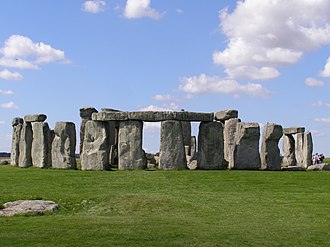
During the Late Neolithic period, important places like Avebury and Stonehenge were built on Salisbury Plain. Stonehenge was finished later in the Middle Bronze Age by a culture called the Wessex culture. Many other stone monuments and earthworks from this time can still be seen there. By the Iron Age, Celtic tribes such as the Durotriges, Atrebates, Belgae, and Dobunni lived in what would become Wessex.
Roman Britain
Main article: Roman Britain
After the Romans came to Britain, they built many homes and farms in Wessex. Important towns like Dorchester and Winchester were started. The Romans also built roads connecting places such as Exeter, Dorchester, Winchester, Silchester, and London.
In the mid-4th century, raids by groups such as the Picts, Scottish people, Attacotti, and Franks became more common. In 367, these groups attacked Britain but were stopped by the Roman general Theodosius. However, Roman control got weaker over time, especially after Roman soldiers left Britain to fight elsewhere.
Anglo-Saxon settlement
Main article: Anglo-Saxon settlement of Britain
Stories about how the Saxons came to Britain are different. One story, told by Gildas, says that after the Romans left, the Celtic Britons asked Saxon help for protection, giving them land in return. Later, there were fights between the Britons and Saxons.
Another story, told by Bede, mentions Hengest and Horsa, who fought in Britain and were given land such as the Island of Thanet. More details come from the Historia Brittonum and the Anglo-Saxon Chronicle, which talk about Cerdic, who is considered the founder of Wessex, landing in southern Hampshire in 495.
According to the Anglo-Saxon Chronicle, Cerdic and his son Cynric landed in 495 and became the first kings of Wessex in 519 after defeating a British king named Natanleod. The Saxons had some tough times, including a big battle at Mons Badonicus, which stopped their growth for about thirty years. Later, they took over the Isle of Wight.
Cynric ruled after Cerdic and was followed by Ceawlin, who made Wessex bigger, taking areas like Gloucestershire and Somerset. Ceawlin was one of the kings called a “Britain-ruler.” After Ceawlin, several kings ruled, including Cynegils, who was the first West Saxon king to be baptized by Birinus in the 630s.
Christianisation of Wessex
Main article: Christianisation of Anglo-Saxon England
Cynegils was the first West Saxon king to be baptized, helped by Birinus around the end of the 630s. His successor, Cenwealh, started as a pagan but later turned to Christianity. Cenwealh had to fight against the kingdom of Mercia but still made Wessex larger, taking over Somerset.
After Cenwealh, several kings ruled Wessex, including Seaxburh, Æscwine, and Centwine. Centwine fought against the Britons. Cædwalla, another king, made Wessex much bigger, taking over places like Sussex, Kent, and the Isle of Wight, before going to become a pilgrim in Rome.
Ine, who ruled for 38 years, made one of the oldest sets of English laws and set up a bishopric at Sherborne. During the 8th century, Wessex was affected by the stronger kingdom of Mercia but still grew, especially into the area called Dumnonia (Devon).
Hegemony of Wessex and the Viking raids
In 802, Egbert became king and made Wessex stronger. He defeated the king of Mercia and took control of areas like Surrey, Sussex, Kent, and Essex. He also became an important ruler in Britain for a short time.
Egbert’s son Æthelwulf fought off a big Danish army in 851 at the Battle of Aclea, which delayed more Danish attacks for fifteen years. Æthelwulf later went on a pilgrimage to Rome, leaving his son Æthelbald to rule part of the kingdom.
Last English kingdom
In 865, a large group of Danes, called the Great Heathen Army, attacked England. They took over Northumbria and East Anglia and then came to Wessex. Although King Æthelred and his brother Alfred had some wins, they lost many battles. Alfred finally made the Danes leave Wessex by paying them.
Alfred then made changes to protect Wessex. He built forts called burhs and made a navy. He also split his army into two groups that took turns defending the kingdom. These changes helped Alfred protect against more attacks in the 890s.
Alfred also worked to improve learning and laws. He brought scholars to his court and had important books translated from Latin into English. Because of these efforts and Wessex’s strength, the West Saxon dialect became the standard form of Old English.
Unification of England; Earldom of Wessex
After more attacks in the 890s, Wessex and Mercia kept fighting the Danish forces. By 918, King Edward the Elder had brought all of England south of the Humber River under his control, joining Wessex and Mercia into one Kingdom of the English. Later, his son Æthelstan united all of England by taking over Northumbria in 927.
After the Danish king Cnut took over England in 1016, he made earldoms based on old kingdoms. Wessex became an earldom ruled by strong leaders like Godwin and his son Harold Godwinson. When Edward the Confessor died in 1066, Harold became king, but soon after, the Norman Conquest ended the earldom of Wessex forever.
Symbols
Wyvern or dragon
Wessex is often shown with a wyvern or dragon. Old writers like Henry of Huntingdon and Matthew of Westminster talked about a golden dragon used by the West Saxons in old battles. Dragons were common symbols in Europe back then, and they became especially linked with Wessex.
Today, dragons and wyverns are still used in symbols for Wessex. For example, the British Army’s 43rd (Wessex) Infantry Division has a gold wyvern on its sign. Some groups in the area still use these symbols.
Cross of Saint Aldhelm
Some people in Wessex use a white cross on a red background, called the Flag of Saint Aldhelm. This flag is celebrated on May 25, “Wessex Day.” The design comes from old symbols linked to a place called Sherborne Abbey in Dorset.
Attributed coat of arms
Medieval writers sometimes gave the kings of Wessex a special coat of arms. This design has a blue background with a special cross and four small birds. It is also called the “Arms of Edward the Confessor” because it was used on old coins. It appeared in windows of churches and other important places.
Cultural and political identity in modern times
Main article: Thomas Hardy's Wessex
Thomas Hardy created a fictional place called Wessex for his novels. He took the name from his friend William Barnes to describe their home area in Dorset and nearby parts of England.
The TV show and book series The Last Kingdom uses Wessex as its main setting. It tells stories about Alfred the Great and battles against the Vikings.
Today, people still use the name Wessex for this part of England. Many groups and companies in Dorset, Somerset, Hampshire, and Wiltshire include "Wessex" in their names, like Wessex Bus, Wessex Water, and Wessex Institute of Technology. Some small political groups, such as the Wessex Constitutional Convention and Wessex Regionalists, want more control for the region. The British Army also uses Wessex in the names of some units, like the Wessex Regiment and the 32nd Regiment Royal Artillery, known as the 'Wessex Gunners'.
In 2023, Dorset Council suggested creating a new group called "Heart of Wessex" together with Bournemouth, Christchurch and Poole, Somerset, North Somerset, and Wiltshire councils.
Pictures
Keep exploring




This article is a child-friendly adaptation of the Wikipedia article on Wessex, available under CC BY-SA 4.0.
Images from Wikimedia Commons. Tap any image to view credits and license.