European Economic Community
The European Economic Community (EEC) was a regional organisation created by the Treaty of Rome in 1957. Its goal was to encourage economic integration among its member countries. In 1993, when it became part of the first pillar of the newly formed European Union (EU), it was renamed the European Community (EC). People sometimes used the name European Community even before the official change. The EEC was also known as the European Common Market in English-speaking countries.
The Community began with six founding members: Belgium, France, Italy, Luxembourg, the Netherlands and West Germany. Its main aim was economic integration, including a common market and a customs union. It shared a common set of institutions with the European Coal and Steel Community (ECSC) and the European Atomic Energy Community (EURATOM). Together these formed the European Communities under the 1965 Merger Treaty.
In 1993, a complete single market was achieved, known as the internal market. It allowed goods, money, services and people to move freely within the EEC. In 1994, the internal market was made official by the EEA agreement, which also brought most members of the European Free Trade Association into the European Economic Area, made up of 15 countries.
When the Maastricht Treaty took effect in 1993, the EEC was renamed the European Community, because it covered more than economic policy. The three European Communities, including the EC, became the first of the three pillars of the European Union. The EC continued in this form until the 2009 Treaty of Lisbon abolished it. That treaty brought the EC's institutions into the EU's wider framework, and the EU was set to "replace and succeed the European Community."
History
Further information: History of the European Union
In April 1951, the Treaty of Paris created the European Coal and Steel Community (ECSC). It was based on supranationalism and aimed to help the economy of Europe and prevent future war by integrating its members. Two more communities were proposed, a European Defence Community and a European Political Community, with the aim of creating a federal Europe. The French Parliament rejected the defence community. Jean Monnet, a leading figure behind the communities, resigned from the High Authority in protest. After the Messina Conference in 1955, Paul-Henri Spaak was asked to prepare a report on a customs union, known as the Spaak Report. Spaak also led the Intergovernmental Conference on the Common Market and Euratom at the Val Duchesse conference centre in 1956. On 25 March 1957, the Treaty of Rome was signed, establishing a European Economic Community.
The resulting communities were the European Economic Community (EEC) and the European Atomic Energy Community (Euratom). They were less supranational than the earlier communities, because some countries worried that their sovereignty was being harmed. The EEC was to create a customs union, while Euratom would promote co-operation in nuclear power. The EEC soon became the most important of the two. In 1962, it set common prices for farm products under the Common Agricultural Policy. A crisis followed when French President Charles de Gaulle withdrew French representatives from the European institutions, but a compromise, the Luxembourg compromise, was reached in 1966. On 1 July 1967, the Merger Treaty combined the institutions of the ECSC and Euratom with those of the EEC, and they became known together as the European Communities. Several countries, including Denmark, Ireland, the United Kingdom, and Norway, applied to join, but de Gaulle blocked British membership. Denmark, Ireland and the United Kingdom joined the Community on 1 January 1973, while Norway rejected membership in a referendum on 25 September 1972. The Single European Act was signed in 1986 and came into force in 1987. It dealt with the institutions, the powers of the Community, and the single market. The Maastricht Treaty was agreed in 1991, signed in 1992, and came into force on 1 November 1993, establishing the European Union and paving the way for the European Monetary Union.
The EU absorbed the European Communities as one of its three pillars. The EEC's activities were enlarged, and it was renamed the European Community. Under the Treaty of Lisbon, which came into force in 2009, the pillar structure ended, and the European Community was absorbed into the European Union, although Euratom remained separate.
Aims and achievements
The main aim of the EEC, as stated in its preamble, was to "preserve peace and liberty and to lay the foundations of an ever closer union among the peoples of Europe." Its goal was balanced economic growth, to be reached through a customs union with a common external tariff, common policies for agriculture, transport and trade, including standardization (for example, the CE marking shows that standards were met), and enlargement of the EEC to the rest of Europe. Article 2 of the Treaty of Rome aimed for harmonious economic development, stability, a higher standard of living, and closer relations between member states. Many Western Europeans feared that poverty would make people open to communist propaganda, so growing prosperity was seen as a way to balance power between the Western and Eastern blocs and to bring together countries such as France and Germany after the Second World War.
The EEC's work was shared among an assembly (the European Parliament), a Council, a Commission, and a Court of Justice. Trade restrictions were lifted so goods could move more freely between member states, and citizens were allowed to move freely too, as were services and capital. The Common Agricultural Policy regulated and supported farming, a European Social Fund helped workers who lost their jobs, and a European Investment Bank was set up to open up new resources. These measures also applied to overseas territories, and competition was kept alive to make products cheaper for European consumers. The customs union made fast progress, much faster than the twelve years planned, although France faced setbacks because of its war with Algeria.
Members
Further information: Member state of the European Union and Enlargement of the European Union
The six countries that founded the EEC and the other two Communities were called the "inner six". (The "outer seven" were the countries that formed the European Free Trade Association.) The six were France, West Germany, Italy, and the three Benelux countries: Belgium, the Netherlands, and Luxembourg. The first enlargement came in 1973, when Denmark, Ireland, and the United Kingdom joined. Greece, Spain, and Portugal joined in the 1980s. The former East Germany became part of the EEC when Germany was reunited in 1990. After the EU was created in 1993, it grew by an additional sixteen countries by 2013.
Member states are represented in some form in each institution. Each member state has one minister on the Council, who represents their national government. Each state also has one European Commissioner, although Commissioners are not supposed to represent their national interest but the interest of the Community. Before 2004, the larger members (France, Germany, Italy, and the United Kingdom) had two Commissioners. In the European Parliament, members are allocated a set number of seats based on their population. However, since 1979, these members have been directly elected, and they sit according to political allegiance, not national origin. Most other institutions, including the European Court of Justice, have some form of national division among their members.
| Flag | State | Accession | Language(s) | Currency | Population (1990) |
|---|---|---|---|---|---|
 | Belgium | 25 March 1957 | Dutch, French and German | Franc (fr.) | 10,016,000 |
 | France | 25 March 1957 | French | Franc (F) | 56,718,000 |
 | West Germany/Germany | 25 March 1957 | German | Mark (DM) | 63,254,000 |
 | Italy | 25 March 1957 | Italian | Lira (Lit.) | 56,762,700 |
 | Luxembourg | 25 March 1957 | French, German and Luxembourgish | Franc (fr.) | 384,400 |
 | Netherlands | 25 March 1957 | Dutch and Frisian | Guilder (ƒ) | 14,892,300 |
 | Denmark | 1 January 1973 | Danish | Krone (kr.) | 5,146,500 |
 | Ireland | 1 January 1973 | Irish and English | Punt (£) | 3,521,000 |
 | United Kingdom | 1 January 1973 | English | Sterling (£) | 57,681,000 |
 | Greece | 1 January 1981 | Greek | Drachma (₯) | 10,120,000 |
 | Portugal | 1 January 1986 | Portuguese | Escudo ( ) | 9,862,500 |
 | Spain | 1 January 1986 | Spanish | Peseta (₧) | 38,993,800 |
Further information: Institutions of the European Union
There were three political institutions that held the executive and legislative power of the EEC, one judicial institution, and a fifth body created in 1975. Most of these were created by the EEC in 1957, and from 1967 they applied to all three Communities. The Council represents the governments of the member states, the Parliament represents citizens, and the Commission of the European Communities represents the European interest. The Commission drafts laws requested by the Council or Parliament, then presents them to the Council for approval and to Parliament for an opinion. The EEC inherited some institutions from the Institutions of the ECSC, including the Common Assembly. Its executive bodies were different, though. The Council of the European Economic Community took the place of the ECSC's Council of Ministers, and the Commission took the place of the High Authority. The French government was suspicious of the High Authority's power, so the Council was given a bigger executive role. The Merger Treaty in 1967 combined the executives of the three Communities into one structure.
The Council of the European Communities was the main decision-making body, with legislative and executive powers. Its Presidency rotated between the member states every six months. It is related to the European Council, an informal gathering of national leaders that started in 1961. The Council was made up of one national minister from each member state and met in different forms depending on the topic. Votes were taken by majority or unanimity. Since the 1960s, heads of government and heads of state also met informally at European summits. The Commission was the executive arm of the Community. It drafted Community law, handled the day-to-day running of the Community, and upheld the treaties. It was designed to be independent. The President, appointed by the Council, chaired it and represented it.
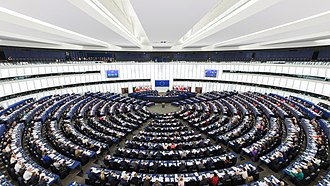
The European Parliament (formerly the European Parliamentary Assembly) had an advisory role. At first, the consultation procedure meant Parliament had to be consulted, although it was often ignored. The Single European Act gave Parliament more power through the assent procedure and the cooperation procedure. Budgetary treaties in 1970 and 1975 gave Parliament power over the Community budget. Parliament's members were national MPs serving part-time until 1980. Elections were delayed until 1979 (see 1979 European Parliament election), and after that Parliament was elected every five years. Over the following 20 years, it gradually won more say over legislation and over the appointment of the Commission. The Court of Justice of the European Communities was the highest court on matters of Community law. It had one judge per state and made sure Community law was applied in the same way across all states. The fifth institution is the European Court of Auditors, which checked that taxpayer funds from the Community budget were correctly spent. It gave an audit report each year and is the only institution not mentioned in the original treaties, having been set up in 1975.
Policy areas
Further information: Three pillars of the European Union
When it was abolished, the European Community pillar covered the following areas:

Quiz time!
5 questions about European Economic Community
What was the main goal of the European Economic Community (EEC)?
Pictures
Keep exploring


This article is a child-friendly adaptation of the Wikipedia article on European Economic Community, available under CC BY-SA 4.0.
Images from Wikimedia Commons. Tap any image to view credits and license.